Advanced Search

Advanced Search

Current Filters

Filter your query

Publication Types

Other

to

Issue Briefs

/

How Care Coordination Varies Internationally: A Study of Primary Care Physicians in 10 Countries

Waiting room

A door sign points the way to the waiting room of a general practitioner’s surgery on May 11, 2026, in Untermerzbach, Bavaria, Germany. Primary care doctors across 10 countries say they communicate frequently with the specialists their patients see. But delays, technological gaps, and other care coordination problems remain, causing unnecessary deteriorations in patient health. Photo: Pia Bayer/picture alliance via Getty Images

A door sign points the way to the waiting room of a general practitioner’s surgery on May 11, 2026, in Untermerzbach, Bavaria, Germany. Primary care doctors across 10 countries say they communicate frequently with the specialists their patients see. But delays, technological gaps, and other care coordination problems remain, causing unnecessary deteriorations in patient health. Photo: Pia Bayer/picture alliance via Getty Images

Toplines
  • Strong coordination of care between primary care doctors, specialists, and social services is critical for patients with multiple chronic conditions

  • A survey of primary care physicians in 10 countries shows that care coordination quality varies widely both within and between those countries

Toplines
  • Strong coordination of care between primary care doctors, specialists, and social services is critical for patients with multiple chronic conditions

  • A survey of primary care physicians in 10 countries shows that care coordination quality varies widely both within and between those countries

Essential to any high-performing health system is coordination of primary care with other medical care and social services that patients receive.1 When primary care practices, specialists, hospitals, and social service providers work in harmony, patient outcomes are optimized.

Half of Americans have multiple chronic conditions, such as heart disease, cancer, stroke, and diabetes.2 For these patients, their primary care doctor should serve as the central coordinator, managing relationships between specialists and hospitals and connecting patients to any health-related social supports they need, such as access to housing, transportation, or nutritious food.

The capacity of primary care providers to routinely coordinate their patients’ care varies globally — and even within individual countries. This variation can be caused by differences in how health care practices are structured, how care is funded and reimbursed, access to providers, and level of adoption of health information technology.3 When care is fragmented, clinicians can’t communicate effectively. This can result not only in inefficiencies like duplicative tests and unnecessary doctor visits, but also in negative health outcomes due to medication errors, treatment delays, and poor transitions from one health care setting to another.

This data brief presents findings from the 2025 Commonwealth Fund International Health Policy Survey of Primary Care Physicians to examine care coordination in 10 countries: Australia, Canada, France, Germany, Netherlands, New Zealand, Sweden, Switzerland, the United Kingdom, and the United States. We report on the types of clinicians coordinating care, the timeliness of care delivery, the information being exchanged between providers, and reported barriers to coordination. We also identify key lessons for how countries can improve care coordination. (For more information on the survey, see “How We Conducted This Survey.”)

Highlights

  • Frequent care coordination between primary care physicians (PCPs) and other types of providers was not universally reported in any of the 10 surveyed countries.
  • Most PCPs across the surveyed countries do not receive a report from the specialists to whom they’ve referred patients within a week.
  • The majority of physicians across all 10 countries reported they were able to electronically coordinate with providers outside of their practice.
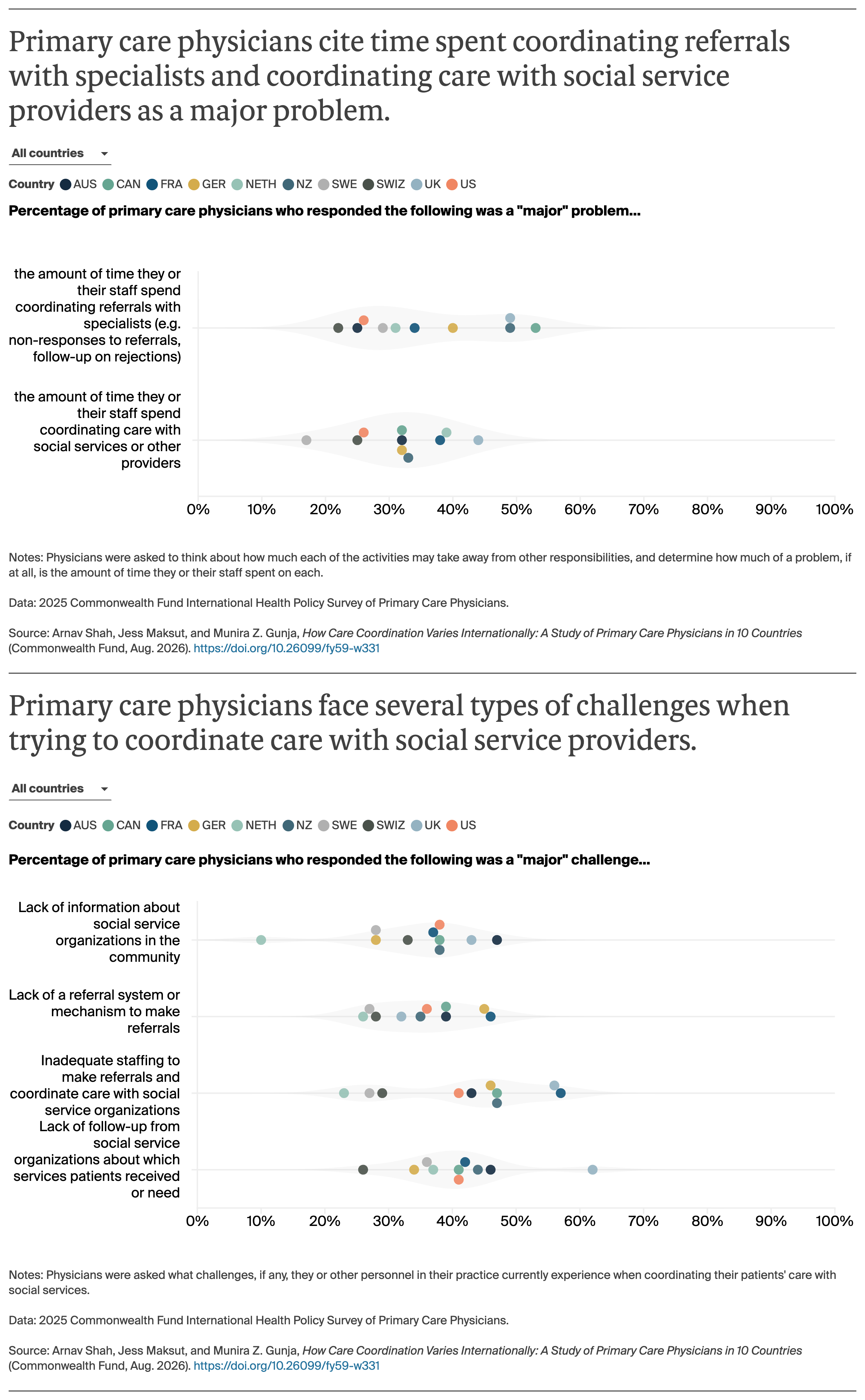
  • Around half of PCPs in Canada, New Zealand, and the U.K. said the amount of time they spend coordinating referrals with specialists was a major problem for their practice, while about one in four did so in the U.S.

Findings

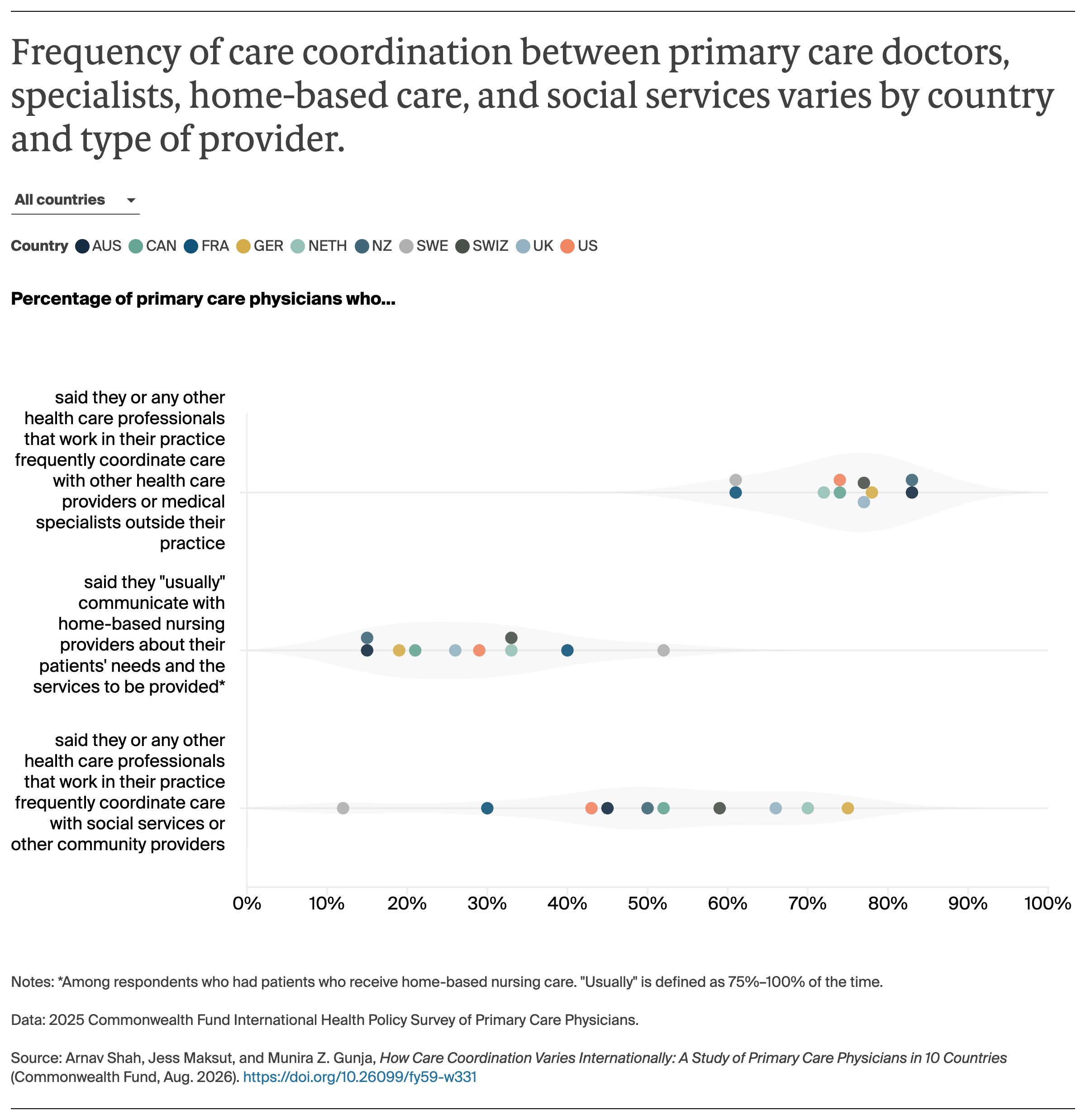
AUTHOR_REVIEW_Shah_how_care_coordination_varies_internationally_Exhibit_01

Care coordination varies by country and provider type. While about six in 10 primary care physicians (PCPs) in France and Sweden reported someone in their practice frequently coordinating care with other health care providers, more than eight in 10 did so in Australia and New Zealand. Around three in four PCPs in the U.S. reported doing so frequently.

In all countries except Sweden and France, at least four in 10 PCPs said they frequently coordinated care with social services or other community providers. For PCPs with home-based nursing patients, less than half in all countries, except Sweden, reported communicating at least 75 percent of the time with home-based nursing providers about their patients’ needs and services.

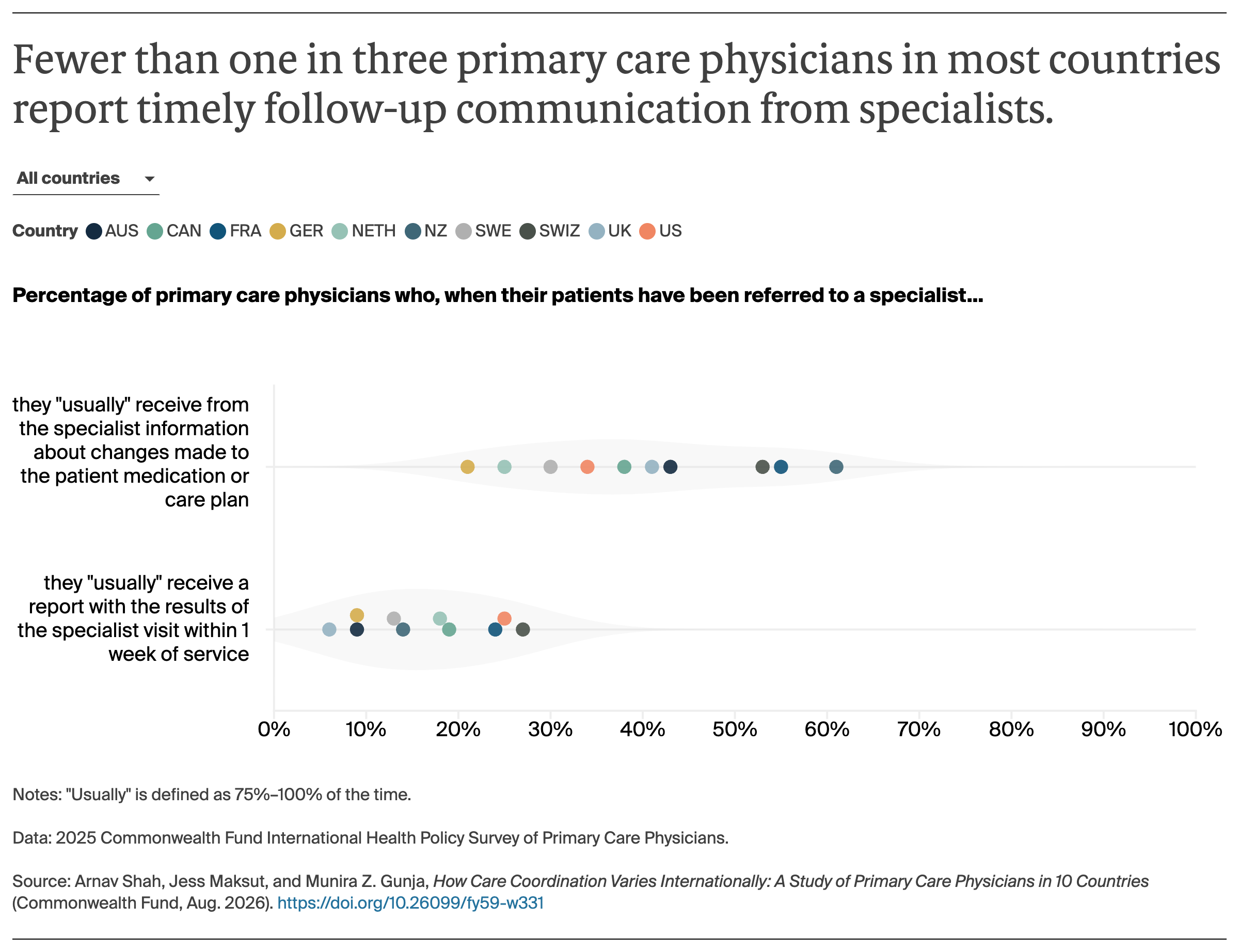
AUTHOR_REVIEW_Shah_how_care_coordination_varies_internationally_Exhibit_02

Timely communication between primary care physicians and specialists is an important aspect of effective care coordination. Delayed or inconsistent communication, particularly when reporting key information from a specialist visit back to the referring PCP, can translate into patient frustration, disjointed care, and poorer health outcomes.4

Communication between PCPs and specialists about changes to patient medications and care plans varied across countries. In the U.S., around one-third of PCPs said they usually receive such information from specialists, while rates in New Zealand were almost twice as high.

Most PCPs across the surveyed countries do not receive a report of specialist visits within a week of service. Around one in four PCPs in Switzerland, the U.S., and France said they usually received such information, compared to less than one in 10 in Australia, Germany, and the U.K. Lack of timely information-sharing between clinicians and inadequate physician-to-physician communication can lead to delayed diagnoses, which in turn can result in health issues for patients.5

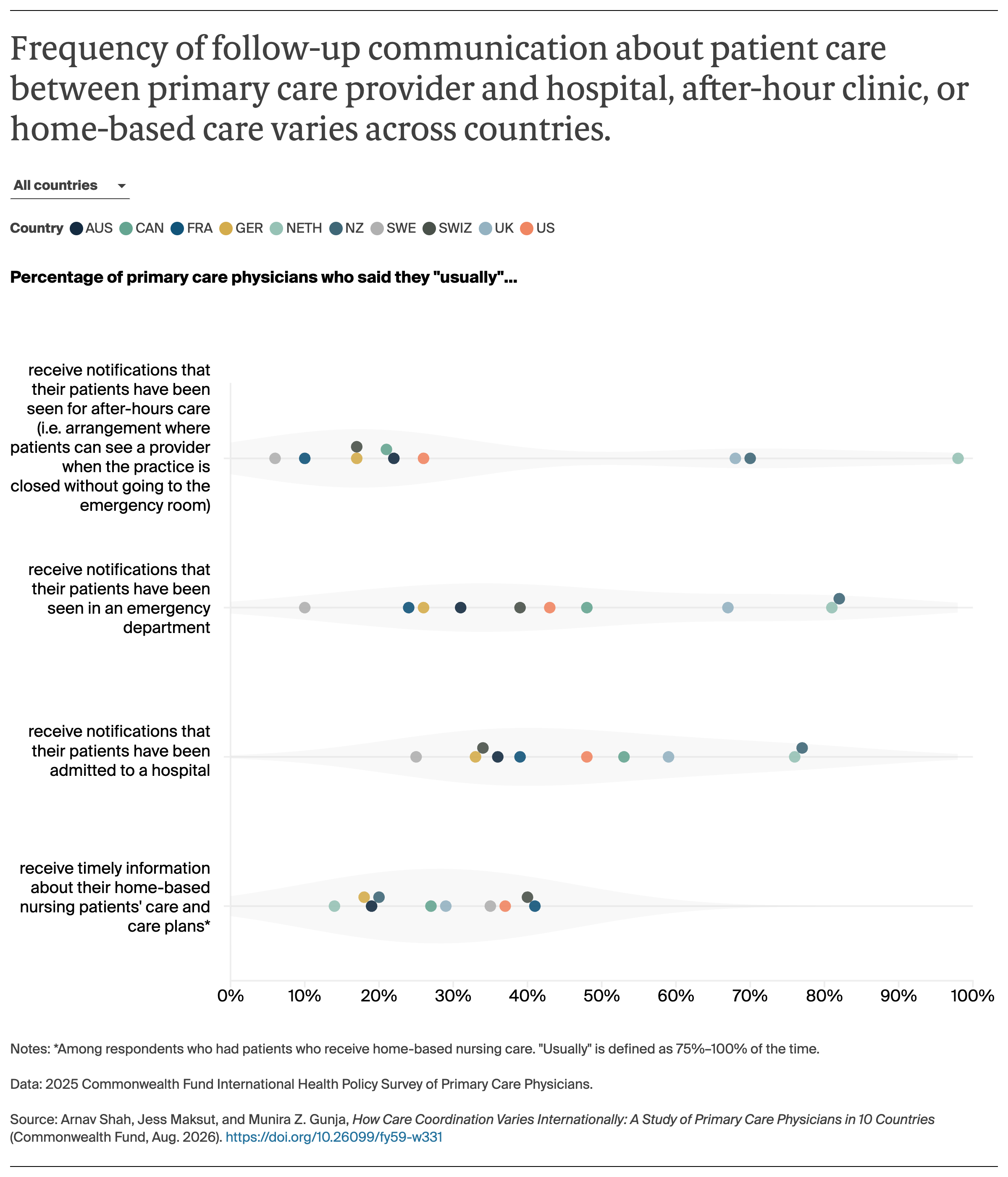
AUTHOR_REVIEW_Shah_how_care_coordination_varies_internationally_Exhibit_03

To help ensure that all providers have the information they need to deliver high-quality care, PCPs need to be alerted when their patients are seen in other settings, such as hospitals or after-hours clinics.6 Across countries, we saw wide variation in rates at which PCPs are notified when their patients are seen for after-hours care or notified about changes in their patients’ home-based care.

Nearly all PCPs (98%) in the Netherlands reported that they are alerted regularly when their patients seek after-hours care, compared to only 10 percent in France and 6 percent in Sweden. Around one in four PCPs in the U.S. reported usually getting this information. Most PCPs in the Netherlands, New Zealand, and the U.K. said they usually receive notifications when their patients are seen in an emergency department or admitted to a hospital.

PCPs in the Netherlands who have home-based nursing patients were least likely to report getting timely notifications about their patients’ care and care plans. Rates were highest — about four in 10 — in France, Switzerland, and the U.S.

AUTHOR_REVIEW_Shah_how_care_coordination_varies_internationally_Exhibit_04

Electronic and digital technologies can help PCPs coordinate their patients’ care more seamlessly. By enabling the secure, timely sharing of information such as clinical summaries, lab and diagnostic test results, medication lists, and specialist referrals with other clinicians, these tools can also help reduce errors and streamline workflows.7

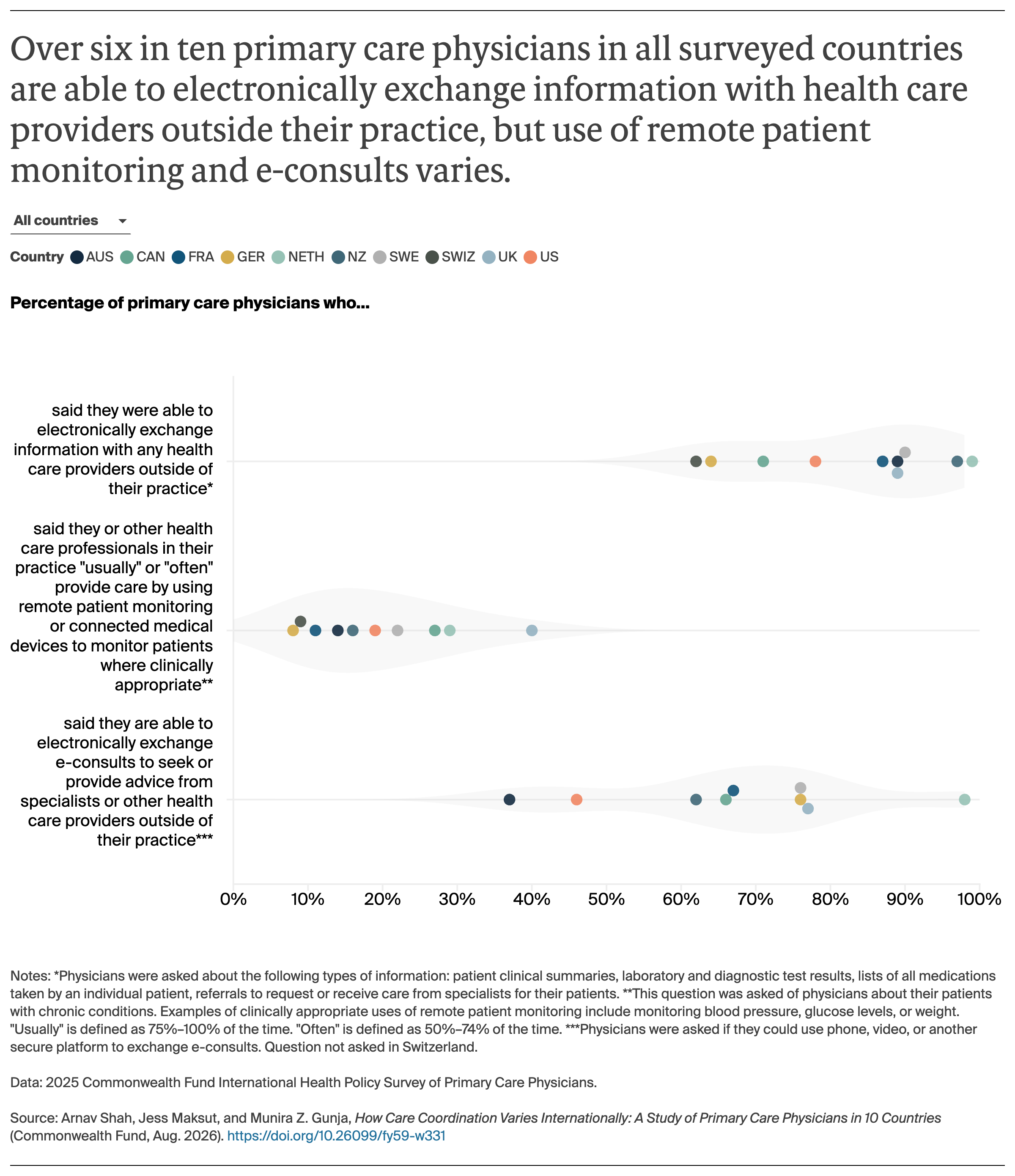
Most surveyed physicians across all 10 countries reported that they were able to electronically coordinate with providers outside of their practice, including nearly all PCPs in the Netherlands and New Zealand and most in the U.S.

Electronic consultations, or e-consults, allow PCPs to get recommendations from specialists outside their practice without having to meet in person or speak on the phone. PCPs’ use of e-consults outside their practice varied across the surveyed countries. Nearly all PCPs in the Netherlands reported doing so, compared to less than half in the U.S. and Australia.

Remote patient monitoring (RPM) is used to automatically track patient health data, such as blood pressure, glucose levels, and weight, in real time. This digital technology allows clinicians to adjust or initiate care without the need for in-person visits — making RPM especially valuable for patients with disabilities or chronic conditions or patients living in rural or remote areas, who often have difficulty making frequent office visits.

By providing the kind of real-time health data needed to develop coordinated care plans, RPM — together with other health information technologies that enhance provider communication — can help ensure that all of a patient’s providers are on the same page. Around one in five physicians in the U.S. report that either they or another provider in their practice “usually” or “often” use RPM for patients with chronic conditions.

AUTHOR_REVIEW_Shah_how_care_coordination_varies_internationally_Exhibit_05

Administratively burdensome, time-consuming challenges associated with care coordination contribute to the high rates of clinician burnout seen across countries.8 Around half of PCPs in Canada, New Zealand, and the U.K. and about one in four in the U.S. said the time spent coordinating referrals with specialists was a major problem for their practice.

When trying to coordinate care with social service providers, around four in 10 PCPs in the U.S. said that lack of information about providers in their community was a major challenge. Other challenges include lack of referral systems or mechanisms to make these referrals, inadequate staff for coordinating care with social service organizations, and lack of follow-up from such organizations about which services patients need or receive.

Conclusion

Each of the 10 countries we surveyed has room to improve their care coordination between primary care physicians and other health providers.

While most primary care physicians reported coordinating care frequently with specialists, many are not receiving updates in a timely way or getting notified about patients’ plans. Physicians found coordinating care with social services and home-based care to be even more challenging because of issues related to time, staffing, referral systems, and follow‑up. These problems increase the risk of poor care coordination, especially for people with greater or more complex medical and social needs. Without seamless coordination across settings, patients face delays in care, duplicative tests, and avoidable deterioration in their health.

While all 10 surveyed countries have issues with care coordination, PCPs in some countries are doing better than others. These countries offer two key lessons.

Payment reform can incentivize care coordination. Evidence suggests improving how primary care is reimbursed can expand access to coordinated care.9 In the Netherlands, for example, where most PCPs receive notifications on their patients’ care, payment reforms have helped strengthen cooperation between primary and community care services. These reforms include a move to bundled payment for management of chronic conditions, such as type 2 diabetes, which can help align provider incentives and reduce fragmentation in care delivery by creating shared provider accountability for patient outcomes.10

Similar payment models are being adopted in the United States. In 2025, over half of PCPs received revenues from value-based payment arrangements, which tie clinicians’ payments to their performance on cost, quality, and other outcomes.11 These models rely on successful care coordination.12 Accountable care organizations (ACOs) — groups of physicians, hospitals, and other providers that coordinate care for patients while being held accountable for quality and cost through financial and nonfinancial levers — represent one of the most widely adopted value-based care models in the U.S.13 According to a 2024 Commonwealth Fund survey, nearly 60 percent of federally qualified health centers participating in an ACO reported that patients with multiple physical, behavioral, or social needs receive complex care management services. This was a significantly larger percentage than in non-ACO health centers.14

Also worthy of greater support are payment models that incentivize the expansion of team-based primary care, which evidence shows can yield better-coordinated patient care.15

Technology can enhance care coordination. In many health systems, electronic communication and exchange of patient data are the backbone of care coordination.16 By connecting patients, primary care providers, and other care providers through shared technologies, instant communication and real-time data sharing can reduce administrative burdens, minimize potential medical errors, and ensure all parties involved in a patient’s care have the information needed to deliver continuous, coordinated, and personalized care.

Several of the countries we surveyed use technology to enhance care coordination activities. For example, New Zealand’s “smart hospitals” leverage digital technologies to improve communication between primary, community, and hospital care settings.17 In Sweden, nearly all health care facilities use electronic health records under the National Patient Overview system. This integration ensures the secure sharing of patient information between public and private providers and facilitates care coordination.18

While adoption of digital health technology in the U.S. has advanced considerably in recent years, certain barriers limit efforts to use it to improve care coordination. One is the inability to move patient data easily across different software applications, electronic health records, and health care networks. In recent years, federal policymakers have tried to improve this data interoperability through the 21st Century Cures Act.19 More recently, the Centers for Medicare and Medicaid Services (CMS) under the Trump administration announced efforts in 2025 to establish the CMS Interoperability Framework and CMS Aligned Networks, both of which are intended to facilitate more seamless sharing of health information among providers, payers, and patients.20 It remains to be seen if these efforts will achieve their goals, but continued efforts by CMS, the Office of the National Coordinator for Health Information Technology, and private technology firms to modernize data infrastructure and advance interoperability are needed to enhance care coordination.21

As a key pillar of high-quality primary care, improved care coordination remains an important area for expansion and reform for delivery system leaders and policymakers around the world.


HOW WE CONDUCTED THIS SURVEY

The 2025 Commonwealth Fund International Health Policy Survey of Primary Care Physicians was administered to nationally representative samples of practicing primary care doctors in Australia, Canada, France, Germany, the Netherlands, New Zealand, Sweden, Switzerland, the United Kingdom, and the United States. These samples were drawn at random from government or private lists of primary care doctors in each country except France, where they were selected from publicly available lists of primary care physicians. Within each country, experts defined the physician specialties responsible for primary care, recognizing that roles, training, and scopes of practice vary across countries. In all countries, general practitioners (GPs) and family physicians were included, with internists and pediatricians also sampled in Germany, Switzerland, and the United States.

The questionnaire was designed with input from country experts and pretested in most countries. Pretest respondents provided feedback about question interpretation via semistructured cognitive interviews. The Commonwealth Fund contracted with SSRS, a U.S.-based survey research firm, to support survey design and field the survey in the U.S. and five additional countries, as well as collaborate with fieldwork partners and oversee survey administration in the other four countries. SSRS worked with contractors in each country to survey doctors from March through September 2025; the field period ranged from nine to 25 weeks. Survey modes (mail, online, and telephone) were tailored based on each country’s best practices for reaching physicians and maximizing response rates. Sample sizes ranged from 318 to 2,157, and response rates ranged from 6 percent to 42 percent. Across all countries, response rates are generally similar to 2022. Final data were weighted to align with country benchmarks along key geographic and demographic dimensions.

ACKNOWLEDGMENTS

The authors thank Rob Manley, Robyn Rapoport, Molly Fisch-Freidman, and Phoebe Henninger of SSRS; and Aishu Balaji, Jen Wilson, Paul Frame, Sam Chase, Chris Hollander, Corinne Lewis, Celli Horstman, Sarah Klein, Tony Shih, Kristen Kolb, and Karina Polanco, all of the Commonwealth Fund.

Notes

Publication Details

Date

Contact

Arnav Shah, Researcher, Programs, The Commonwealth Fund

as@cmwf.org

Citation

Arnav Shah, Jess Maksut, and Munira Z. Gunja, How Care Coordination Varies Internationally: A Study of Primary Care Physicians in 10 Countries (Commonwealth Fund, Aug. 2026). https://doi.org/10.26099/fy59-w331