



Extreme weather events that threaten power outages are becoming more frequent, making reliable power a health equity issue. When the grid goes down, the consequences of a disrupted power supply are far-reaching. People who rely on medical devices that require electricity — like ventilators, oxygen concentrators, and sleep apnea machines — are particularly vulnerable.
The Aging Population and the 72-Hour Energy Window
People are increasingly aging in place and using home health care. In the United States, at least 2.9 million Medicare beneficiaries rely on electricity to power home medical equipment.
This shift has introduced a new vulnerability. While nursing homes and hospitals are often required to have back-up power supplies, many home-based patients may lack a safety net.
Many home medical devices have an internal battery, but the duration of backup power can vary and depends on when the device was last charged. Some portable oxygen concentrators, for instance, have internal batteries that can support a couple of hours of continued use if an outlet isn’t available. When a battery is depleted and the device is no longer operational, people are forced to travel to the nearest hospital or seek emergency ambulatory support to access reliable backup power. This surge can overwhelm a system already strained by medical emergencies common after severe weather events. At scale, it has the potential to outpace resources and become a mass casualty event.
But before states can design and fund solutions, they must first measure the vulnerable population and risk. Public health departments can share data on the types of medical devices in each county or zip code and track trends. Officials can use these data to ensure preparedness plans can meet community needs during power outages.
One tool public health departments use to share data is the U.S. Department of Health and Human Services emPOWER Program. Developed by the Office of the Assistant Secretary for Preparedness and Response, along with the Centers for Medicare and Medicaid Services (CMS), it provides state and local health departments and their partners with dynamic data and mapping tools to better anticipate and respond to the potential needs of at-risk people before, during, and after disasters. This dataset draws from CMS claims and includes only durable medical equipment, oxygen tank services, outpatient dialysis, home health care services, and at-home hospice. It does not include people with private insurance, so it provides an estimate but not the complete picture.
How Solar and Battery Storage Can Improve Public Health Outcomes After an Emergency
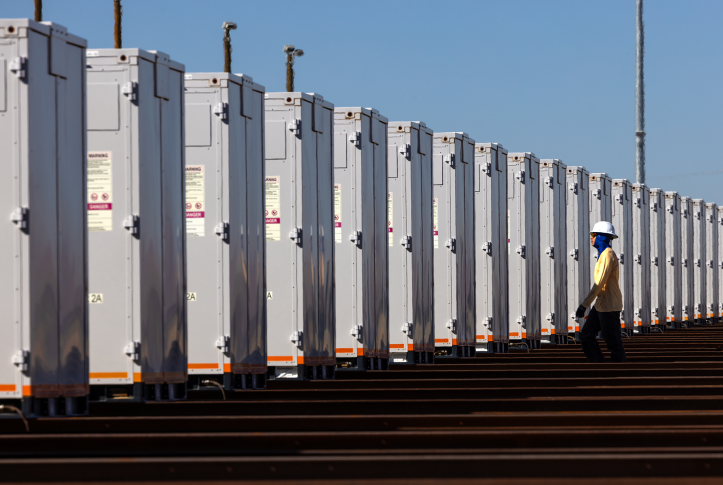
Solar and battery storage are increasingly being used in emergency responses, disaster preparedness, and public health efforts to improve community resilience — that is, a community’s ability to recover from a natural disaster or other adversity. Solar and battery storage systems offer a solution that can be adapted and implemented to meet local needs.
Stationary solar and battery storage systems are permanently installed in a fixed location and can be designed to meet the needs of medically vulnerable people. For example, the California Public Utility Commission’s Self-Generation Incentive Program provides incentives in the form of a financial rebate for people to install solar power and battery storage in their homes. Substantial rebates are offered for people who meet income requirements or have an electricity-dependent medical need and live in a high wildfire threat zone.
These systems can also be located where medically vulnerable people are likely to seek care, improving the resilience of the larger health care system. During Hurricane Ida in 2021, the diesel generator backup power system failed at the CrescentCare health care center serving southeastern Louisiana. Not designated as a first responder and unable to get access to fuel, the clinic temporarily closed and redirected patients to another location. After this occurrence, CrescentCare overhauled its backup generator system and installed a solar and battery storage system that can power the facility’s energy needs. This system is paired with a natural gas generator for redundancy. The project was supported through the Community Lighthouse effort, a community-based solar and battery storage initiative working to ensure people in New Orleans are all within a 15-minute walk (or within a 30-minute drive for those in rural communities) of a community building with reliable backup power.
Mobile solar and battery storage systems offer flexibility; first responders can use them in the field during emergencies. A mobile solar and storage trailer can power an entire building. After the need is met, the trailer can charge while driving to another location. In Puerto Rico, a mobile solar power trailer has been used over the past five years to help provide access to clean drinking water in rural areas. It charges at the emergency management office and is deployed to power water pumps. A trailer could be similarly deployed to supply power for people relying on electricity-dependent medical devices or to health care facilities.
Challenges, the Role of Public Health, and Opportunity
Solar and battery storage solutions — especially those that address health needs — are promising but complex projects that require collaboration and coordination across multiple agencies. Identifying resources and funding, determining responsibilities, and establishing priorities can make implementation challenging.
Protecting people who rely on medical devices is a critical yet overlooked part of community resilience. With substantial improvements in the available data and technology over the past several years, public health, emergency response, energy utilities, and community-based organizations can work together to implement reliable and renewable backup systems and strategies that meet growing needs.
The STAT Network extends gratitude to Marriele Mango and Clean Energy Group’s leadership in energy storage, and for their willingness to partner on this work. We also thank the many state public health and energy resilience workers who participated in small-group discussions during spring 2026, which contributed to the development of this blog post. The STAT Network is a nonpartisan, practice-focused strategic partner for state public health departments, facilitating deep dive discussions and surfacing replicable and scalable solutions. This work was funded by the Commonwealth Fund’s Climate Change and Health Care initiative.


