Discussion
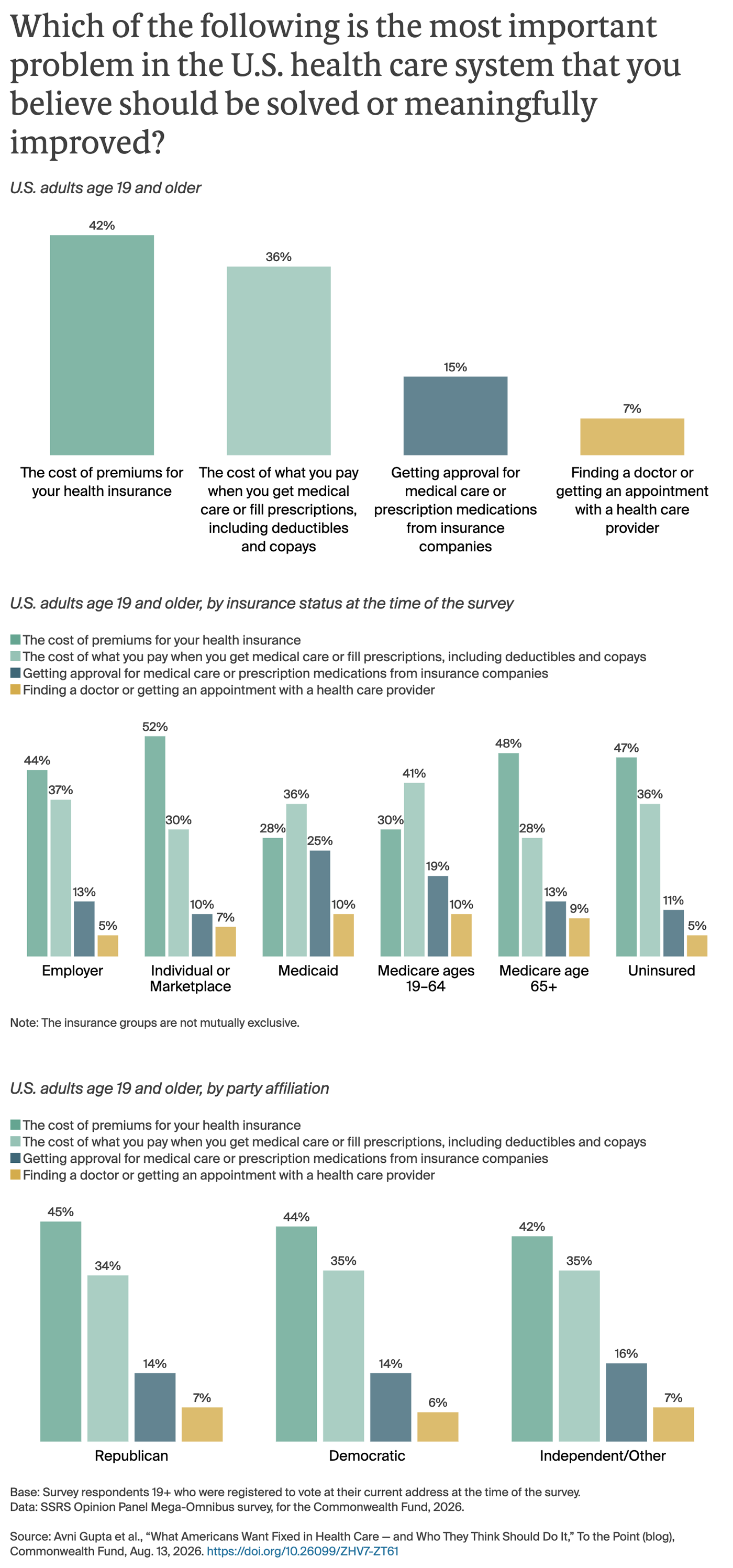
Americans across the political spectrum are united in their struggle to afford the cost of health insurance and health care. Medical cost trends projected for 2027 are the highest in nearly two decades and employers are responding by shifting more costs onto workers — through higher cost sharing, tighter utilization management, reduced benefits like prescription drugs, and narrower provider networks. At the same time, policy changes enacted by the Trump administration and Republicans in Congress have helped drive up premiums in the Affordable Care Act marketplace by more than 20 percent in 2026. As a result of these changes, health insurance enrollment is down and insurers are requesting a double-digit increase in premiums, likely because they suspect healthier people are leaving the marketplace, leaving sicker and costlier enrollees. These trends will continue to make health care even more unaffordable for Americans.
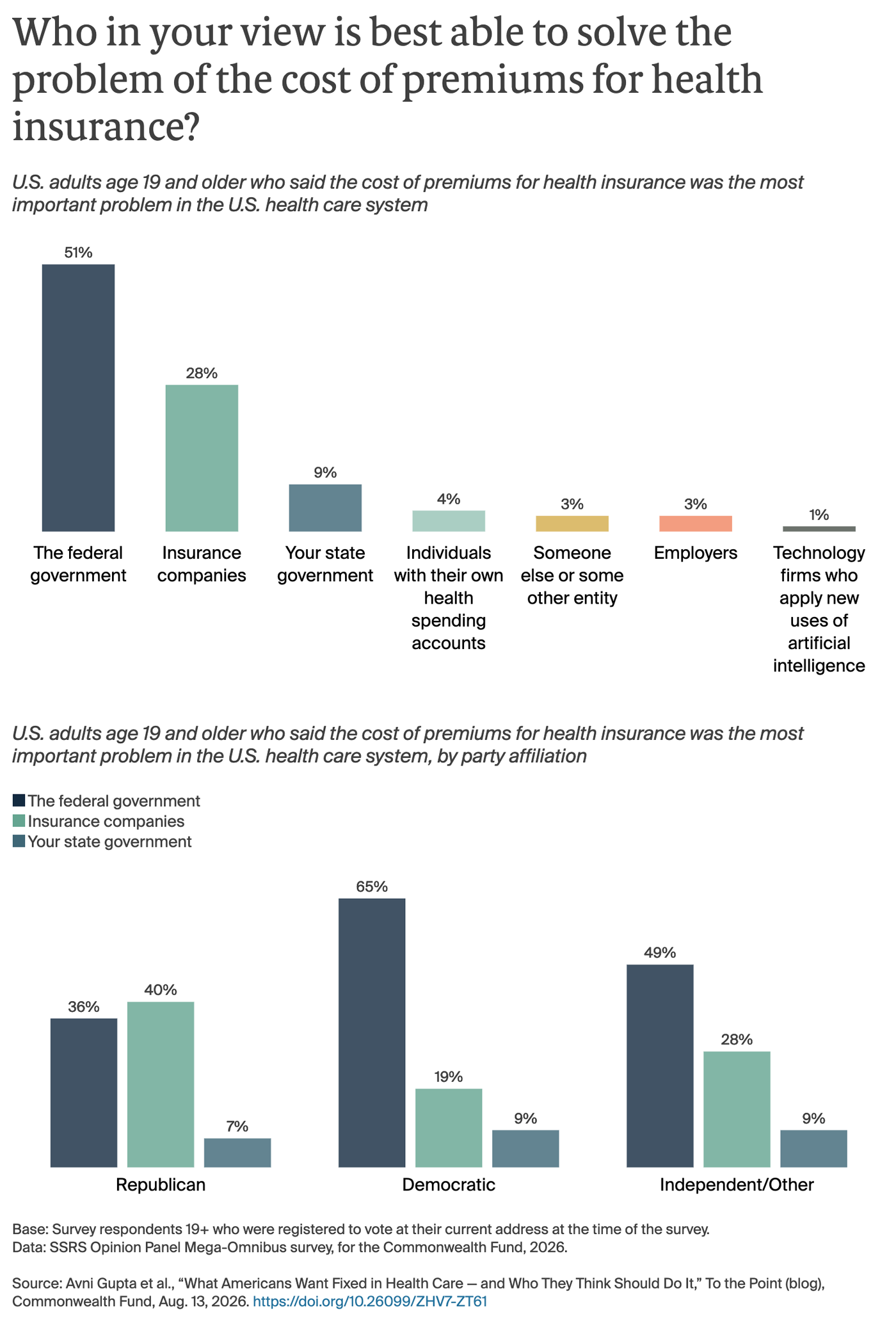
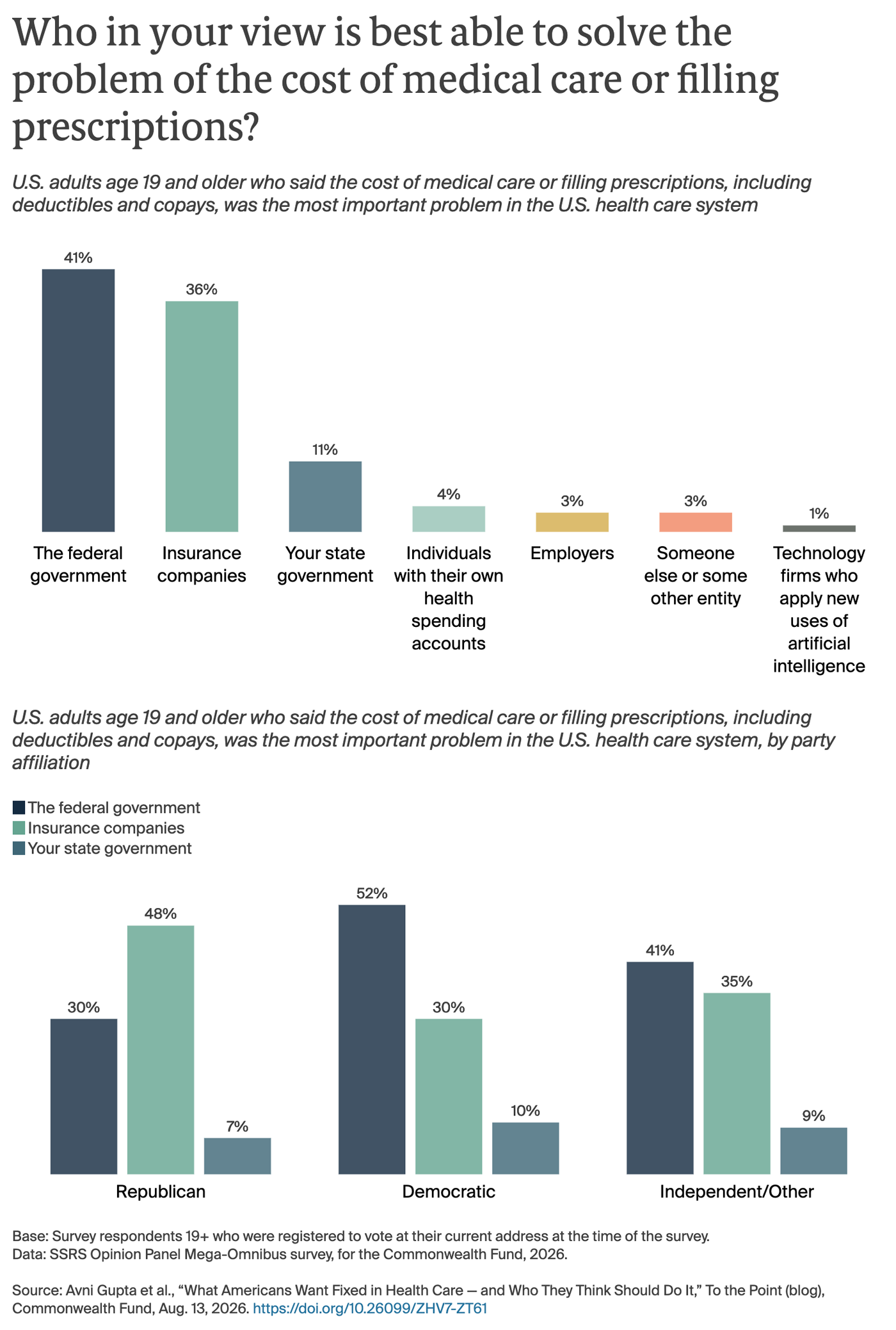
Many look to the federal government to solve this affordability crisis, but the current administration’s policies are doing the opposite. The expiration of enhanced premium tax credits, burdensome marketplace eligibility and enrollment rules, and plans with higher out-of-pocket costs are driving down enrollment in the marketplaces. As a result, millions more Americans are projected to become uninsured or underinsured and will struggle to afford timely care. The federal government could instead respond to Americans’ concerns by permanently extending the enhanced marketplace subsidies that expired in 2026, increasing marketplace cost-sharing subsidies, limiting or eliminating deductibles in private plans, removing barriers to eligibility and enrollment in the marketplaces and Medicaid, and meaningfully addressing the root drivers of health care costs, such as provider prices, rather than shifting more and more costs onto patients and their families.
How We Conducted This Survey
The Commonwealth Fund conducted a national, probability-based survey with the SSRS Opinion Panel Mega-Omnibus from May 4 through May 26, 2026, among a sample of 25,873 respondents age 18 and older in the United States. This blog post focuses on 25,858 respondents age 19 and older.
The survey was conducted in English (n=25,422) and Spanish (n=451) via telephone (n=998) and web (24,875) modes. This survey was conducted via the SSRS Opinion Panel, which recruits panelists using probability-based sampling frames, including address-based and prepaid cell phone sample.
Statistical results were weighted to compensate for sample designs and patterns of nonresponse that might bias results. The survey has an overall maximum margin of sampling error for total respondents of +/– 0.8 percentage points at the 95 percent confidence level. The survey completion rate was 55.1 percent.
The authors thank Rob Manley, Elizabeth Sciupac, and Robyn Rapoport of SSRS and Deborah Lorber, Jen Wilson, and Paul Frame of the Commonwealth Fund.