
Advanced Search

Advanced Search

Current Filters

Filter your query

Publication Types

Other

to

Issue Briefs

/

The State of Rural Primary Care in the United States

Patients register for care at a Remote Area Medical (RAM) mobile dental and medical clinic at Terre Haute South High School on August 02, 2025 in Terre Haute, Indiana. Photo: Spencer Platt via Getty Images

Patients register for care at a Remote Area Medical (RAM) mobile dental and medical clinic at Terre Haute South High School on August 02, 2025 in Terre Haute, Indiana. Photo: Spencer Platt via Getty Images

Toplines
  • Rural communities face persistent primary care workforce shortages, leaving millions with fewer options for routine and preventive care

  • More than 40 million rural Americans live in areas with too few primary care providers

Toplines
  • Rural communities face persistent primary care workforce shortages, leaving millions with fewer options for routine and preventive care

  • More than 40 million rural Americans live in areas with too few primary care providers

Introduction

Primary care is facing existential challenges — from lower relative investment compared to specialty care to clinician burnout — which are particularly acute in rural communities.1 For the more than 60 million people, or one in five Americans, who live in rural areas, strengthening primary care requires rural-specific solutions.2

Rural clinician shortages, limited broadband internet, and a lack of public transportation in rural areas make it difficult for patients to get health care, either in person or virtually.3 These access challenges are associated with poor health outcomes, low uptake of preventive services, and overreliance on costly emergency department visits for nonurgent health needs.4

Nearly half of rural residents are uninsured or insured by public payers.5 This limited payer mix, coupled with relatively low reimbursement rates and high provision of uncompensated care compared to nonrural areas, poses challenges to the financial stability of rural primary care.6

Despite these challenges, rural communities have developed innovative, place-based solutions to their health care access problems, such as mobile health units, Rural Health Clinics, and other community-directed health programs that help meet local needs.

State and congressional policymakers are also investing in rural health. For example, H.R. 1, the recently passed tax and spending law, includes the Rural Health Transformation Program, which allocates $50 billion for states over the next five years to strengthen care delivery.7 National and local strategies to improve primary care access and quality will be key to ensuring better health outcomes for rural residents.

Drawing from the Commonwealth Fund 2023 International Health Policy Survey and federal health workforce data, we describe the current state of U.S. primary care across rural America, focusing on the workforce, access to care, and care delivery. We also highlight innovative rural primary care delivery models and regional differences where data are available (see “How We Conducted This Study” for more detail).
Highlights

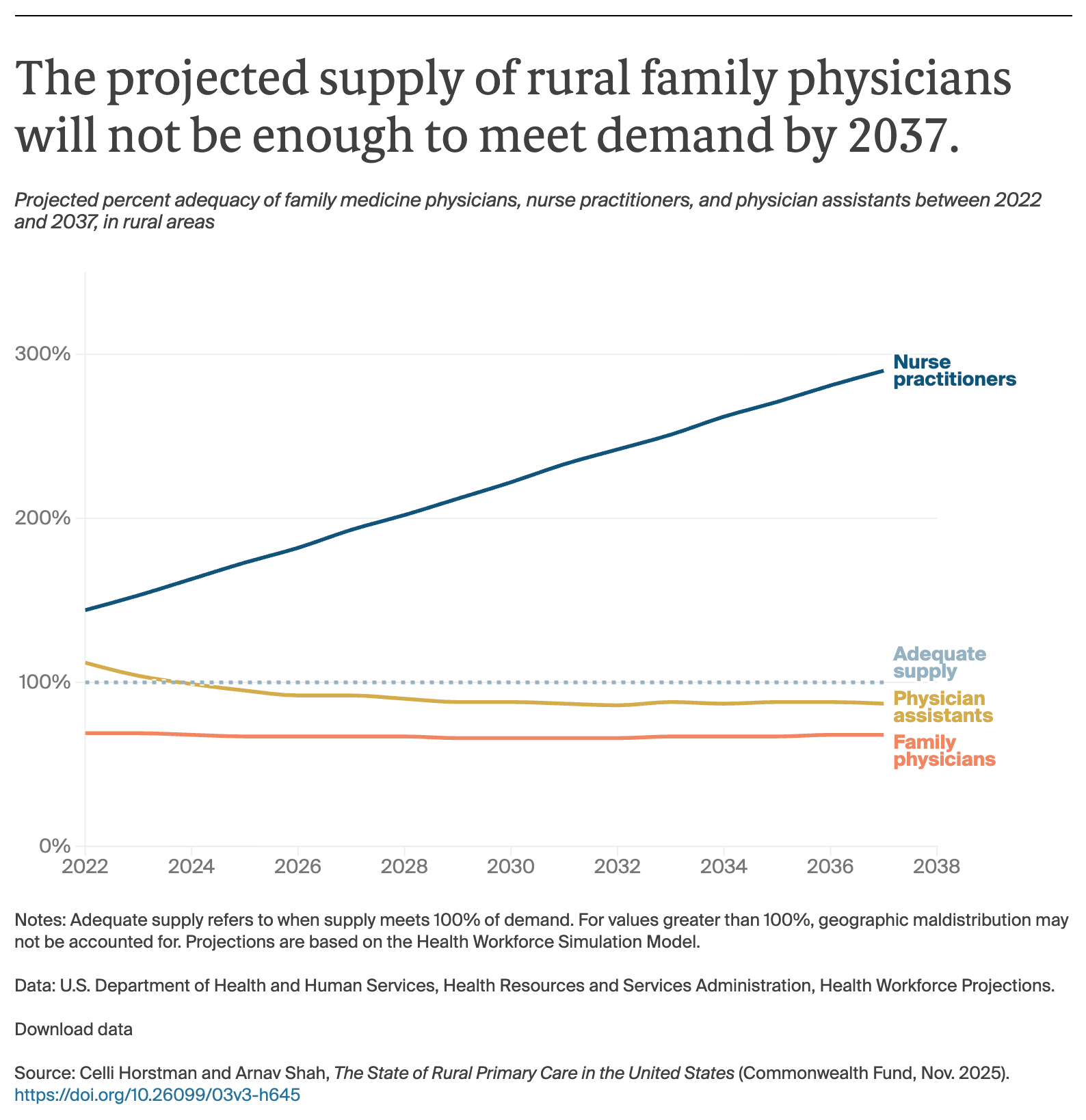
  • The supply of primary care physicians in rural areas isn’t enough to meet demand: by 2037, the current supply of physicians is expected to meet only 68 percent of demand.
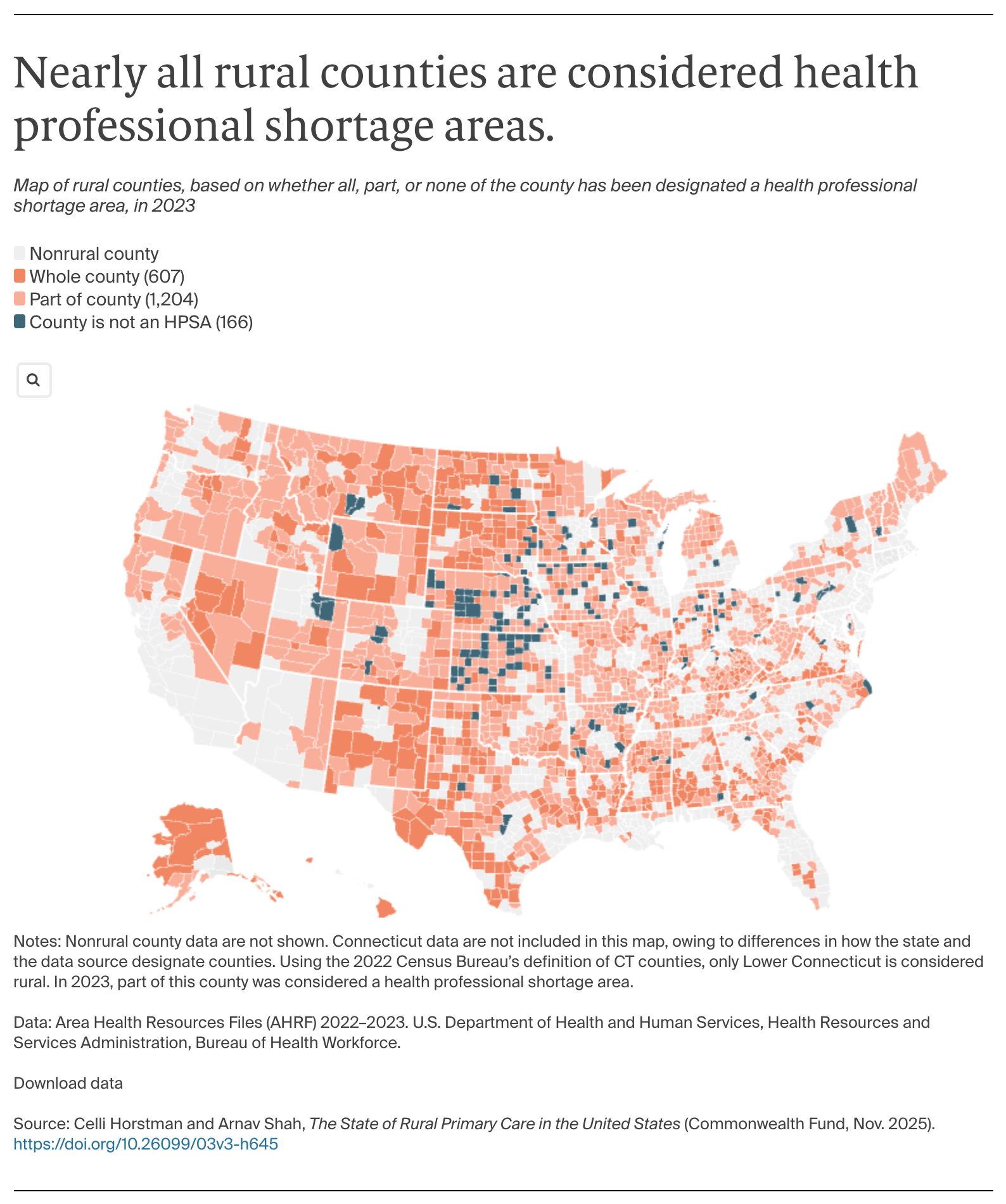
  • Forty-three million people live in rural areas with primary care health professional shortages.
  • Over a third (38%) of rural adults used the emergency room for care that could have been provided at a primary care practice.
  • Around one in five (19%) rural adults received primary care via telehealth, substantially lower than the national average (29%).

Study Findings

The Rural Primary Care Workforce

AUTHOR_REVIEW_Horstman_rural_primary_care_in_US_Exhibit_01

The Health Resources and Services Administration (HRSA) projects that by 2037, only 68 percent of demand for rural primary care physicians will be met, compared to 73 percent nationally (data not shown).

To help fill physician shortages, practices may engage advanced care practitioners such as nurse practitioners and physician assistants. While these clinicians cannot fully replace the role of physicians in primary care delivery, they can expand the capacity of primary care practices and mitigate the impacts of shortages. HRSA projects that the supply of nurse practitioners in rural areas will continue to exceed demand over time, partly because nurse practitioners are the fastest-growing type of clinician in our health system, regardless of geography.8 Additionally, while the supply of physician assistants relative to demand will likely decrease, it will do so more slowly than for physicians. While not included in this map, community health workers could also fill gaps in rural communities (see “Kentucky Homeplace: Augmenting the Workforce with Community Health Workers” to learn more).

While advanced care practitioners play a growing role in primary care, concerns about workforce availability remain. Across the health system, fewer trainees are opting to practice primary care, and even fewer are choosing to work in rural areas.9 It’s possible these trends may not play out as projected.

The Rural Health Transformation Program

The 2025 tax and spending law known as H.R. 1 includes a $50 billion allocation to be distributed across states by 2030. This Rural Health Transformation Program (RHTP) will be overseen by the Centers for Medicare and Medicaid Services (CMS).10 One half of the funds will be equally distributed across all states, while the other half will be distributed based on state-specific applications. CMS has outlined several strategic goals to be addressed with the funds: chronic disease management, workforce development, digital innovations, and delivery system reforms.

The RHTP could spur place-based innovations aligned with the Trump administration’s health care priorities, ensuring rural solutions effectively meet community needs. Experts have estimated, however, that other health care changes included in the law will lead to financial losses that won’t be entirely offset by the RHTP — specifically, a reduction in hospital and health system revenue nationally of up to $87 billion over 10 years, with substantial variation by state.11

Horstman_rural_primary_care_in_US_Exhibit_02

In 2023, 92 percent of rural counties were designated primary care health professional shortage areas (HPSAs), compared to 83 percent of nonrural counties (data not shown). HPSAs are geographic areas that the federal government determines have inadequate health care resources relative to community needs. We estimate that 42.6 million people lived in a rural primary care HPSA in 2023, compared to 260 million people in nonrural primary care HPSAs (data not shown in map).

There is substantial regional variation in health professional availability. Ninety-seven percent of rural counties in the South and West are either partially or wholly designated as primary care HPSAs, compared to 84 percent in the Midwest.

Additionally, 45 percent of rural counties had five or fewer primary care physicians, including 199 rural counties without any. On average, there was one rural physician per 2,881 residents. This ratio similarly varied by region, with a higher average proportion of patients to physicians in the South (3,411:1) than the Northeast (1,979:1) (data not shown).

Kentucky Homeplace: Augmenting the Workforce with Community Health Workers

Kentucky Homeplace aims to address the predominantly rural state’s primary care physician shortage by leveraging community health workers (CHWs) — a place-based solution to community-specific issues.12 CHWs are members of the local community who create a bridge between residents and the health care, public health, and social service systems. They also provide health education to, for example, help patients better adhere to their chronic condition management plans.

Between 2001 and 2024, Kentucky Homeplace served over 196,000 patients and provided over 5 million services. For every $1 invested in the program, it saved $11.13 The program also reduced hospital readmissions and nonemergency ER visits.

Horstman_rural_primary_care_in_US_Exhibit_03

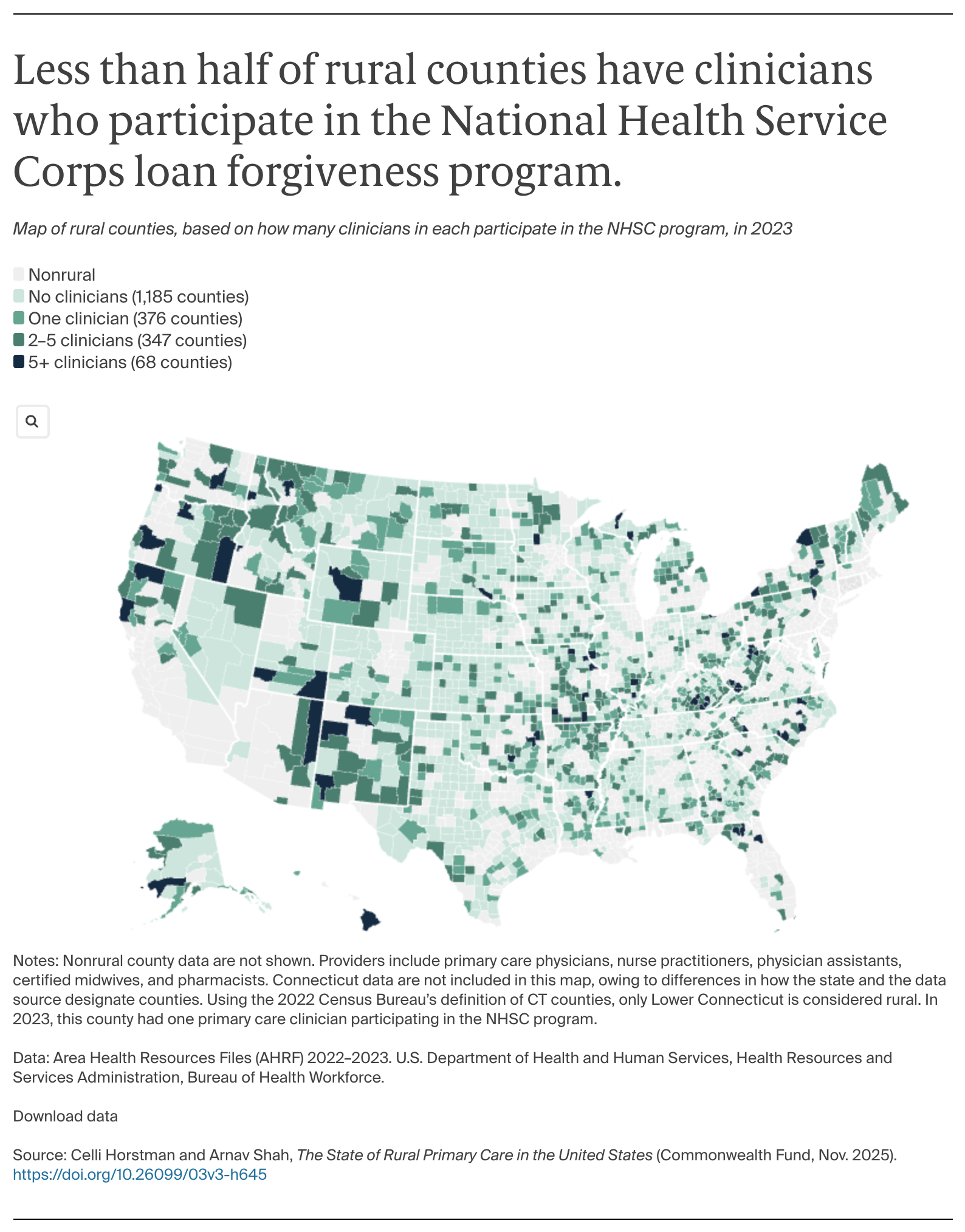
Clinicians who work in rural areas often remain in those places, making place-based training or incentive programs an effective way to address shortages.14 The National Health Service Corp (NHSC) is one such program. This federal initiative provides loan repayment and scholarships to clinicians working in HPSAs.

Forty percent of rural counties had at least one NHSC primary care clinician in 2023, compared to 60 percent of nonrural counties (data not shown), an indication the program could be expanded further in rural communities.

The NHSC program has been effective at retaining clinicians in underserved areas, including rural communities, with 84 percent of participants staying in an underserved area for at least one year after their service year ended.15

Physician Shortage Area Program: Expanding Rural Access in the Mid-Atlantic

The Sidney Kimmel Medical College within Thomas Jefferson University in Pennsylvania developed the Physician Shortage Area Program to increase the supply of primary care physicians in rural areas, where most of the state’s population lives.16 The program selectively admits medical school applicants from rural areas who are committed to practicing rural primary care in the future, providing mentorship, financial aid, and rural rotations.

This place-based program has trained more than 300 physicians since 1974, accounting for 21 percent of all rural physicians in Pennsylvania.17 Evaluations of the program have found that 70 percent of participants stay in rural areas for 20 to 25 years, and 10 percent have moved to other rural areas.18

Horstman_rural_primary_care_in_US_Exhibit_04

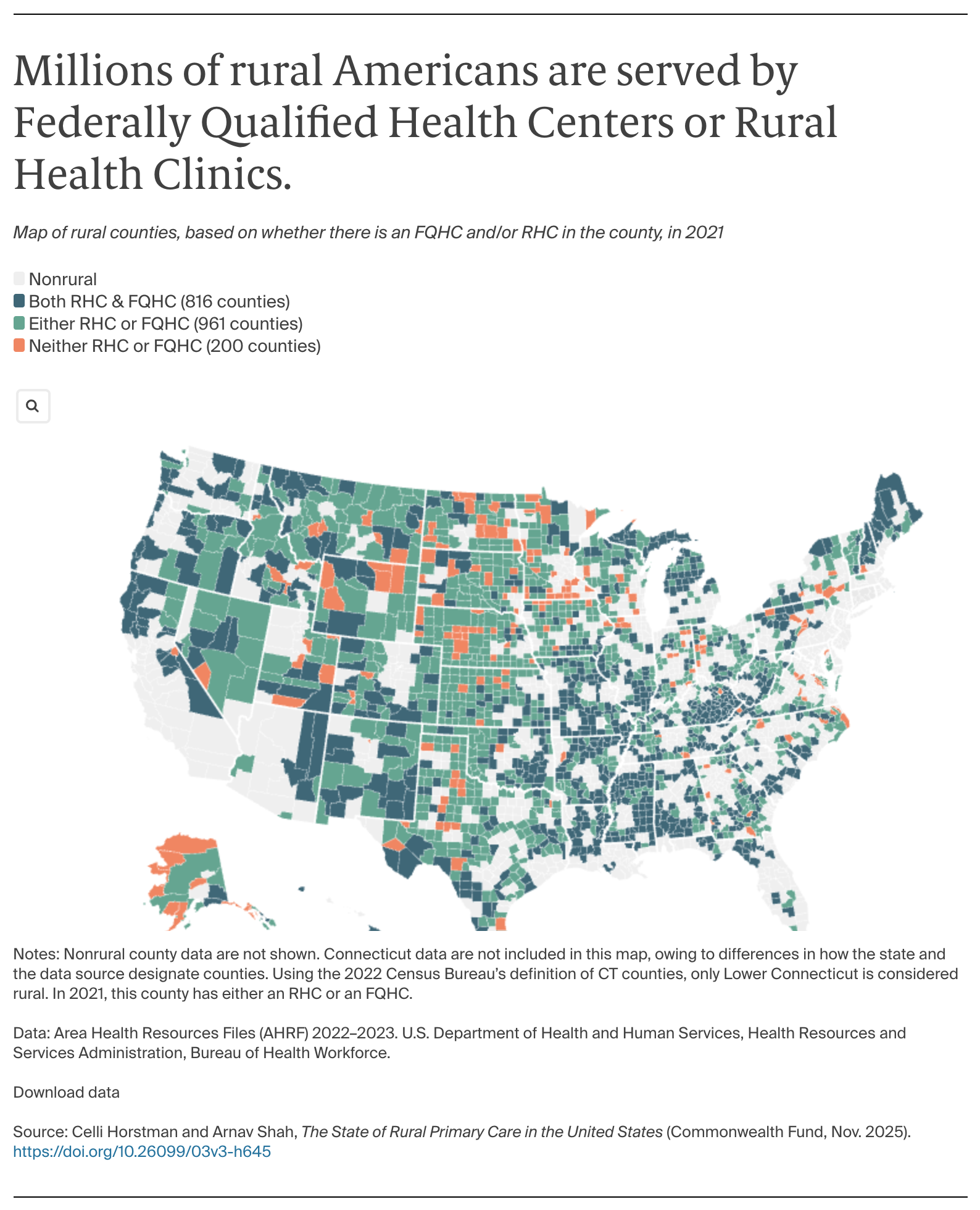
Rural residents are accessing primary care through clinics designed for their communities, such as a Rural Health Clinic (RHC) or a Federally Qualified Health Center (FQHC). In 2021, 90 percent of rural counties, with a total population of 42 million people, had one or the other providing primary care services (data not shown).

RHCs, located in rural areas with health professional shortages, are eligible for enhanced reimbursement rates from CMS. FQHCs, overseen by HRSA, are community-based outpatient clinics funded through federal grants and reimbursements that provide services to patients regardless of their ability to pay.

The Rural Patient Experience

AUTHOR_REVIEW_Horstman_rural_primary_care_in_US_Table_01

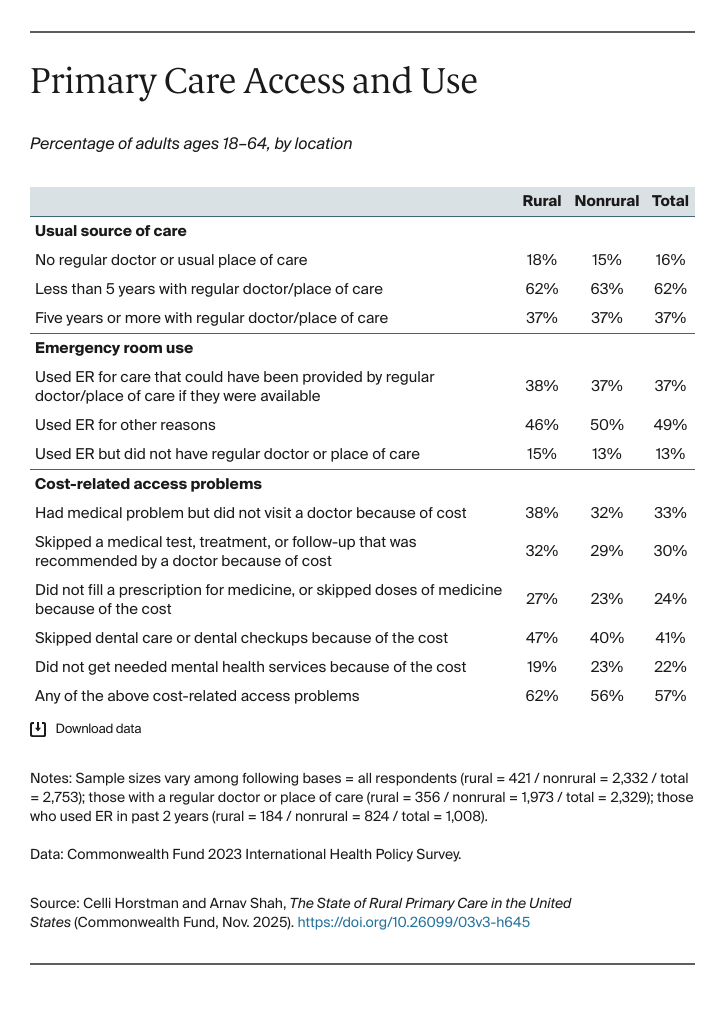
Having a usual place to get primary care makes it easier for people to receive preventive care, detect diseases and receive treatment in a timely manner, and manage chronic conditions. Patients with a usual place of care are also more likely to receive recommended immunizations and health screenings.19

Despite most adults reporting they have a usual place of care, access issues remain. About one in four adults in rural areas reported going to the emergency room in the past two years for something that could have been handled by their usual doctor if they had been available. A similar share of rural adults reported not going to the doctor when needed because of the cost, which can contribute to higher rates of chronic disease, suicide, and poor maternal health in rural areas.20

Even if people know where to get primary care, it must be easily accessible and affordable to be effective. We’ve found that in rural communities, clinician and appointment availability, as well as costs of care, are a challenge.

AUTHOR_REVIEW_Horstman_rural_primary_care_in_US_Table_02

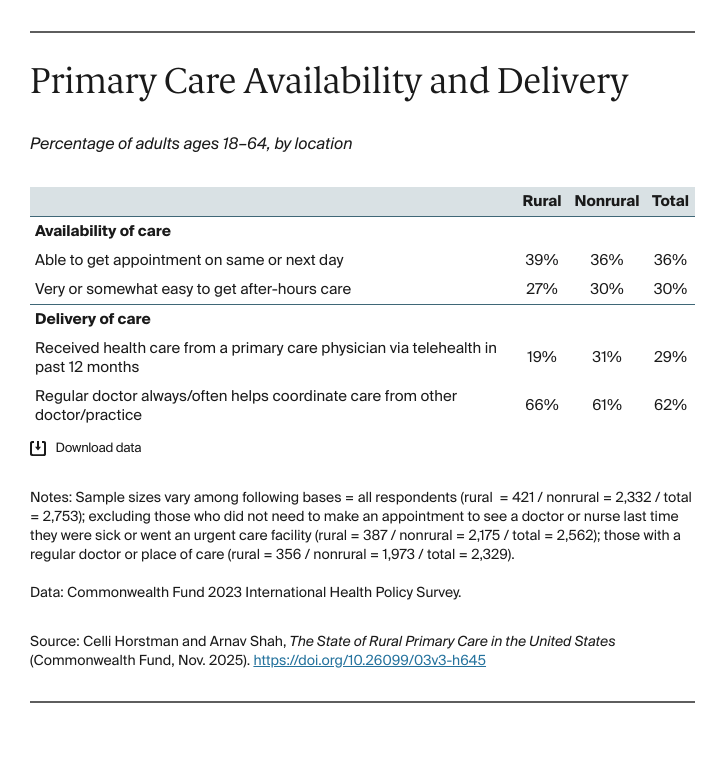
Only four in 10 working-age rural adults can get same-day or next-day primary care appointments, and about one in three said they could easily get after-hours care — both of which are necessary for minimizing unnecessary emergency room utilization. Timely access is compromised when there are fewer clinicians available per patient.

While use of telehealth for primary care services has decreased since peaking during the COVID-19 pandemic, technology still offers a solution to some traditional access problems, particularly in rural areas where people often have to travel longer distances to see their doctor.21 However, only two in 10 working-age rural adults reported receiving primary care via telehealth in the past 12 months, compared to three in 10 nonrural residents (a statistically significant difference).

Obstacles to widespread use of telehealth services in rural areas include limited access to high-speed internet and inadequate reimbursement for such services.22 Clinician have also raised that telehealth licensing can be burdensome and time-prohibitive.23 Without addressing these challenges, it will be difficult for rural clinicians to sustain telehealth delivery.

Discussion

Rural Americans face significant barriers to accessing adequate primary care services, from workforce shortages to the expenses of care. However, we found that federal and state programs tailored to rural America — such as Rural Health Clinics, the Rural Health Transformation Program, and clinician training and loan payment programs — can help address some of these challenges. In addition to programs already underway, policymakers and delivery system leaders can take additional steps to strengthen rural primary care.

Design rural-specific financing options. Our health care payment models are designed for higher-volume service areas and don’t account for the realities of rural care delivery, including lower case volume, lack of specialists, and greater operating costs.24 Clinicians have also noted that lack of telehealth payment parity is a challenge, regardless of geography, and implementation costs can be high in rural areas.25

Payment reform such as enhanced reimbursements, bonus payments, upfront infrastructure investments, and payments tied to operational costs could play a role in mitigating the lack of funding in rural care delivery. Evidence shows that rural-specific payment models, like the Pennsylvania Rural Health Model, which provides consistent payments untied to patient volume, has the potential to provide greater financial stability and better patient outcomes.26

Grow the pipeline of health care clinicians. Living or training in a rural area make it more likely that clinicians will practice in a rural area.27 Delivery system and policy leaders can grow the rural workforce pipeline by targeting local recruitment of health care workers, incorporating rural rotations into medical school training, increasing opportunities for rural residencies and experiential learning, and incentivizing practicing in rural areas through loan repayment programs.

Strengthen rural technology infrastructure. Technology can play a major role in increasing access to health care for rural residents, but as our survey data show, telehealth is not widely used, likely owing to limited internet access via broadband or satellite. Policymakers can invest in broadband infrastructure. They also can promote payment parity and training for telehealth and other digital innovations, such as through regional resource centers, to ensure clinicians have the capacity and financial means to deliver telehealth care.28

HOW WE CONDUCTED THIS STUDY

Commonwealth Fund 2023 International Health Policy Survey

This analysis uses United States data that were collected from nationally representative samples of noninstitutionalized adults age 18 and older and was conducted between March and August 2023. The survey was conducted by SSRS in Australia, Canada, France, Germany, the Netherlands, New Zealand, Sweden, Switzerland, the United Kingdom, and the United States. In the U.S., three probability-based sample frames were used.

Most of the interviews were conducted from address-based sample (ABS). Additional interviews were completed via a nationally representative probabilistic panel and from a sample of cell phone numbers connected to prepaid cell phones to reach populations who are typically underrepresented in ABS samples, including low-income and non-white adults. Respondents in the U.S. completed surveys via mobile phones as well as online. Data were weighted using country-specific demographic variables to account for differences in sample design and probability of selection. The final U.S. sample was 3,594.

This analysis is limited to respondents whose address is located in rural areas, as defined by the Federal Office of Rural Health Policy.29

Federal Data Sources

Additional data were collected from the Health and Resource Services Administration (HRSA) prior to April 2025.

Primary Care Workforce Projections: Workforce projections are based on the Health Workforce Simulation Model. This model is an integrated microsimulation model that estimates supply and demand, current and future, for health care workers. The model incorporates population changes, workforce trends, and access to care.30

Our analysis is limited to rural, or nonmetro, primary care clinicians, including family medicine physicians, nurse practitioners, and physician assistants. We define “rural” according to the Office of Management and Budget’s designation.

Area Health Resources Files: This dataset provides current and historic data for all U.S. counties and includes information about health facilities, health professions, measures of resource scarcity, health status, economic activity, health training programs, and socioeconomic and environmental characteristics. The data are obtained from more than 60 sources, including data from HRSA, the Bureau of Health Workforce, the National Center for Health Workforce Analysis, and more. You can learn more about the data here. Our analysis is limited to rural, or nonmetro, counties. The data source defines rural using the 2013 Rural–Urban Continuum Codes.31

ACKNOWLEDGMENTS

The authors thank Kevin Bennett, Corinne Lewis, and Tony Shih for providing their expert input. We also thank Jen Wilson for her assistance in developing the county-level maps.

NOTES
  1. Corinne Lewis et al., “How Congress Can Strengthen Primary Care Through Medicare Payment Reform,” To the Point (blog), Commonwealth Fund, Mar. 27, 2023; and Munira Z. Gunja et al., Stressed Out and Burned Out: The Global Primary Care Crisis — Findings from the 2022 International Health Policy Survey of Primary Care Physicians (Commonwealth Fund, Nov. 2022).
  2. America Counts staff, “One in Five Americans Live in Rural Areas,” U.S. Census Bureau, Aug. 9, 2017.
  3. Evan D. Gumas et al., Finger on the Pulse: The State of Primary Care in the U.S. and Nine Other Countries (Commonwealth Fund, Mar. 2024); and Tracey Farrigan et al., Rural America at a Glance: 2024 Edition (Economic Research Service, U.S. Department of Agriculture, Nov. 2024).
  4. Rural Health Information Hub, “Rural Health Disparities — How Does Rural Health Status Compare to Urban?,” last updated Nov. 28, 2022; National Center for Health Statistics, “Interactive Summary Health Statistics for Adults,” Centers for Disease Control and Prevention, n.d.; and Erika Ziller et al., Non-Urgent Use of Emergency Departments by Rural and Urban Adults (University of Southern Maine, Apr. 2024).
  5. National Center for Health Statistics, “Interactive Summary Health Statistics for Adults,” Centers for Disease Control and Prevention, n.d.; and American Hospital Association, Rural Report: Challenges Facing Rural Communities and the Roadmap to Ensure Local Access to High-Quality, Affordable Care (AHA, Feb. 2019).
  6. Medicaid and CHIP Payment and Access Commission, Medicaid and Rural Health (MACPAC, Apr. 2021).
  7. Zachary Levinson and Tricia Neuman, “A Closer Look at the $50 Billion Rural Health Fund in the New Reconciliation Law,” KFF, Aug. 4, 2025.
  8. Bureau of Labor Statistics, “Occupational Outlook Handbook — Fastest-Growing Occupations,” U.S. Department of Labor, last updated Aug. 28, 2025.
  9. Yalda Jabbarpour et al., The Health of U.S. Primary Care: 2024 Scorecard Report — No One Can See You Now (Milbank Memorial Fund, Feb. 2024); and Scott A. Shipman et al., “The Decline in Rural Medical Students: A Growing Gap in Geographic Diversity Threatens the Rural Physician Workforce,” Health Affairs 38, no. 12 (Dec. 2019): 2011–18.
  10. Centers for Medicare and Medicaid Services, “Rural Health Transformation (RHT) Program,” last updated Sept. 26, 2025.
  11. Fredric Blavin, Michael Simpson, and Laura Skopec, “Rural Hospital Revenue Could Drop by $87 Billion over 10 Years Because of the Reconciliation Bill and Expiring Enhanced Tax Credits,” Urban Wire (blog), Urban Institute, June 30, 2025; and Manatt Health and National Rural Health Association, Estimated Impact on Medicaid Enrollment and Hospital Expenditures in Rural Communities (Manatt and NRHA, June 2025).
  12. Center of Excellence in Rural Health, “Kentucky Homeplace,” University of Kentucky College of Medicine, n.d.
  13. Rural Health Information Hub, “Kentucky Homeplace,” n.d.
  14. Emily M. Hawes et al., “Physician Training in Rural and Health Center Settings More Than Doubled, 2008–24,” Health Affairs 44, no. 5 (May 2025): 572–79; and Health Resources and Services Administration, National Health Service Corps Report to Congress for the Year 2022 (U.S. Department of Health and Human Services, 2022).
  15. Health Resources and Services Administration, National Health Service Corps Report to Congress for the Year 2022 (U.S. Department of Health and Human Services, 2022).
  16. Thomas Jefferson University, “Physician Shortage Area Program,” n.d.
  17. Thomas Jefferson University, “Physician Shortage Area Program,” n.d.
  18. Howard K. Rabinowitz et al., “Lessons Learned as Thomas Jefferson University’s Rural Physician Shortage Area Program (PSAP) Approaches the Half-Century Mark,” Academic Medicine 97, no. 9 (Sept. 2022): 1264–67.
  19. Office of Disease Prevention and Health Promotion, “Healthy People 2030 — Access to Primary Care,” U.S. Department of Health and Human Services, n.d.
  20. Macarena C. Garcia et al., “Reducing Potentially Excess Deaths from the Five Leading Causes of Death in the Rural United States,” Morbidity and Mortality Weekly Report 66, no. 2 (Jan. 13, 2017): 1–7; Centers for Disease Control and Prevention, “Rural Health — Suicide in Rural America,” May 16, 2024; and Rural Health Information Hub, “Rural Maternal Health,” last updated Aug. 6, 2025.
  21. FAIR Health, A Window into Primary Care: An Analysis of Private Healthcare Claims (FAIR Health, Mar. 15, 2023).
  22. Constance van Eeghen et al., Organizational Factors Associated with Using Telehealth Services: Perspectives from Leaders of Rural Health Clinics and Federally Qualified Health Centers (Rural Telehealth Research Center, June 2025).
  23. Rural Health Information Hub, “Licensing and Credentialing of Telehealth Programs,” last updated Mar. 12, 2025.
  24. U.S. Governmental Accountability Office, Medicare: Information on the Transition to Alternative Payment Models by Providers in Rural, Health Professional Shortage, or Underserved Areas (GAO, Nov. 2021).
  25. Lori Uscher-Pines et al., “Financial Impact of Telehealth: Rural Chief Financial Officer Perspectives,” American Journal of Managed Care 28, no. 12 (Dec. 1, 2022): e436–e443.
  26. Centers for Medicare and Medicaid Services, “Pennsylvania Rural Health Model,” n.d.
  27. Davis G. Patterson et al., “Growing a Rural Family Physician Workforce: The Contributions of Rural Background and Rural Place of Residency Training,” Health Services Research 59, no. 1 (Feb. 2024): e14168.
  28. Rural Policy Research Institute, Technology Innovation Supporting Access to Rural Health and Human Services: Possibilities and Encouraging Further Investments (RUPRI, Oct. 2024).
  29. Health Resources and Services Administration, “How We Define Rural,” last updated Sept. 2025.
  30. Health Resources and Services Administration, “Health Workforce Projections Dashboard,” n.d.
  31. Health Resources and Services Administration, “Definitions for the Area Health Resources Files Clinician Dashboard,” last updated May 2025.

Publication Details

Date

Contact

Celli Horstman, Senior Research Associate, Improving Care Delivery, The Commonwealth Fund

ceh@cmwf.org

Citation

Celli Horstman and Arnav Shah, The State of Rural Primary Care in the United States (Commonwealth Fund, Nov. 2025). https://doi.org/10.26099/03v3-h645