Advanced Search

Advanced Search

Current Filters

Filter your query

Publication Types

Other

to

Toplines
  • Nearly 15 percent of Florida hospital beds sit in high-hazard flood zones — one of many signs that health care systems nationwide are vulnerable to extreme weather and climate threats

  • The health care sector saves lives every day but also adds to the pollution that harms health, generating 8.5 percent of U.S. greenhouse gas emissions

Abstract

  • Issue: Environmental hazards and pollution, including extreme weather events that increasingly threaten health care infrastructure and operations, have a big impact on human health. As a significant source of greenhouse gas emissions, the health care sector itself also contributes to climate hazards. States have various policy levers to mitigate the effects of these hazards while also boosting the health care sector’s resilience.
  • Goals: To evaluate states on their vulnerability to, and contribution to, environmental factors affecting their populations and health care systems and to highlight opportunities for reducing patient and community impacts.
  • Methods: We analyzed publicly available data to rank states on eight indicators of health system environmental risk, preparedness for extreme weather events, and state and health system carbon emissions: air quality, extreme heat risk, natural hazard vulnerability, energy efficiency policies, electricity generation emissions, health sector emissions, flood risk, and health care facility employee commuting emissions.
  • Key Findings: Vermont, New York, and Washington are the top-ranked states overall. The lowest-ranked are West Virginia, Kentucky, and Louisiana. High-ranked states have lower environmental risk and vulnerability as well as stronger decarbonization and clean energy policies. Low-ranked states face more frequent and intense hazards and lack supportive energy and environmental policies. Southwestern states face the greatest health risks from extreme heat, while low-lying coastal states like Florida and Louisiana have more health infrastructure at risk of flooding. Both coastal and inland states are at high risk for natural hazards.
  • Conclusion: Improving the sustainability of our health care delivery systems requires comprehensive action to reduce emissions and bolster resilience to escalating environmental risks.

Introduction

For decades, the Commonwealth Fund has assessed the impact of state and federal policy on health and health care. This is the first scorecard to examine how policy decisions on the environment affect health and health care.

While the earth’s climate naturally fluctuates, scientific consensus identifies human activity as the primary driver of the rapid climate change observed today and over the past century.1 Uncontrollable factors are behind many of the greater climate and environmental risks that certain states face, but policies enacted by federal, state, and local governments have and will continue to influence how these risks impact people’s health and the health systems delivering care. Through the actions that health systems and government at the local, state, and federal levels take, we can better respond to environmental risk, build resilience, and limit the health care sector’s contribution to these risks.


Human health depends on a clean, healthy environment. But around the world, increasingly severe environmental risks threaten human health. Hazards like air and water pollution are responsible for approximately 19 percent of deaths globally, as well as a significant share of the disease burden societies face.2 As climate change exacerbates many of these hazards — through intensifying storms and flooding events, more frequent and widespread heat waves and wildfires, and the spread of viruses and other pathogens — death and disease are projected to increase.3 Among the most vulnerable and least capable of adapting to these threats are the elderly and the very young, people with disabilities, and low-income, vulnerable communities, including those where residents are disproportionately people of color.4

Extreme weather events are also disrupting health care supply chains, creating transportation challenges for patients and staff, overburdening emergency rooms and hospitals, and causing significant financial losses.5 Ultimately, these can all lead to worse patient outcomes.6 For example, Hurricane Helene in 2024 forced the closure of a North Carolina manufacturing plant that had supplied 60 percent of intravenous fluid nationwide, resulting in nationwide shortages and delayed care for thousands of patients.7 Overwhelming scientific evidence shows that climate change significantly intensifies such weather events, with human-induced warming increasing rainfall and wind speeds. Such storms are expected to become more frequent and severe as average global temperatures rise, according to World Weather Attribution analysis.8

The health care sector itself contributes to these environmental hazards. In the United States, the sector accounts for 8.5 percent of the nation’s total national greenhouse gas (GHG) emissions, which play a central role in climate change.9 These emissions come primarily from the production and transportation of goods and services — such as those related to pharmaceuticals and medical devices — but some are direct emissions from health care facilities.

The health care sector is dedicated to promoting patient health but also contributes significantly to climate change and environmental harm. Because of this interconnectedness, it is incumbent upon the sector to embrace sustainability measures and climate action in order to uphold its commitment to “do no harm.”

About the Scorecard

The Commonwealth Fund State Scorecard on Climate, Health, and Health Care aims to highlight the ways that health care systems impact the environment and how the environment, in turn, impacts public health and health care operations. We chose the scorecard’s indicators based on the following criteria:

  • The data for the indicator can be obtained from publicly available sources and are available nationwide at the state or local level.
  • The indicator is scientifically valid, reliable, unbiased, and updated annually.
  • The indicator is complementary with other indicators.
  • The indicator represents a major sustainability concern.
  • Performance on the indicator could be improved with appropriate policy action.

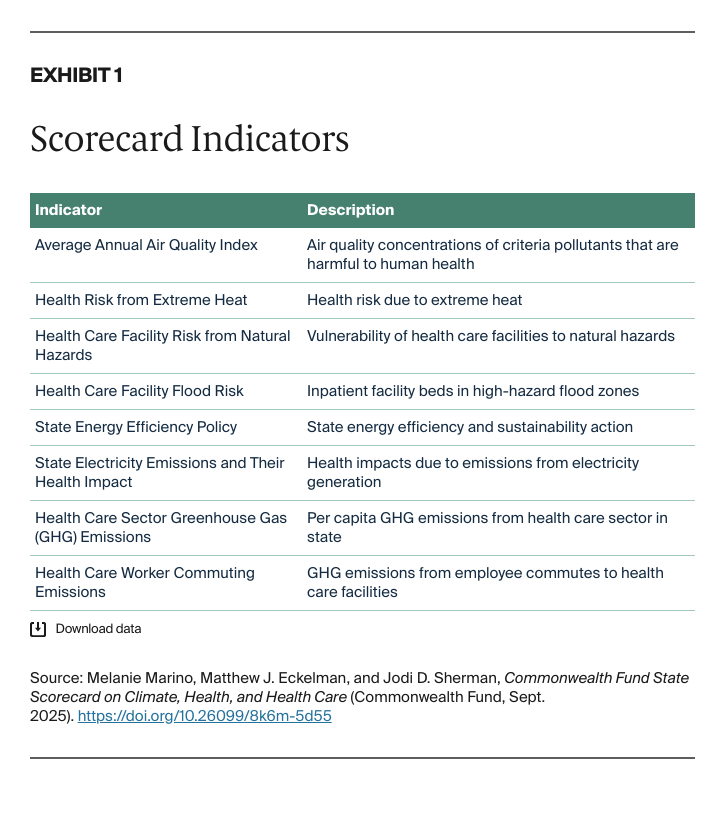
The eight indicators, described in Exhibit 1, assess risks from the environment to human health and health care facilities, and how states and health care facilities address, prepare for, and contribute to this environmental risk. We selected the indicators in part because they represent risks that can be mitigated through policy change at the local, state, or federal level or through proactive measures taken by health care systems.

Marino_state_scorecard_climate_health_health_care_Exhibit_01

Findings

Overall Score

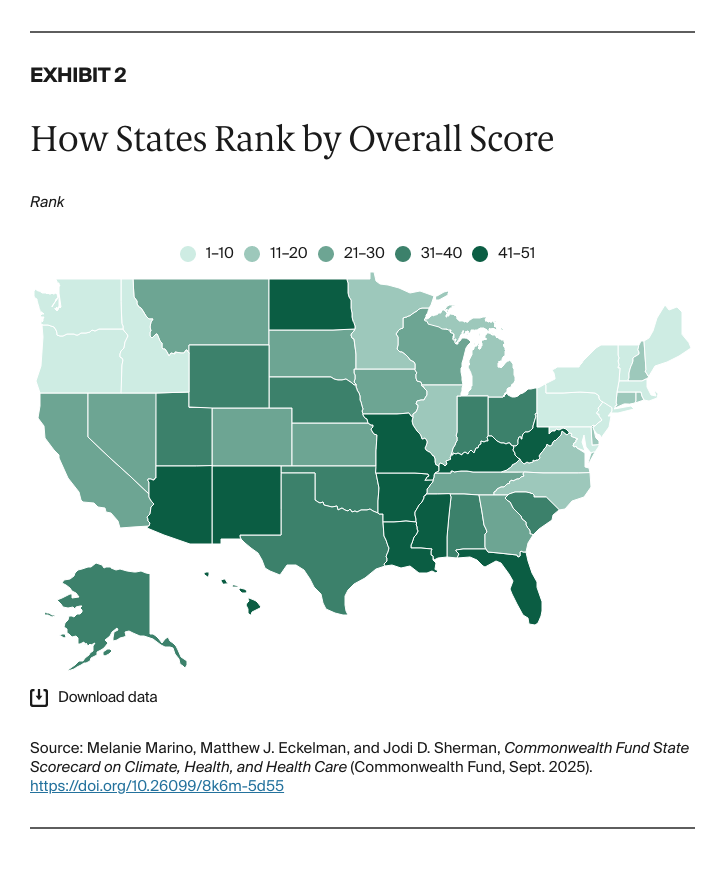
Vermont achieved the best overall score, followed by New York, Washington, New Jersey, and Maine. The lowest-ranked states overall are West Virginia, Kentucky, Louisiana, Florida, and Mississippi.

Exhibit 2 shows how states rank according to their overall score, with the highest-ranking states represented by lightest shade. Each of the scorecard’s eight indicators, described in Exhibit 1, contribute equally to each state’s overall score. Top-ranking states have a combination of lower risk and vulnerability to environmental hazards, better clean and efficient energy policies, and lower health care sector emissions.

Marino_state_scorecard_climate_health_health_care_Exhibit_02

Air Quality

When looking at average annual air quality, Arizona performs the worst, followed by California.

The federal Air Quality Index (AQI) gauges the levels of five main air pollutants regulated by the Clean Air Act. Air pollution poses serious health risks: it’s responsible for between 100,000 and 200,000 “excess” deaths — deaths beyond what would normally be expected — each year.10

In Arizona, high AQI is most likely due to ground-level ozone, driven by constant sun and a lack of cloud cover, and to particulate matter from dust and surrounding wildfires in the western United States. As for California, frequent wildfires are likely the reason for the state’s high AQI. Alaska, with its low population density, and Hawaii, as an island in the Pacific benefitting from air pollution–dispersing winds, rank among the states with the best air quality.

While a number of states perform inadequately on this indicator, all except Arizona have air quality classified as “good” to “moderate.” Arizona’s air quality is designated as “unhealthy for sensitive groups.”

Marino_state_scorecard_climate_health_health_care_Exhibit_03

Extreme Heat and Human Health

Nevada, New Mexico, and Arizona are the nation’s hotspots.

Our Extreme Heat and Human Health indicator is based on the Heat and Human Health Index, which captures extreme heat exposure in combination with social and environmental factors that interact to determine health outcomes.11 The low scores for Arizona, Nevada, and New Mexico are driven by several factors: higher temperatures; worse air quality, which can worsen the health effects of extreme heat; and, likely, a lack of tree cover and a greater proportion of paved or developed surfaces. These impacts are disproportionally affecting people with preexisting health conditions and other vulnerable groups.12

In the United States, extreme heat is the deadliest weather-related event, and heat waves are rapidly increasing in length and intensity.13 Arizona experienced 143 days in 2024 during which temperatures exceeded 100℉; Nevada recorded 112 such days.14 Extreme heat events are also triggering public health emergencies and power outages that hamper the delivery of medical services. States and health systems will need to take action to prepare for increasing temperatures and protect vulnerable populations.

Marino_state_scorecard_climate_health_health_care_Exhibit_04

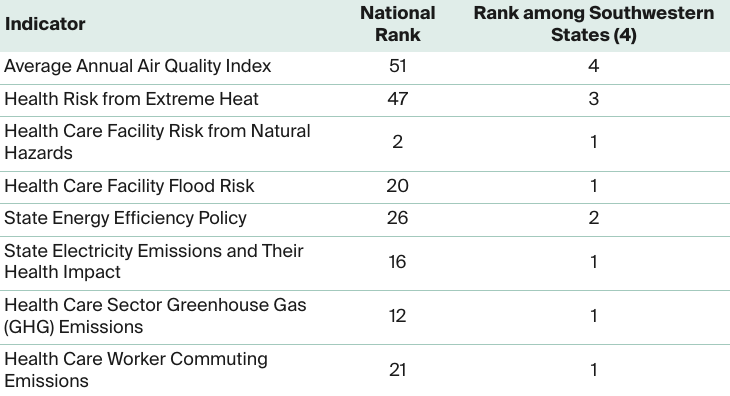
ARIZONA

Overall Rank: 45

Marino_state_climate_scorecard_box_Arizona

Arizona has the worst air quality index scores in the nation, due to high levels of ground-level ozone and fine particulate matter. Intense sunlight, little wind, proximity to wildfires, an arid climate, and heavy car traffic are key factors.

To reduce ozone-forming emissions, Arizona could adopt stronger vehicle and transportation standards. Currently, the state lacks emissions regulations, reduction targets, and investments in alternative transportation.15

Extreme Heat Preparedness

In 2024, Arizona released its first extreme heat preparedness plan and announced plans to hire the nation’s first statewide Chief Heat Officer.16 The state also pledges to expand access to cooling centers to improve community resilience and lessen burdens on hospitals and emergency rooms during extreme heat events.

Mobilizing the Health Care Sector

Arizona Health Professionals for Climate Action is a coalition of health care professionals dedicated to addressing the health impacts of climate change across the state. Through education, advocacy, and community engagement, the group empowers health professionals to lead climate action efforts that promote public health and environmental sustainability. Its initiatives include the development of educational resources and collaborations with policymakers to enhance climate resilience in health care settings.

Health Care Facility Risk from Natural Hazards

Florida’s health care infrastructure faces especially notable risks due to frequent coastal flooding, hurricanes, and other damaging storms. South Dakota’s health care infrastructure also faces high risk due to severe winter weather and extreme storms.

We use Natural Hazard Risk Scores, from the FEMA National Risk Index (NRI), to show how vulnerable health care facilities are to natural hazards in each state. Natural hazard risk analysis is critical for health care facilities as climate change intensifies extreme weather events, which pose significant threats to patient care and hospital operations. Health care facilities will need to consider natural hazard risk to ensure their resilience, maintain continuous quality care, and mitigate financial impacts in the face of increasing environmental challenges.17

Marino_state_scorecard_climate_health_health_care_Exhibit_05

State Energy Efficiency Policy

Most states score low on the scorecard’s State Energy Efficiency Policy indicator. California and Massachusetts, however, stand out for their high scores, which stem from the extensive clean energy legislation that both states have enacted in recent years.

The goal of the American Council for an Energy-Efficient Economy’s State Energy Efficiency Scorecard, which our indicator uses, is to rank U.S. states on their efforts to save energy, advance equity, and pursue efficiency as a cost-effective means to reduce emissions and meet clean energy goals. In the United States, health care facilities consume about 10 percent of all the energy used in commercial buildings. With hospitals and inpatient facilities accounting for nearly three-quarters of this amount, there is clearly significant potential for energy efficiency improvements in these settings.18

High scorers Massachusetts and California have both implemented ambitious statewide policies to promote sustainable buildings and transportation and facilitate equitable access to clean energy solutions. Their comprehensive actions help improve health care facility GHG emissions, since most health care emissions are indirect — stemming from the production and transportation of goods and services used by hospitals and health systems to provide care.

Marino_state_scorecard_climate_health_health_care_Exhibit_06

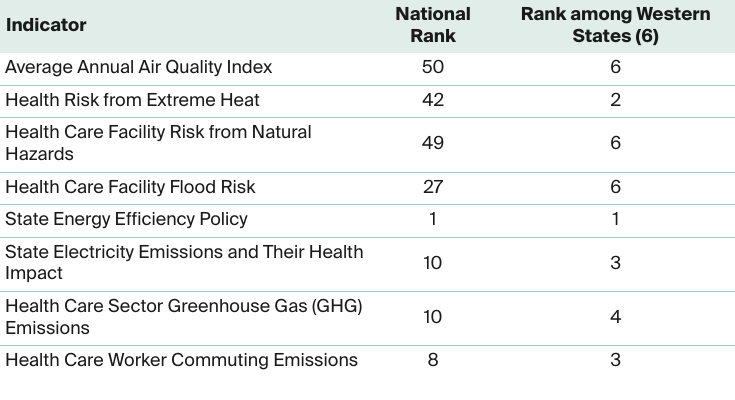
CALIFORNIA

Overall Rank: 24

Marino_state_climate_scorecard_box_California

California has passed significant legislation around building energy codes, vehicle emissions, and energy efficient utilities, all with a priority on equitable policies. These policies have brought the state closer to meeting its targets for emissions reductions and helped to improve air quality.

California has the nation’s second-worst air quality, largely due to wildfires that release dangerous levels of fine particulate matter, which pose serious health risks. Longer, drier summers from climate change have resulted in larger, more destructive, and more frequent wildfires.19 While there have been calls for improved forest management, the continued promotion of fossil fuel drilling at the national level undermines efforts to address the root causes of the escalating wildfire crisis.

Greenhouse Gas Emissions Reporting

As of 2022, 186 hospitals publicly report energy use data under California’s Building Energy Benchmarking Program.20 The state also has enacted policies (yet to take effect) targeting high-revenue entities, such as the Climate Corporate Data Accountability Act, which requires the reporting of Scope 1 and 2 emissions by 2026 and Scope 3 by 2027.21 Similarly, the Climate Related Financial Risk Act will require, starting in 2026, the creation of third-party verified reports detailing climate-related risk and mitigation strategies.22

Hospitals Making Strides in Sustainability

As of 2024, Valley Children’s Hospital is the first hospital in California, and the second children’s hospital in the nation, to receive the Sustainable Healthcare Certification from The Joint Commission. The hospital is posed to operate the largest renewable energy microgrid connected to a hospital emergency system.23

Electricity Emissions and Their Health Impacts

Hawaii’s heavy use of petroleum, especially heavy fuel oil, is responsible for the high health harms its residents experience from electricity generation.24 Kentucky and West Virginia also score low on this measure, due to their heavy use of coal for electricity generation.

Electricity Emissions and Their Health Impacts is an indicator that measures the health effects of pollutant emissions resulting from electricity generation in each state. These impacts are quantified with Disability-Adjusted Life Years (DALYs), a common measure of the burden of disease, representing years of healthy life lost. Exhibit 7 displays the DALYs per megawatt-hour of electricity generated, for each state. In other words, the standardized health burden for every unit of electricity generated.

The indicator captures states’ progress toward cleaner electricity generation as well as the health burden from associated pollution. Electricity generation significantly contributes to GHG emissions and pollution in the U.S.25 A major factor contributing to differences in per capita emissions between states is the overall emissions intensity of a state’s electricity production — the amount of GHGs released per unit of electricity generated. States that rely more on emissions-intense electricity sources tend to have higher emissions and consequently perform poorly on our indicator.

Marino_state_scorecard_climate_health_health_care_Exhibit_07

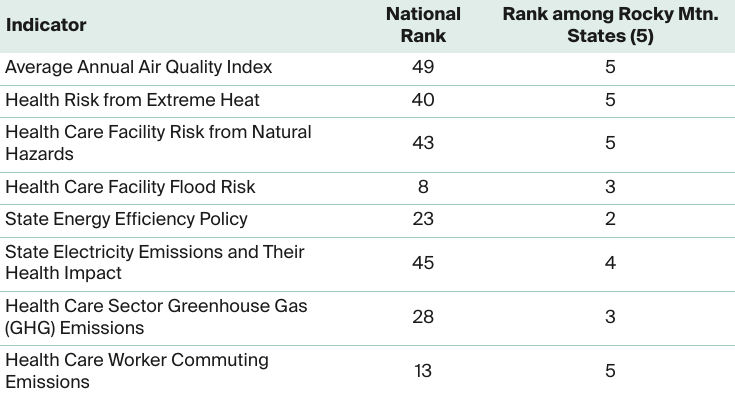
UTAH

Overall Rank: 35

Marino_state_climate_scorecard_box_Utah

Utah ranks poorly on air quality, primarily because of ozone and particulate matter. This is likely driven by western wildfires and exacerbated by extreme heat, which accelerates the production of ground-level ozone and traps pollutants closer to the ground.

Shift Away from Fossil Fuels

Utah has struggled with the transition away from fossil fuels, as reflected by its poor scores on clean energy indicators. Currently, about 80 percent of the state’s electricity is generated from coal and natural gas. However, since 2015, most new generating capacity built in Utah (94%) has been solar.26 Given Utah’s poor air quality compared to other states, actions that reduce pollutant emissions, such as decarbonization of energy sources, should be prioritized.

Solar Power for Sustainable Health Care

In the summer of 2024, Intermountain Health, the largest health system in Utah, celebrated the opening of a 40-megawatt solar farm capable of producing enough electricity to offset the use of 17 health system facilities and reaping considerable cost savings.27 This step is emblematic of the health system’s efforts to address the high energy consumption of its health care facilities and the associated environmental impacts.

Health Care Sector Greenhouse Gas Emissions

West Virginia, Wyoming, and North Dakota have the highest per capita GHG emissions, correlating with these states’ emissions-intense electricity production.

Health care facilities, particularly hospitals, are energy-intensive buildings, owing to their constant operation and high-air-flow standards.28 The health care sector makes a substantial contribution to the GHG emissions that drive much of climate change, accounting for approximately 8.5 percent of total U.S. emissions.29

Looking at per capita health care–related emissions helps gauge the sector’s role in driving climate change at the state level. In 2020, West Virginia’s health care sector emitted 2,570 kilograms of CO₂e on a per capita basis, a level analogous to driving a car 6,540 miles (CO₂e stands for “carbon dioxide equivalent,” a standard measure of the warming effect of greenhouse gases.)

Marino_state_scorecard_climate_health_health_care_Exhibit_08

Health Care Facility Flood Risk

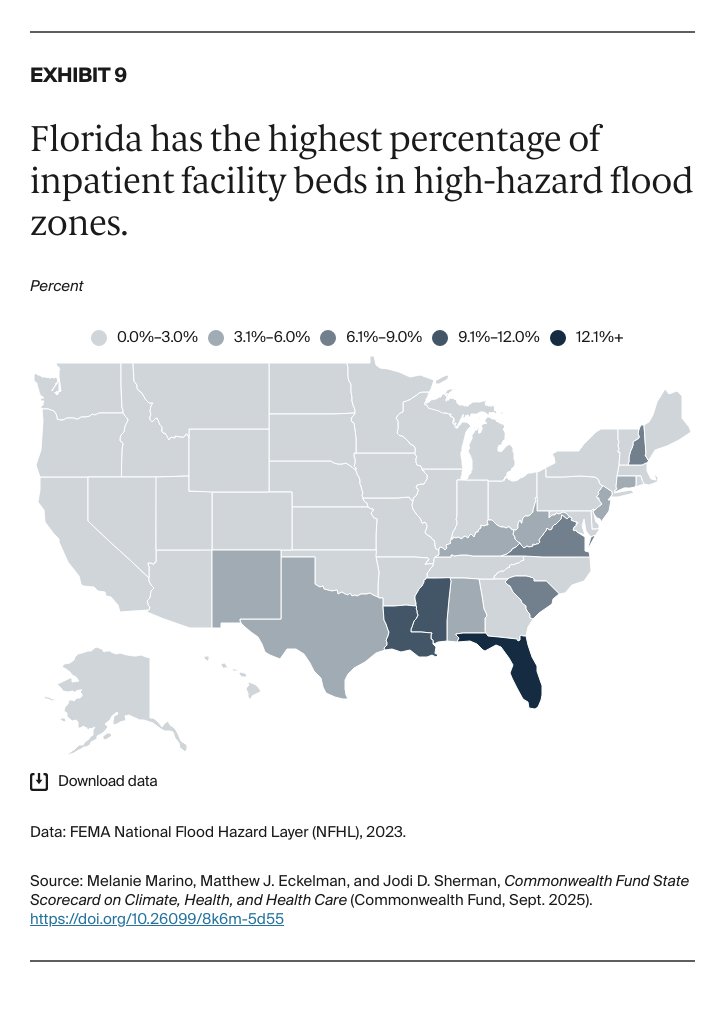
In Florida, nearly 15 percent of health care facility beds are in high-hazard flood zones — the highest share of any state. Louisiana and Mississippi are close behind.

Coastal states Florida, Louisiana, and Mississippi endure more frequent tropical storms, putting more of their health care facilities at risk of flooding. Flooding poses a significant threat to both facility operations and patients’ health outcomes. This risk is expected to grow as climate change increases the frequency and severity of flooding events. This indicator looks at the percentage of inpatient facility beds in high-hazard flood zones, using the Federal Emergency Management Agency’s (FEMA) National Flood Hazard Layer.

Marino_state_scorecard_climate_health_health_care_Exhibit_09

Health Care Facility Employee Commuting Emissions

South Carolina, Mississippi, and Alabama have the highest emissions related to commuting by health care workers.

Addressing transportation-related GHG emissions, including those from employee commuting, has become an important part of efforts to reduce the health care sector’s overall environmental footprint and its associated public health burden.30

Our indicator relies on data from the Environmental Protection Agency’s Smart Location Calculator, which estimates average annual employee commuting values to health care facilities in the U.S. In the three lowest-scoring states, health care facilities are more often located in lower-density areas with limited access to public transit or lack of pedestrian infrastructure, necessitating longer, more frequent trips.

Marino_state_scorecard_climate_health_health_care_Exhibit_10

Discussion

By evaluating environmental risks to U.S. health and health care as well as the sector’s own emissions, the Commonwealth Fund State Scorecard on Climate and Health aims to inform policy and operational efforts that can help ensure health care systems are both resilient and low-polluting.

The scorecard’s findings show that across states, both coastal and inland, health care facilities are vulnerable to extreme weather events like hurricanes, floods, severe storms, wildfires, and extreme heat. As climate change accelerates, many facilities are unprepared for these mounting threats.

The scorecard also finds that states whose clean energy policies are weak and more dependent on fossil fuels have higher emissions from health care and greater health impacts from electricity generation. In contrast, states with strong clean energy and energy efficiency policies performed better. As pollution does not respect state boundaries, policies in one state may affect the health of millions of Americans downwind. Federal environmental policies are critically important to protect the health of all Americans and save tens to hundreds of billions of dollars annually in avoided health care costs.31

The Path Forward

To improve their resilience and limit harmful health impacts, health care systems will need to integrate climate projections into their hazard vulnerability analyses and infrastructure planning, supported by high-quality meteorological data. Mandatory, standardized, and transparent GHG emissions reporting by health care facilities and their suppliers at the federal and state levels can also guide evidence-based policies and strategic management, as well as ensure accountability for mitigation efforts. States should also take action to promote the decarbonization of their energy sources and support greater energy efficiency — especially those states whose populations are facing poor air quality.

In highlighting the complex relationship between health care systems and the environment, the scorecard’s findings point to the need for coordinated state and national policy interventions that can help bring about more sustainable and resilient health care systems. Levers for action include federal and state regulations and payment incentives, standardized emissions reporting and decarbonization requirements, and centralized data repositories that support evidence-based actions to mitigate risk, bolster resilience, and ensure the safety and quality of health care for all.

States should also prioritize a health-in-all-policies approach, recognizing that energy, infrastructure, industrial, and environmental policies are all key determinants of health and essential for protecting both people and health care systems.

The need for more and better data is especially urgent. At present, only 29 percent of U.S. hospitals report at least some of their GHG emissions and energy use publicly, largely a result of federal requirements, state laws, and voluntary programs.32 However, the data reported are inconsistent and incomplete, suggesting a strong need for standards to ensure that information is verifiable, comparable, and actionable.33 Comprehensive climate risk data and assessments also remain sparse, not only for health care facilities and infrastructure but also across health care supply chains and suppliers.34

Regulatory incentives from federal and state agencies and organizations that already have the capabilities for centralized data reporting and oversight — such as the Centers for Medicare and Medicaid Services’ Transforming Episode Accountability Model, designed to improve the quality and cost effectiveness of care for Medicare beneficiaries, and The Joint Commission’s Sustainable Healthcare Certification program — can help spur energy and environmental management action within health care organizations.35 Such incentives encourage data collection and sustainability management activities around energy use, purchased electricity, anesthetic gas use, pressurized metered-dose inhaler use, transportation, and waste disposal.

Even in the absence of regulations, health care facilities have many opportunities to improve their resilience and sustainability and better support the health of the communities they serve. Some steps they can take include: investing in energy efficient and climate-resilient facilities, purchasing reusable and other environmentally preferable products, reducing waste and emissions, and investing in clean energy. Such voluntary actions build momentum within the health care sector toward a more safe and sustainable model of care.

Summary of Recommended Actions

What federal policymakers can do:
  • Maintain the United States’s energy efficiency and decarbonization trajectory, enabled by strong climate change mitigation goals.
  • Uphold bedrock environmental regulations, such as the Clean Air Act, that safeguard American public health.
  • Support research efforts and public education by maintaining and regularly updating federal databases and tools addressing environmental hazards and climate risks to human health and safety.
  • Facilitate better implementation of Hazard Vulnerability Analyses by backing state and local climate risk assessments and providing methodological support for health system resilience planning.
  • Require standardized, transparent, and verified reporting of climate risks and emissions by health care facilities.
  • Facilitate centralized data repositories for health system sustainability metrics to support progress tracking, accountability, and evidence-based actions.
What state and local policymakers can do:
  • Prioritize decarbonizing energy sources and improving efficiency, through mechanisms like renewable portfolio standards and updated building energy codes, to reduce emissions and protect public health.
  • Evaluate and improve climate action plans, including GHG-reduction targets, cross-sector decarbonization goals, hazard and vulnerability assessments, and adaptation measures.
  • Set health care decarbonization goals and incentive performance improvement through payment reforms in Medicaid as well as private and employer insurance.
  • Prioritize building resilience to extreme weather; expand public health investment in relief centers and early warning systems, especially in high-risk areas.
  • Require standardized, verified, and transparent reporting of greenhouse gas emissions, strategic planning, and mitigation targets by health care facilities and their suppliers.
What health care systems can do:
  • Assign executive-level sustainability responsibility and employ designated leaders at each health care facility.
  • Collect and report sustainability and resilience data in areas prioritized by the Centers for Medicare and Medicaid Services and The Joint Commission.
  • Engage in collaborative learning through the exchange of implementation lessons and evidence-based best practices with other health care organizations.
  • Analyze and publicly report direct and indirect emissions using established corporate sustainability standards, ensuring that all data are verifiable.
  • Conduct Hazard Vulnerability Analyses for health care facilities, incorporating climate projections using local data.
  • Account for projected climate risk in capital project planning.
  • Incorporate climate change considerations into Community Health Needs Assessments and Community Health Improvement Plans.
  • Purchase reusable and environmentally preferable products and champion waste reduction and clean energy.
  • Prepare for higher patient loads and potential service disruptions from extreme weather events.
  • Support low-emission transportation options for staff and patients, including through effective connections to existing infrastructure.

How We Conducted This Study

We chose the final set of eight indicators by first identifying key sustainability challenges and threats to human health and health care infrastructure stemming from climate change.36 Considering these areas, we reviewed publicly available data sources with nationwide coverage at the state or local level. We selected data that were scientifically valid, reliable, unbiased, and updated annually. After initial selection, the indicators and methods were reviewed by an expert panel to confirm their relevance and robustness.

While we used the most reliable, comprehensive data available, it’s important to note the inherent limitations of environmental hazard data at the state, or even county, level. For instance, air quality can vary within neighborhoods, and local flood data provide a more complete picture of risk that national or state models may not fully capture. This is addressed by our recommendations for states and health care facilities to use local environmental and climate projection data when conducting risk assessments and resilience planning.

Data

The data for these indicators span the period 2020 to 2024, reflecting the most recent year available at the time of scorecard development. For indicators derived from existing indices or models, such as the Natural Risk Index, Heat and Health Index, and Smart Location Calculator, a compilation of historical data was used in their development. The data year or index release year and data source for each indicator are detailed in the Appendix.

Environmental hazards have only worsened since we collected data for this scorecard, and they are projected to continue escalating because of climate change. Still, the indicators provide a baseline assessment of environmental risk, offering actionable insights for policymakers and health care facilities to guide informed decision-making.

Calculation of Overall State Scores

We calculated states’ overall scores based on eight indicators, with each weighted equally:

  • Average Annual Air Quality Index
  • Health Risk from Extreme Heat
  • Health Care Facility Risk from Natural Hazards
  • Health Care Facility Flood Risk
  • State Energy Efficiency Policy
  • State Electricity Emissions and Their Health Impact
  • Health Sector Greenhouse Gas (GHG) Emissions
  • Health Care Worker Commuting Emissions

For each indicator, the standard score, or z-score,37 was computed as the difference between the observed value and the average, divided by the standard deviation. These z-scores were then adjusted to reflect the directionality of the indicator — whether higher or lower values indicate better or worse outcomes. The overall score was determined by averaging the z-scores across all indicators. Finally, states were ranked based on their overall score.


Appendix. Indicator Descriptions and Methods

Average Annual Air Quality Index

The Air Quality Index (AQI) is calculated from five major air pollutants that impact public health: ground-level ozone (smog), particulate matter, carbon monoxide, sulfur dioxide, and nitrogen dioxide. Higher AQI values indicate poorer air quality, while lower values signify better air quality. “Good” air quality falls within an AQI range of 0 to 50.38 The national AQI is a population-weighted average of county-level AQIs, reflecting air quality experienced by the average person. Typically, the per-person air quality is worse than the overall average, as densely populated urban areas often have higher pollution levels than rural areas.

Using county-level, daily AQI data for 2022, from the EPA, the mean annual AQI was found for each county. Weights were determined by per capita observations for each county in each year. In other words, the weights for each county were calculated by dividing the county population by the sum of county populations with AQI observations. This approach was taken instead of dividing the county population by the total state population, as AQI data are not available for every county. Weights were then applied and the average AQI was calculated for each state.

Health Risk from Extreme Heat

The 2024 Centers for Disease Control and Prevention (CDC) Agency for Toxic Substances and Disease Registry (ATSDR) Heat and Health Index (HHI) indicates which areas are most likely to experience negative health outcomes from extreme heat exposure.39 Indicators are grouped into four dimensions — historical heat and health burden, sensitivity (preexisting conditions), sociodemographic factors, and natural and built environment factors. All dimensions are weighed equally, and the dimension rankings are averaged to create an overall HHI score between 0–1, with 1 indicating the highest risk.

The Heat and Health Index Scores are provided at the ZIP Code Tabulation Area (ZCTA) level, so the weighted average of the scores for each state was taken. The weights for each ZCTA were determined by dividing the population of each ZCTA by the sum of ZCTA populations for the state with HHI scores. This approach was taken instead of dividing each ZCTA population by the total state population, as HHI data are not available for every ZCTA.

Calculations for Hawaii and Alaska were not possible due to unavailability of data for some indicators. For the Extreme Heat Days indicator under Historical Heat & Health Burden, the data source (National Land Data Assimilation System, NLDAS-2) provides meteorological data covering the entirety of the United States, except Alaska and Hawaii.40

Health Care Facility Risk from Natural Hazards

The FEMA National Risk Index (NRI)41 quantifies risk as the potential for negative impacts as a result of a natural hazard.42 The 18 natural hazards included in the NRI are avalanche, coastal flooding, cold wave, drought, earthquake, hail, heat wave, hurricane, ice storm, landslide, lightning, riverine flooding, strong wind, tornado, tsunami, volcanic activity, wildfire, and winter weather. In the NRI, natural hazards are represented in terms of Expected Annual Loss (EAL), calculated by multiplying exposure (potential impact on buildings, population, or agriculture), annualized frequency, and historic loss ratio (percentage of exposed value typically lost). The component of the NRI of interest is the EAL Score. The EAL value is expressed in 2022 dollars, while the EAL Score is a normalized, unitless value ranging from 0 to 100, where 100 represents the highest level of risk.

Health care facility location data are from the Health Resources and Services Administration (HRSA) dataset, containing Providers of Services (POS) Facilities Data from the Centers for Medicare and Medicaid Services.43 This is a comprehensive dataset that contains information on approximately 80,000 health care facilities that participate in Medicare and/or Medicaid programs, representing a substantial portion of facilities in the United States. This dataset was filtered to include facilities within the 50 states and cleaned to eliminate facilities with null geometry fields. The dataset includes a large variety of facilities, including hospitals, clinical laboratories, home health agencies, ambulatory surgical centers, long-term care facilities, and hospices.

To look at how the NRI interacts with health care facilities, we used the NRI shapefiles, with NRI data disaggregated to the census block group level, and the health care facilities dataset. From this, the census block group EAL Scores were assigned to the health care facilities located in the corresponding census block groups. Then, for each state, an average EAL Score was determined based on all the facilities in the state.

Health Care Facility Flood Risk

This indicator uses FEMA’s USA Flood Hazard Area Feature Layer, derived from the November 20, 2023, version of the National Flood Hazard Layer feature class “S_Fld_Haz_Ar” (Special Flood Hazard Areas). Flood zone areas of minimal and undetermined hazard were removed from the dataset, as well as areas with no data.44 Health care facility location data were pulled from the previously introduced HRSA dataset. This dataset was filtered to only include facilities with data on the number of beds — hospitals, residential treatment facilities, and nursing facilities — resulting in a total of 27,127 facilities and 2,822,303 beds.

Analysis of the Flood Hazard Areas layer was done in ArcGIS Pro. Flood hazard area designations were assigned to each of the health care facilities by performing a spatial join — determining if each facility fell within a flood hazard area. Using Python, the facility-level data, with a field indicating the number of beds at the facility, were aggregated to the state level. For this metric, areas of moderate flood hazard (Flood Zone X) were not included. Most inpatient facility beds in flood hazards are in Zone X and including this in the metric skews the picture of which states are facing the highest risk of flooding for their health care facilities. Beds in high-risk areas, areas that face 1 percent or greater annual chance of flooding, are the focus of this indicator. For each state, the number of beds in high-risk areas was totaled and divided by the total number of beds in the state, to determine the percentage of beds at high risk of flooding.

State Energy Efficiency Policy

This indicator draws from the 2022 American Council for an Energy-Efficient Economy (ACEEE) State Energy Efficiency Scorecard.45 It covers key topics of interest such as state emission reductions goals, zero-energy buildings policy, code compliance, transportation emissions policy, and other energy efficiency policy metrics.

Of the 50 total points possible, 30 percent are allocated to utility and public benefits program and policy metrics, 26 percent to transportation policies and programs, 24 percent to building energy efficiency policies, 9 percent to state-led initiatives, 5 percent industrial energy efficiency policies, and 6 percent to state appliance and equipment standards. The precalculated scores from the scorecard were used, and detailed methodology can be found in the ACEEE State Energy Efficiency Scorecard research report.46

State Electricity Emissions and Their Health Impact

Electricity emissions intensity data were taken from the Emissions & Generation Resource Integrated Database (eGRID) by the EPA, a comprehensive source of data on the environmental characteristics of almost all electric power generated in the U.S.47 eGRID considers the entire electricity generation mix of a state, including both renewable and nonrenewable sources, providing a holistic view of a state’s overall environmental impact from electricity production. Although eGRID 2022 data are available, 2021 data were used so that PM2.5 data, only available for 2021, could be incorporated in this indicator. The EPA uses National Emissions Inventory (NEI) data to determine PM2.5 emissions at electric generating units.

Annual output emissions rates are calculated by eGRID, as total annual adjusted emissions divided by annual net generation. State output emissions rates for CO2e, SO2, NOx, and PM2.5 were extracted from eGRID. To normalize the emissions rates, they were converted into terms of human health impacts, or Disability-Adjusted Life Years (DALYs) per unit of electricity generation (MWh). This was done using endpoint characterization factors from ReCiPe 2016 impact assessment method.48

Health Care Sector Greenhouse Gas (GHG) Emissions

We calculated health care sector greenhouse gas (GHG) emissions by using the EPA’s U.S. Environmentally Extended Input-Output Model, USEEIO v2.0.1-411.49 USEEIO is an environmental-economic model of U.S. goods and services. This model combines economic data on industry inputs and outputs with environmental data on resource use and pollutant emissions. Further information on methods and data used for the construction of USEEIO v2.0 can be found in the associated publication.50

The 2020 state health expenditure data from the Centers for Medicare and Medicaid Services (CMS) are adjusted to reflect patients’ states of residence, reallocating spending from where care was provided to the patient’s home state to account for cross-border health care.51 This ensures that health expenditure data accurately represent the health care costs associated with each state’s residents, providing a clearer picture of health care spending based on population needs and behaviors.52

To estimate state-level greenhouse gas emissions for the health care sector, health expenditure categories were first mapped to corresponding economic sectors from the USEEIO model. Next, expenditure data were initially adjusted for inflation by converting from 2020 to 2012 dollars using the GDP price index — multiplied by a conversion factor (93.18/105.41). To adjust for differences in the carbon intensity of electricity consumed in each state, emissions from purchased electricity were adjusted using electricity emissions intensity data from eGRID.53

For each state, the percentage deviation from the U.S. average emissions intensity rate was applied to the emissions factors of the electric power generation, transmission, and distribution sector in the model. The updated D matrix, representing direct emissions coefficients, was then used to compute state-specific GHG factors. The equation, Nd = D x Ld, calculates state-specific total GHG emissions factors by combining direct emissions intensities (D) with the supply chain requirements (Ld) across sectors. The impact factors for GHG emissions were then multiplied by expenditures for each health care category to yield state-level GHG estimates.

Health Care Worker Commuting Emissions

The primary source used to derive this metric was the EPA’s Smart Location Calculator (SLC), a tool aimed at determining workplace location efficiency and examining the worker commuting emissions based on workplace location.54 Data from the Smart Location Calculator is disaggregated by census block group, the smallest statistical area for which the Census Bureau tabulates data. Vehicle Miles Traveled (VMT) values for each census block group are calculated using a combination of demographic and built environment factors. The main factors include income levels, gender, number of household drivers versus vehicles, gas prices, housing and job density, road network characteristics (automobile and pedestrian-oriented), and transit accessibility. The modeling process accounts for trips for a commuting purpose and those for a noncommute purpose (midday errands), which originate or end in the block groups in which the workplace is located.

First, the SLC data were joined with the TIGER files for census block group.55 VMT values were then averaged from block groups within a quarter-mile radius of the health care facility to account for facilities that fall along the boundary on a census block group and potentially share characteristics with the adjacent block group. To calculate GHG emissions associated with employee commuting at each facility, the VMT values were multiplied by the EPA’s most recent emissions factors for passenger cars and light-duty trucks.56 The Federal Highway Administration 2022 State Motor-Vehicle Registrations,57 showing the breakdown of automobiles and trucks by state, was used to determine the appropriate proportion of VMTs to multiply by each factor.

Calculations resulted in the mass of CO2, CH4, and N2O emitted per day from one worker’s commute. Using the EPA’s Global Warming Potential (GWP) values, the total amount of GHG emissions were calculated in terms of kg CO2e.58 Next, annual GHG emissions from a worker’s commute were calculated by multiplying the per-day emissions value by 260 days, the assumed days per year that a worker commutes, according to the EPA. To aggregate up to state level, we took the average of annual commute emissions per worker, based on the number of health care facilities in each state.

For more information, see the Appendix Tables.


Acknowledgements

The authors would like to sincerely thank the members of our advisory panel: John Balbus of HHS/Climate Care Consulting, Peter Berry of Health Canada, Joe Bialowitz of Memorial Sloan Kettering Cancer Center, Melissa Bilec of University of Pittsburgh, and Kara Brooks of the American Hospital Association.

We would also like to acknowledge the following Commonwealth Fund staff members: David Radley, Kristen Kolb, Sara Collins, and Lovisa Gustafson for supporting the development of the scorecard; Joseph Betancourt, Kathleen Regan, Tony Shih, Rachel Nuzum, Arnav Shah, and Evan Gumas for providing constructive feedback and guidance; and the Fund’s communications and support teams, including Barry Scholl, Chris Hollander, Bethanne Fox, Samantha Chase, Jen Wilson, Paul Frame, Josh Tallman, Naomi Leibowitz, Deborah Lorber, Aishu Balaji, Avni Gupta, Carson Richards, Celli Horstman, Mathew Kelley, Paige Huffman, Claire Coen, and Karina Polanco for their guidance, editorial and production support, and public dissemination efforts.

Finally, we wish to acknowledge Maya Brod and Gabrielle O’Brien of Burness for their assistance with media outreach.


NOTES
  1. Intergovernmental Panel on Climate Change, AR6 Synthesis Report (IPCC, 2023).
  2. Sierra N. Clark et al., “Global Burden of Disease from Environmental Factors,” Annual Review of Public Health 46 (Apr. 4, 2025): 233–51.
  3. Marina Romanello et al., “The 2024 Report of the Lancet Countdown on Health and Climate Change: Facing Record-Breaking Threats from Delayed Action,” The Lancet 404, no. 10465 (Nov. 9, 2024): 1847–96.
  4. Thilagawathi Abi Deivanayagam et al., “Envisioning Environmental Equity: Climate Change, Health, and Racial Justice,” The Lancet 402, no. 10395 (July 1, 2023): 64–78.
  5. Renee N. Salas et al., “Adding a Climate Lens to Health Policy in the United States,” Health Affairs 39, no. 12 (Dec. 2020): 2063–70.
  6. Renee N. Salas et al., “Impact of Extreme Weather Events on Healthcare Utilization and Mortality in the United States,” Nature Medicine 30, no. 4 (Apr. 2024): 1118–26; and Jodi D. Sherman et al., “Sustainable and Resilient Health Care in the Face of a Changing Climate,” Annual Review of Public Health 44 (Apr. 3, 2023): 255–77.
  7. Jodi D. Sherman et al., “Sustainable and Resilient Health Care in the Face of a Changing Climate,” Annual Review of Public Health 44 (Apr. 3, 2023): 255–77; and University of Kansas Health System, “Hurricane Damage Causes National Medical-Grade Fluid Shortage,” Oct. 21, 2024.
  8. Ben Clarke et al., Climate Change Key Driver of Catastrophic Impacts of Hurricane Helene That Devastated Both Coastal and Inland Communities (Imperial College London, Oct. 2024).
  9. Matthew J. Eckelman et al., “Health Care Pollution and Public Health Damage in the United States: An Update,” Health Affairs 39, no. 12 (Dec. 2020): 2071–79.
  10. Sumil K. Thakrar et al., “Reducing Mortality from Air Pollution in the United States by Targeting Specific Emission Sources,” Environmental Science & Technology Letters 7, no. 9 (July 15, 2020): 639–45.
  11. Centers for Disease Control and Prevention and Agency for Toxic Substances and Disease Registry, “Heat and Health Index Technical Documentation,” July 2024.
  12. World Health Organization, “Heat and Health,” fact sheet, May 28, 2024.
  13. Michelle L. Bell, Antonio Gasparrini, and Georges C. Benjamin, “Climate Change, Extreme Heat, and Health,” New England Journal of Medicine 390, no. 19 (May 16/23, 2024): 1793–801.
  14. Hayleigh Evans, “Arizona Weather Wrapped: A Broken Record of Broken Records in Phoenix During 2024,” Arizona Republic, Dec. 21, 2024; and Geneva Zoltek, “Las Vegas Saw a Record 112 Days over 100° in 2024, What Did We Learn?,” KTNV, Oct. 2024.
  15. John Bailey and Dave Grossman, Getting Transportation Right: Ranking the States in Light of New Federal Funding (Natural Resources Defense Council, Nov. 2023).
  16. Office of the Governor, Arizona’s Extreme Heat Preparedness Plan (State of Arizona, Mar. 1, 2024).
  17. Renee N. Salas et al., “Adding a Climate Lens to Health Policy in the United States,” Health Affairs 39, no. 12 (Dec. 2020): 2063–70.
  18. Office of Energy Efficiency and Renewable Energy, Integrating Health and Energy Efficiency in Healthcare Facilities (U.S. Department of Energy, June 2021).
  19. Union of Concerned Scientists, “Infographic: Wildfires and Climate Change,” updated May 9, 2022.
  20. Ana Abel et al., “Emissions Disclosures and Energy Use Reporting by Hospitals in the United States,” NAM Perspectives (Nov. 15, 2024).
  21. Massachusetts Institute of Technology Climate Portal, “Scope 1, 2 and 3 Emissions,” Mar. 20, 2024.
  22. Ana Abel et al., “Emissions Disclosures and Energy Use Reporting by Hospitals in the United States,” NAM Perspectives (Nov. 15, 2024).
  23. Valley Children’s Hospital First in California to Be Certified as Sustainable Healthcare Organization,” The Pulse: A Valley Children’s Healthcare Publication, Valley Children’s Healthcare, May 28, 2024.
  24. Troy R. Hawkins et al., Life Cycle Assessment of Greenhouse Gas and Criteria Air Pollutant Emissions from Conventional and Biobased Marine Fuels (U.S. Department of Transportation, Maritime Administration, Sept. 2019).
  25. U.S. Environmental Protection Agency, “Human Health and Environmental Impacts of the Electric Power Sector,” Feb. 6, 2025.
  26. U.S. Energy Information Administration, “Utah State Profile and Energy Estimates: Profile Analysis,” last updated June 20, 2025.
  27. Intermountain Health, “Intermountain Health Celebrates Opening of Massive Solar Farm to Supply Green Energy to Hospitals and Clinics for Decades to Come,” news release, July 29, 2024.
  28. Office of Energy Efficiency and Renewable Energy, Integrating Health and Energy Efficiency in Healthcare Facilities (U.S. Department of Energy, June 2021).
  29. Matthew J. Eckelman and Jodi D. Sherman, “Estimated Global Disease Burden from U.S. Health Care Sector Greenhouse Gas Emissions,” American Journal of Public Health 108, no. Suppl. 2 (Apr. 2018): S120–S122.
  30. Joe Kruger and Kathryn Blanco, Decarbonizing Health Care: Low-Carbon Transportation Policies Can Reduce Health Care Emissions and Benefit Local Communities (Georgetown Climate Center, Feb. 2024).
  31. U.S. Environmental Protection Agency, “Benefits and Costs of the Clean Air Act,” last updated Oct. 22, 2024.
  32. Ana Abel et al., “Emissions Disclosures and Energy Use Reporting by Hospitals in the United States,” NAM Perspectives (Nov. 15, 2024).
  33. Hardeep Singh et al., “Mandatory Reporting of Emissions to Achieve Net-Zero Health Care,” New England Journal of Medicine 387, no. 26 (Dec. 29, 2022): 2469–76; and Emily Senay et al., “Proposed SEC Climate Rules: Implications for the U.S. Health Care Sector,” NEJM Catalyst 4, no. 6 (Nov. 3, 2023); and Emily Senay et al., “What Can Hospitals Learn from the Coca-Cola Company? Health Care Sustainability Reporting,” NEJM Catalyst 3, no. 3 (Feb. 16, 2022).
  34. Emily Senay et al., “Proposed SEC Climate Rules: Implications for the U.S. Health Care Sector,” NEJM Catalyst 4, no. 6 (Nov. 3, 2023).
  35. The Joint Commission, “Certification: Sustainable Healthcare,” 2024.
  36. Marina Romanello et al., “The 2024 Report of the Lancet Countdown on Health and Climate Change: Facing Record-Breaking Threats from Delayed Action,” The Lancet 404, no. 10465 (Nov. 9, 2024): 1847–96.
  37. JMP Statistical Discovery, Statistics Knowledge Portal, “Z-Score,” n.d.
  38. U.S. Environmental Protection Agency, Clean Air Markets Division, Technical Assistance Document for the Reporting of Daily Air Quality — the Air Quality Index (AQI) (EPA, May 2024).
  39. Center for Disease Control and Prevention and Agency for Toxic Substances and Disease Registry, “Heat and Health Index Technical Documentation,” July 2024.
  40. Center for Disease Control and Prevention and Agency for Toxic Substances and Disease Registry, “Heat and Health Index Technical Documentation,” July 2024.
  41. Federal Emergency Management Agency, “The National Risk Index,” n.d.
  42. Casey Zuzak et al., “National Risk Index: Technical Documentation,” Federal Emergency Management Agency, 2023.
  43. Centers for Medicare and Medicaid Services, “Provider of Services File — Hospital and Nonhospital Facilities,” n.d.
  44. Federal Emergency Management Agency, “FEMA Flood Zone: Miami-Dade County,” Web Mercator Auxiliary Sphere, last updated June 2, 2025.
  45. Sagarika Subramanian et al, 2022 State Energy Efficiency Scorecard (American Council for an Energy-Efficient Economy, Dec. 2022).
  46. Sagarika Subramanian et al, 2022 State Energy Efficiency Scorecard (American Council for an Energy-Efficient Economy, Dec. 2022).
  47. U.S. Environmental Protection Agency, Clean Air Markets Division, The Emissions and Generation Resource Integrated Database: eGRID Technical Guide with 2022 Data (EPA, Jan. 2024).
  48. M.A.J. Huijbregts et al., ReCiPe 2016: A Harmonized Life Cycle Impact Assessment Method at Midpoint and Endpoint Level Report I: Characterization (National Institute for Public Health and the Environment, Dutch Ministry of Health, Welfare, and Sport, 2016).
  49. U.S. Environmental Protection Agency, Office of Research and Development, “USEEIO v2.0.1-411,” 2021; Excel file, last modified Dec. 30, 2021.
  50. Wesley W. Ingwersen et al., “USEEIO v2.0, The U.S. Environmentally Extended Input–Output Model v2.0,” Scientific Data 9 (May 3, 2022): 194.
  51. Centers for Medicare and Medicaid Services, “Health Expenditures by State of Residence, 1991–2020,” last updated Sept. 10, 2024.
  52. Centers for Medicare and Medicaid Services, National Health Expenditure Accounts Methodology Paper, 2023: Definitions, Sources, and Methods (CMS, 2023).
  53. U.S. Environmental Protection Agency, Clean Air Markets Division, The Emissions and Generation Resource Integrated Database: eGRID Technical Guide with 2022 Data (EPA, Jan. 2024).
  54. Jim Chapman et al., Smart Location Database: Technical Documentation and User Guide, Version 3.0, (U.S. Environmental Protection Agency, June 2021).
  55. U.S. Census Bureau, TIGER/Line Shapefile, 2019, Nation, U.S., Block Group National (U.S. Department of Commerce, 2019).
  56. Federal Highway Administration, Status of the Nation’s Highways, Bridges, and Transit: Conditions and Performance Report to Congress, 23rd ed., (U.S. Department of Transportation, 2019).
  57. Federal Highway Administration, “2022 State Motor-Vehicle Registrations (Table MV-1),” U.S. Department of Transportation, 2023.
  58. U.S. Environmental Protection Agency, “Inventory of U.S. Greenhouse Gas Emissions and Sinks: 1990–2022,” last updated Mar. 26, 2025.

Publication Details

Date

Contact

Melanie Marino, Ph.D. Candidate, Northeastern University

marino.me@northeastern.edu

Citation

Melanie Marino, Matthew J. Eckelman, and Jodi D. Sherman, Commonwealth Fund State Scorecard on Climate, Health, and Health Care (Commonwealth Fund, Sept. 2025). https://doi.org/10.26099/8k6m-5d55