Positive Outliers: How Some Rural Communities Maintain Access to Labor and Delivery Services
Dr. Rachael Morris coaches Lieutenant Nathaniel Nichols of the Vicksburg Fire Department through hands-on training. The University of Mississippi Medical Center (UMMC) handles nearly 3,000 high-risk pregnancies each year; nearly one-quarter involve transfers from counties without labor and delivery units or obstetric providers. Photo: Jay Ferchaud, UMMC Communications
Toplines
For rural providers that have managed to keep offering maternity care, success often depends on such factors as business expertise, federal and state support, and a deep commitment to maintaining access
If states cut programs that have helped sustain rural maternity care, the nation may see an even more precipitous decline in access across rural communities
The article is part of a partnership between the Commonwealth Fund and the Bassett Research Institute in Cooperstown, N.Y., to explore innovative approaches to the health care challenges facing rural communities across the United States.
When Adam Willmann left for college, he vowed never to return to Clifton, Texas, an old mill town in Hill Country with under 4,000 people. When he was lured back a dozen years later to become CEO at Goodall-Witcher Healthcare — the 25-bed hospital where he was born — he had a 3-year-old son, a pregnant wife, and a new appreciation for the importance of maintaining access to maternity care in rural communities.
Maintaining that access is no easy feat. Even before Congress approved cuts to Medicaid that are expected to dramatically increase the number of uninsured Americans, many rural hospitals were struggling to cover the high fixed costs of labor and delivery units with small numbers of patients. In rural areas, where residents are more likely to be uninsured or to be covered by Medicaid, it doesn’t take much for an obstetrics program to unravel: the departure of a single doctor, a sharp increase in malpractice premiums, or a hospital board spooked by financial losses. More than 100 rural hospitals have closed their labor and delivery units in the past five years alone, bringing the share of rural hospitals with the staff, expertise, and equipment to safely deliver babies to just 42 percent.
“I call it finances over families,” says Kevin Lambing, senior program officer for health at TLL Temple Foundation, a private foundation in Lufkin, Texas, that serves 23 largely rural counties, only 10 of which have hospitals with maternity wards. A summit he helped organize last year sought to understand how some rural hospitals, including Goodall-Witcher, defy the odds of closure.
In similar fashion, we explore how rural providers have maintained access to maternity care in four states where it’s arguably hardest to do so: Alabama, Mississippi, Oklahoma, and Texas. Along with Arkansas, these states have the lowest number of obstetrician/gynecologists per 10,000 births. They also have abortion bans in place, making it harder to attract young doctors to fill workforce gaps.
We found, as Lambing did, that success often hinges on a combination of factors, including having hospital leadership that pairs a deep commitment to maintaining access with the business savvy to recognize the downstream financial consequences of closing a labor and delivery unit. Many providers leverage federal and state supports, including enhanced Medicaid reimbursements, to defray the cost of staff and malpractice insurance.
Their successes may be a cautionary tale for states now tasked with trimming Medicaid budgets. If those cuts include the initiatives that have sustained these rural maternity care programs, the nation may see an even more precipitous decline in maternal health access in rural areas.
Texas: Gaining Community Buy-In and Control over Hiring
Bosque County, home to Goodall-Witcher, isn’t the most fertile ground for building a maternity care program. Although the area’s population has increased in the decades since Willmann left for college, that growth has been concentrated among older adults drawn to the area’s arts, lakes, and reputation as a retirement community. The county’s uninsured rate of 25 percent is also twice the national average. When Willmann returned to the area in 2012, the health system was losing upwards of $750,000 a year, a problem he hoped to reverse by making the hospital a destination rather than a place to bypass en route to larger hospitals in nearby Austin, Dallas, or Waco.
Willmann put the health system on a stronger footing by designating it as a critical-access hospital eligible for cost-based reimbursement from fee-for-service Medicare. He also made operational changes, including hiring a new dietary manager. The low-cost dining options he created attracted a key demographic: senior citizens, who now show up weekly for meals and often stick around to get lab work done or see the specialists Willmann hired to rotate through the hospital.
Thanks to the expansion of specialty care and a new property tax levy that area residents approved, the hospital began to break even in 2019. When births dipped during the pandemic, Willmann decided to take his turnaround strategy a step further: instead of simply preventing bypass, he wanted to draw patients from a wider radius.
To handle the higher volume without fostering burnout among staff, he recruited four family physicians with obstetrics expertise (FM-OBs) to share the call schedule. They provided the prenatal and postpartum visits that the Texas Medicaid program now covers for a year after delivery, as well as primary care services for patients of all ages. The new hires helped diversify staff by gender and languages spoken. Making them hospital employees rather than independent contractors reduced the clinicians’ outlay for health and malpractice insurance.
To gain community buy-in for the property tax levy, Willmann began making himself as visible as possible, including by calling bingo games and fielding difficult questions about the hospital’s finances and COVID-19 policies. “I try to be as transparent as possible,” Willmann says. “I think people come because they don’t know what’s going to come out of my mouth.”
In 2024, Texas increased supplemental payments for rural hospitals from $500 to $1,500 per birth, bringing the total compensation per Medicaid birth to $8,100. (For comparison, employer-sponsored insurance plans spent $12,992 per birth in Texas in 2020). Willmann used some of the money to upgrade equipment, and the strategy appears to be working.
Births, now nearly 90 per year, are up 30 percent from prepandemic levels, and the hospital has begun to draw patients from Waco. Willmann suspects they prefer knowing that the clinician who sees them for prenatal care is almost guaranteed to be the one to deliver their baby. “That can be a huge dissatisfier in urban markets,” he says.
Oklahoma: Promoting Continuity of Care and Policy Change
Like Texas, Oklahoma recently extended postpartum coverage for Medicaid beneficiaries from 60 days to 12 months and increased Medicaid reimbursements to some rural hospitals to preserve access to care, including labor and delivery services. The Supplemental Hospital Offset Payment Program, or SHOPP, is designed to close the gaps between Medicaid, Medicare, and commercial insurance reimbursements. Critical-access hospitals don’t pay the provider tax that is matched with Medicaid dollars from the federal government but still get a share of the pooled funds.
The payment boost — up to $6,000 per Medicaid birth — makes a considerable difference, says Tom Vasko, the new CEO of Newman Memorial Hospital, a critical-access hospital in Shattuck, Okla. Vasko is hoping to leverage these payments to reopen his hospital’s labor and delivery unit, which closed in 2015. He must move quickly, however, before these state-directed payments are reduced or eliminated in two years to comply with the “One Big Beautiful Bill” — the recently passed budget reconciliation law.
Other changes Oklahoma made to its Medicaid policy in recent years may hold, including covering doula services and making it easier for freestanding birth centers to qualify for reimbursement. State lawmakers have also been considering an expansion in the scope of practice for mid-level providers, which could pave the way for midwives to provide a broader range of services in rural communities, including overseeing low-risk births.
For now, Weatherford Regional Hospital, 70 miles west of Oklahoma City, is the only critical-access hospital in the state with a labor and delivery unit. Local physicians and the hospital board are committed to maintaining it because they see it as an essential component of maintaining a vibrant community. The 25-bed hospital also has a university in its backyard, bringing many reproductive-age students and faculty through its doors.
The additional SHOPP payments allowed the hospital’s maternity care program to turn a profit in 2024, after years of financial losses. Also helping is the hospital’s affiliation with Oklahoma City’s St. Anthony Hospital, to which Weatherford sends new nursing hires for hands-on training in neonatal resuscitation and fetal monitoring — training that would otherwise be hard to do with low numbers of births.
Weatherford Regional now delivers 300 babies a year, drawing patients from as far as 90 miles away. Kayla Glasscock, RN, BSN, director of women’s services, says the size of the hospital and close ties among staff are appealing to patients. “They just love that they see the same nurses over and over again. They like that continuity of care,” she says.
If the state expands the scope of practice for midwives, Newman Memorial Hospital hopes to replicate the personalized approach, but with a twist. Instead of trying to recruit physicians to move their families to Shattuck (population 1,249), Amy Vasko, APRN-CNM, the hospital’s certified nurse midwife, would share responsibility for maternity care with as many as four ob/gyns who live in other states. They would spend a week at a time in Shattuck to handle high-risk deliveries and gynecological surgeries while Vasko handles low-risk births. Newman Memorial has already found two doctors who want the job but needs to raise $3.3 million in startup funds to cover the cost of equipment and the first year of the unit’s operation (payment for birth services is retrospective and thus may be delayed by nine months).
Tom Vasko, who used to work in a private equity–backed venture before moving to Oklahoma, says finding the money to support women’s health has been exasperatingly hard. “I never thought it would be so difficult to get $3.3 million to expand access and save lives,” he says.
If Newman Memorial Hospital can find start-up funds for a labor and delivery unit, Tom Vasko anticipates the hospital will deliver as many as 400 babies a year. Since March, staff have delivered two babies in the emergency department; the hospital that accepted the transfer received the payment, not Newman Memorial.
Alabama: Leveraging Medical Residents and Engaging Specialists Sparingly
Hundreds of miles to the southeast, in Alabama, a state with one of the highest preterm birth rates in the nation, a network of federally qualified health centers (FQHCs) has leveraged a range of federal supports to restore access to maternity care services in four rural counties. John Waits, MD, the CEO and cofounder of Cahaba Medical Care, moved to Centreville, Ala., a town of 2,800, two decades ago, not long after the local hospital, Bibb Medical Center, stopped delivering babies.
As a family physician with obstetrics training who sometimes had to follow patients in labor to a hospital 45 minutes away, Waits was intent on reopening the hospital’s labor and delivery unit. He also wanted to increase access to primary care as a means of better managing chronic conditions like diabetes and hypertension that can complicate a pregnancy and contribute to poor maternal health outcomes.
With grants from the federal Health Resources and Services Administration (HRSA), the health center has expanded rapidly — from a single clinic in 2012 to 27 care sites spanning six counties. Nearly a quarter of Cahaba’s 40,000 patients are uninsured, and 80 percent have incomes below the federal poverty level.
Bibb Medical Center, a 35-bed hospital, agreed to reopen its labor and delivery unit in 2015 after the FQHC made an offer that was hard to refuse. “We told them if you will build the unit, flip the lights on, and help with the nursing piece, we will bring the physicians,” Waits says.
There were many advantages to partnering. Because medical malpractice insurance for FQHC physicians would be fully covered by the Federal Tort Claims Act Program, the hospital’s ledger wouldn’t take a hit. Cahaba’s participation in HRSA’s Teaching Health Center Graduate Medical Education program, a federal initiative aimed at increasing opportunities for residents to train in community settings and rural areas, also meant the hospital would gain access to Cahaba’s medical residents, who are supervised by obstetrics and anesthesia faculty who would be hard to recruit absent such a program.
To ensure that his obstetrics staff’s time was to be used judiciously, Waits trained the medical staff in local emergency departments to handle pregnancy-related issues, such as detecting fetal heartbeats and performing an ultrasound themselves, rather than calling his staff in. “Everywhere I consult, this is a huge problem,” Waits says. “Emergency physicians get nervous about managing pregnancy issues and transfer patients to specialists, driving up costs.”
With so much of the FQHC’s budget determined by the state and federal government, the program is vulnerable to changes in health policy. The long-term prospects of the Teaching Health Center program are unclear; in March, Congress renewed the program but only for an additional six months. Waits is hoping Congress will approve another extension in September. “It’s essential legislation with historically bipartisan support,” he says.
Alabama has not expanded Medicaid, and the FQHC may struggle to cover costs if more of its patients become uninsured.
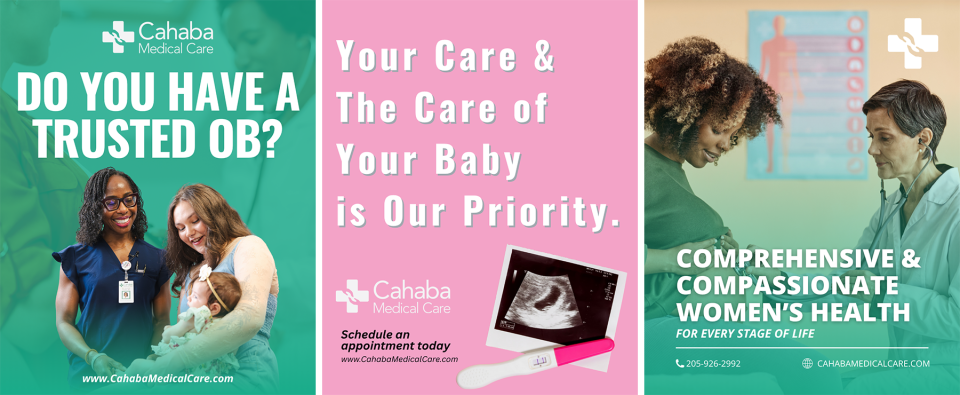
To encourage reproductive-age women with chronic conditions to seek preventive care, Cahaba advertises its health and wellness programs widely. It uses incentives such as performing ultrasounds during the first or second visit to encourage people who are early in pregnancy to pursue prenatal care. The number of patients receiving prenatal care at Cahaba clinics increased by 50 percent from 2019 to 2023, as the health center expanded its geographic footprint.
Dispatching Mobile Teams to Alabama’s Black Belt
While Cahaba is reaching more rural patients, there are other areas of the state that are still hard to reach, and places where patients don’t trust local providers. To support them, artist and entrepreneur Michelle Browder launched a mobile clinic to provide care to rural Alabamans in the Black Belt region, a swath of the state that is known for its rich, dark soil and history of enslavement.
Browder is the visionary and CEO behind Mothers of Gynecology, an initiative paying homage to enslaved Alabama women who were experimented on without consent or anesthesia in the 19th century by surgeon J. Marion Sims. Photo: Michelle Browder
The mobile clinic aims to reach low-income residents who don’t have access to cars or public transportation and can’t travel long distances for prenatal appointments. The team manning the mobile van includes doulas, midwives, nurses, and ob/gyns, many of whom volunteer their time or receive stipends from grant funds. They make treks to rural communities twice per month, sometimes at the request of state legislators, to deliver maternity and primary care. Long lines form for contraception services in particular. In some cases, the team assists with food insecurity, says Browder, recalling a trip where they encountered and fed an emaciated mother walking in 100-degree heat with her newborn in search of food.
Browder has also created a respite home for moms — “Mother’s Rest” — where patients can relax and receive everything from lactation assistance to a massage. Some patients come so they can be closer to an urban hospital near their due date, while others come for advice and support.
“It’s a space we’ve curated for women who are in rural communities,” Browder says. “If they don’t have access to care, we have a space where they can come until they have their baby.” Browder’s eventual goal is to open a full-fledged birth center.
Mississippi: Preparing Hospitals to Handle Obstetric Emergencies
In Mississippi, only one in three rural hospitals still deliver babies, but all are likely to encounter patients experiencing a life-threatening obstetric emergency. To support them, the Mississippi Center for Emergency Services, based at the University of Mississippi Medical Center, developed a program to train emergency department staff, paramedics, and other providers without obstetrics experience to recognize and stabilize pregnant patients until they can get them to a higher level of care.
As part of the STORK program, trainees work through high-risk scenarios using four high-fidelity maternal and infant simulators.1 Victoria and Rhonda mimic the symptoms of patients experiencing preterm labor, preeclampsia, postpartum hemorrhage, and other life-threatening conditions. The pre- and full-term infant simulators, Anne and Norman, cry, move, and turn blue, compelling trainees to make split-second decisions about how to care for them.
“Our goal is to create muscle memory, so staff don’t panic in an emergency — they act,” says Rachael Morris, MD, the maternal-fetal medicine specialist who helps lead the program.
Trainees who complete the free course also receive a go-bag with supplies that can save a mother’s or infant’s life in an emergency, including a warming mattress, infant intubation supplies, and blankets. They also get the cell phone numbers of STORK team members, including a paramedic on the air ambulance and a nurse practitioner with expertise in newborn care, in case they need support during real-life emergencies.
The team expected to train 100 people when the program was launched in 2021 with a grant from the W.K. Kellogg Foundation. Four years later, it has trained nearly 1,000 people and now is considering extending the training to neighboring states.
The University of Mississippi Medical Center (UMMC) handles nearly 3,000 high-risk pregnancies each year; nearly one-quarter involve transfers from counties without labor and delivery units or obstetric providers.
Navigating an Uncertain Future
These programs illustrate that it’s possible, even with a low patient volume, to offer the full continuum of maternity care services with a mix of policy supports, including add-on payments for rural hospitals and subsidies for malpractice insurance and medical trainees. Business expertise is also critical for recognizing untapped demand for care and the myriad ways in which eliminating labor and delivery services can undermine a hospital’s financial viability, Lambing says.
As a follow-up to the summit Lambing helped organize, Stroudwater Associates, a consulting firm that advises rural hospitals, pored over the financial statements of rural hospitals that had closed or were considering closing their labor and delivery units. The firm discovered that some hospitals had overlooked the hidden costs, including lost revenue for ancillary services such as ultrasounds and lab tests. In one instance, an acute-care hospital would have reduced its Medicaid inpatient volume to such an extent that the hospital would no longer qualify for the federal 340b program, which enables safety-net providers to purchase pharmaceuticals at a discount and bill insurers at market rates.
Cash-strapped rural hospitals may also be missing opportunities to reconfigure their staffing models, says Eric Shell, MBA, Stroudwater’s chairman. One is hiring family medicine physicians with obstetrics expertise who can provide a diverse array of primary care services, including hospital- and office-based pediatric care. To help rural hospitals chart a sustainable path forward, Stroudwater staff partnered with the Flex Monitoring Team, made up of researchers at the University of Minnesota, the University of North Carolina at Chapel Hill, and the University of Southern Maine, to map out ways in which rural labor and delivery programs could reduce expenses and increase revenue, such as by attributing nursing services provided before and after delivery to Medicare Cost Reports.
It’s an open question whether these strategies are sufficient to support programs if states impose strict work requirements on Medicaid enrollees and more patients become uninsured. Congress has set aside $50 billion to support rural providers, structured as a Rural Health Transformation Program (RHTP), which could offset some of the losses and create an opportunity to target supports for maternity care programs. “These funds could help rural hospitals and FQHCs replicate what’s been done in Bibb County. Subsidizing low-volume labor and delivery units and covering malpractice insurance for rural hospitals providing obstetric care would also be a game changer for them,” Waits says.
There’s still a great deal of uncertainty about how the financing will be distributed — not just among states, but within them. With rural health clinics, hospitals, and FQHCs all jockeying for the money, there’s no guarantee that it will be used to support maternity care. It may help that Alabama, Mississippi, and Oklahoma, along with 11 other states and the District of Columbia, are participating in the Transforming Maternal Health Model, a federal initiative that provides state Medicaid agencies with $1.7 million per year over the next 10 years to test innovative models of care that improve maternal health outcomes — which could include promoting interdisciplinary care models like the one Newman Memorial envisions. States could also leverage RHTP funding to enhance oversight of hospital mergers and closures and identify instances when a closure could be averted through more robust financial management or accounting.
In shoring up maternity care programs, Harold Miller, president and CEO of the Center for Healthcare Quality and Payment Reform, hopes state and federal lawmakers, as well as employers, will pay attention to how Medicare Advantage plans and other commercial insurers may be undermining the financial viability of rural hospitals by reimbursing them with less than what it costs to deliver care. “Adequate payment for maternity care is essential to prevent more obstetric unit closures, but it does little good to pay adequately for maternity care if losses on other services force a hospital to close completely,” he says.
EDITORIAL ADVISORY BOARD
Melinda Abrams, MS, Commonwealth Fund
Katrina Armstrong, MD, Columbia University Vagelos College of Physicians and Surgeons
Lynn Barr, MPH, Barr-Campbell Family Foundation
Melissa Lackey, MSN, Texas A&M Rural and Community Health Institute
Harold Miller, Center for Healthcare Quality & Payment Reform
Alan Morgan, MPA, National Rural Health Association
John Supplitt, MPA, MBA, American Hospital Association
Henry Weil, MD, Bassett Healthcare Network
NOTES
Stabilizing OB and Neonatal Patients, Training for OB/Neonatal Emergencies, Outcome Improvements, Resource Sharing, and Kind Care for Vulnerable Families. ↩
Sarah Klein and Molly Castle Work, “Positive Outliers: How Some Rural Communities Maintain Access to Labor and Delivery Services,” feature article, Commonwealth Fund, Oct. 24, 2025. https://doi.org/10.26099/mrm2-6e21