



Advanced Search

Advanced Search

Current Filters

Filter your query

Publication Types

Other

to

Blog

/

Strengthening Rural Primary Care Will Require More Robust Research and Evidence

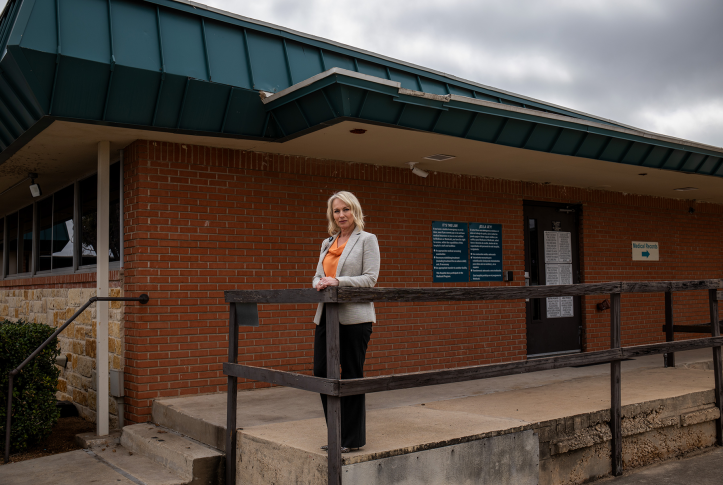
Woman stands in front of brick building

Billie Bell, chief executive officer of Medina Healthcare System, stands outside the emergency room of the medical complex in Hondo, Texas. Research on rural primary care has been historically underresourced. Photo: Kaylee Greenlee for the Washington Post via Getty Images

Billie Bell, chief executive officer of Medina Healthcare System, stands outside the emergency room of the medical complex in Hondo, Texas. Research on rural primary care has been historically underresourced. Photo: Kaylee Greenlee for the Washington Post via Getty Images

Authors
  • Celli Horstman
    Celli Horstman

    Senior Research Associate, Improving Care Delivery, The Commonwealth Fund

  • Kevin Bennett Headshot
    Kevin Bennett

    Rural Health Fellow, The Commonwealth Fund

  • Anushree Vichare headshot
    Anushree Vichare

    Associate Professor in the Department of Health Policy and Management and is the Interim Director of the Fitzhugh Mullan Institute for Health Workforce Equity, Milken Institute School of Public Health at George Washington University

  • Chris Salyers headshot
    Chris Salyers

    Director of Research & Programs, National Organization of State Offices of Rural Health (NOSORH)

Toplines
  • Research on rural primary care has been under-resourced, leaving gaps in the evidence and challenges for scaling and spreading solutions

  • Addressing evidence gaps will require incorporating the rural experience into existing data tools, investing more in rural-specific research, and strengthening partnerships with rural communities

One of five people in the United States live in rural areas, many of which have higher rates of chronic conditions and significant unmet health care needs. Only one of 10 rural counties have enough primary care clinicians to meet demand.

This disparity in primary care access has garnered significant attention from national and state policymakers, resulting in substantial new state and federal investments in rural health care. This marks a shift in the way health care resources are distributed — historically, these investments have favored urban communities but are now targeting rural communities.

Research on rural primary care has also been historically underresourced, which has left gaps in the evidence base and challenges for scaling and spreading solutions. These new investments represent an opportunity to bolster the evidence base for rural primary care, which will help policy and program leaders determine what works best for communities.

The Way We Generate Evidence Is Broken

Traditionally, the process of conducting research and generating evidence involves researchers receiving funding to learn more about a given topic. This knowledge then informs the development of programs or policies. Once implemented, researchers evaluate these policies and programs before they are scaled up and applied to other communities.

However, rural communities and researchers don’t necessarily experience the same process. They face structural barriers, which impact the funding, development, execution, and dissemination of research. For example, there are fewer clinicians practicing in rural areas, which means there are fewer clinicians to sample, and they are costlier to reach for research. Even as research is developed to support policy and program design, there are fewer clinicians available to participate in policies or programs. Without their participation, evaluations will have limited effectiveness, which can make it harder to revise programs and policies to support scale and spread.

Defining Populations and Finding Usable Data

This broken process plays out in various ways in rural primary care, including how rural definitions impact research and program design and how data availability affects evaluation.

Defining “rural” for policy or program design

Having a clearly defined population is key to well-designed research, policies, and programs. It ensures that the right groups are included and accounted for. However, this can be particularly challenging in rural health care.

There are at least seven federal rural definitions commonly used in health services. These definitions are designed for administrative, not research, purposes. And because they rely on different geographic designations (e.g., zip codes versus counties), they capture different people and areas. Federal agencies, like the Office of Management and Budget, advise against using certain definitions because they inaccurately capture rural communities, yet some Medicare programs and policies rely on these definitions. This discrepancy could potentially omit rural facilities that would otherwise be eligible.

As a result, researchers and people developing policies or programs must carefully determine which definition best fits their needs, while making trade-offs about who is eligible.

Rural data availability for evaluation

Availability of rural data can be a logistical challenge to evaluating programs and policies. Rural data can often be limited, owing to small sample sizes or incompatible definitions across data sources. Without usable data, researchers and evaluators can’t easily determine the effectiveness of policies or programs.

For example, Medicaid programs must maintain adequate clinician networks to meet beneficiaries’ needs. However, identifying rural clinicians in existing data sets can be challenging because information about where clinicians practice is often incomplete, outdated, or reported at administrative rather than practice addresses. Further, Medicaid data may be inconsistent across states, making it difficult to assess nationally. Without quality data, researchers and policymakers can’t measure, track, or evaluate network adequacy, particularly in regions where access challenges are most pronounced.

Supporting a Seamless Process

Funders, health systems, and researchers are attempting to address the gaps and ensure underlying evidence accurately captures the rural experience by:

  • Incorporating the rural experience into existing data tools. The Medicaid Primary Care Workforce Tracker, intended to support Medicaid evaluation by measuring the ratio of clinicians to patients, now tracks changes in rural counties. By making this change, the tool provides greater insight into how rural and urban primary care experiences may differ and what may happen in rural counties if primary care clinicians stop accepting Medicaid.
  • Investing more in rural-specific research. The Federal Office of Rural Health Policy supports rural health research institutes across the country. However, private funders can also support rural research, either by investing in rural researchers or ensuring the rural experience is included in existing research.
  • Strengthening partnerships with rural communities. Recently created scholarships in UC Berkeley’s public health school have allowed students to focus on rural health care. They conduct research in rural communities to understand the unique landscape, while community members can leverage their work to support local services and care delivery.

Strengthening how evidence is generated, through efforts like these, is vital to improving rural primary care and reducing geographic disparities.

Publication Details

Date

Contact

Celli Horstman, Senior Research Associate, Improving Care Delivery, The Commonwealth Fund

ceh@cmwf.org

Citation

Celli Horstman et al., “Strengthening Rural Primary Care Will Require More Robust Research and Evidence,” To the Point (blog), Commonwealth Fund, Sept. 10, 2026. https://doi.org/10.26099/GCZ8-NB53