

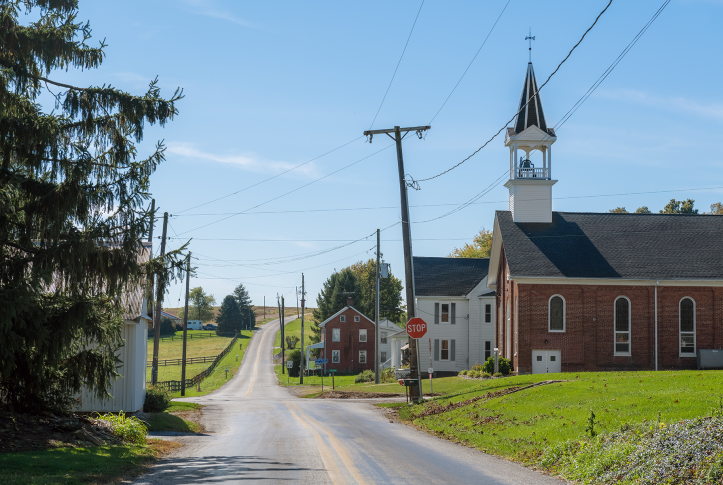
In rural Pennsylvania and other communities in the United States, access to primary care is deeply concerning, with a shortage of physicians, fewer hospitals and health clinics, and patients who cannot reliably get the care they need.
Recruiting more clinicians to rural practices remains essential but is not enough. Physician training takes many years, and many who practice in rural areas do not remain there for long. Advanced practice clinicians (e.g., nurse practitioners and physician assistants) increasingly pursue careers in medical subspecialties and urban settings. Rural communities need something more: care team members who can bring primary care directly to patients in their homes and communities, and who are themselves rooted in the places they serve.
The Primary Care Medic Project, under development at the Penn State College of Medicine, is designed around that idea: a certificate-based pathway that trains local individuals to deliver protocol-guided, telehealth-enabled primary and preventive care under the supervision of licensed clinicians. The initiative has been shaped by conversations with rural clinicians, employers, community health workers, educators, and prospective medic students, whose perspectives continue to shape the model as it develops.
What Is a Primary Care Medic?
A primary care medic will be a new role designed to extend the reach of primary care teams into rural, underserved, and otherwise hard-to-reach communities. They will be trained to deliver protocol-guided primary and preventive care services, such as care for diabetes and high blood pressure, as members of a clinical team. Medics work within clear limits: they only do what they are trained and approved for and follow clearly defined guidelines. If a case needs more expertise, they can immediately reach a supervising clinician.
Medics are not replacements for physicians, nurse practitioners, physician assistants, nurses, medical assistants, community health workers, or community paramedics — though they do overlap with those providers. Rather, the role is designed to fill a gap between community-based outreach and licensed primary care practice. They are similar to military medics, who see patients under the supervision of a physician and can greatly extend physicians’ capacity and reach. The medic role is anchored in primary care, prevention, chronic disease support, and team-based care.
The medic model combines a hands-on community presence with high-tech clinical support. Medics use workflows guided by protocols, along with telehealth and clinical decision support tools to help patients receive care. Concerns that are outside the protocol parameters trigger escalation to the supervising clinician.
Individuals interested in becoming primary care medics would be recruited from the communities they already live in and serve. This specifically includes adults from rural areas, community health workers, medical assistants, and medics transitioning out of military service.
Challenges Ahead
The primary care medic model holds promise, but there are critical unanswered questions. How visits will be reimbursed by insurers is unresolved, and without a sustainable payment model, the role cannot become a durable part of the health care system. In addition, recruiting the right candidates will require outreach and engagement with local community organizations. Building a path from a Pennsylvania pilot to one that other states can adopt may involve modifying the model to fit other states’ resources and constraints.
Workforce Development as Community Development
When rural residents can train for health care roles without leaving home for years of education, communities gain both care capacity and career opportunity. That matters for young people deciding whether they can stay near home, for veterans transitioning to civilian life, and for clinics trying to build teams that reflect the communities they serve.
Primary care medics are one solution to rural access problems. Medics will help rural primary care teams serve patients who are currently difficult to reach, delivering care where and when it is needed most.


