
Advanced Search

Advanced Search

Current Filters

Filter your query

Publication Types

Other

to

Toplines
  • Although Medicare is a federal program, beneficiaries’ ability to afford care, access providers, and avoid preventable hospitalizations varies widely depending on their state

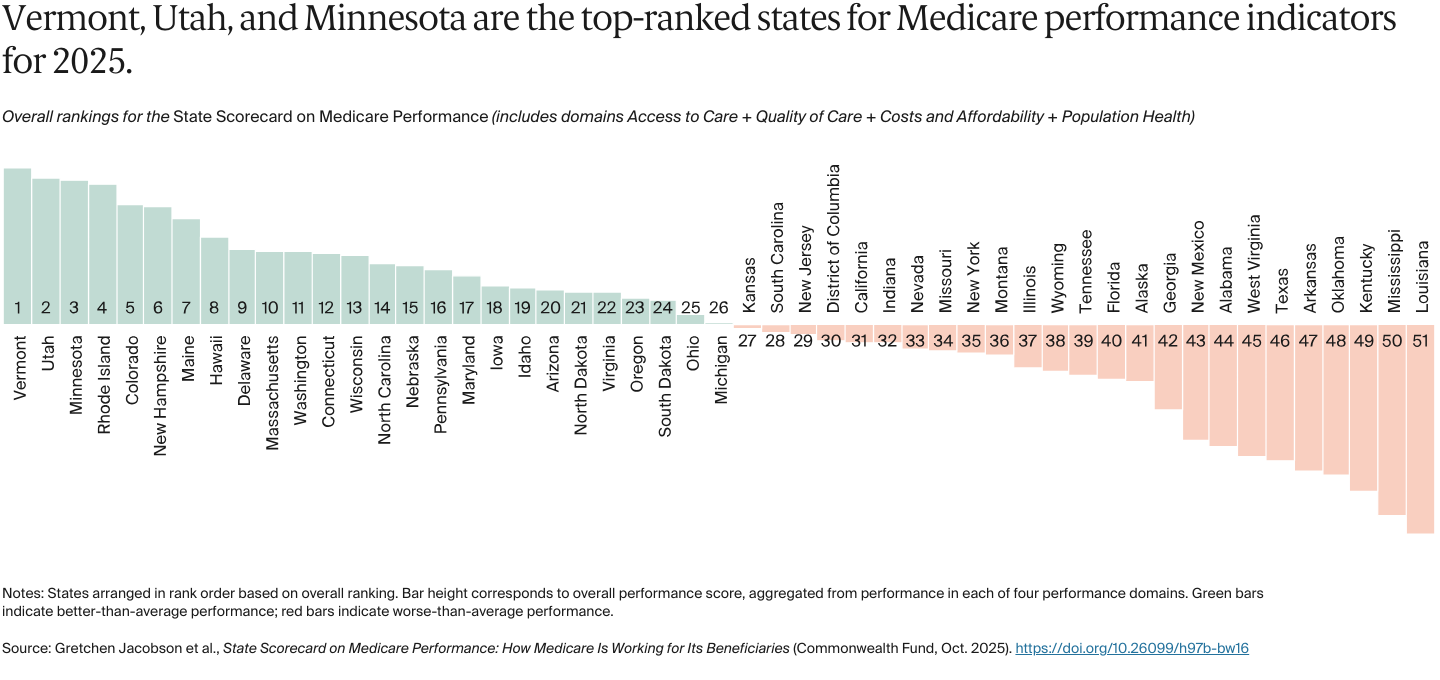
  • Vermont, Utah, and Minnesota rank highest for their Medicare beneficiaries’ health care access, affordability, quality, and outcomes, while Louisiana, Mississippi, and Kentucky ranked lowest

Introduction

Why a State Medicare Scorecard?

Medicare, established 60 years ago, provides health care coverage for more than 68 million Americans, including nearly all adults age 65 and older as well as 7 million younger people with disabilities.1 Over the decades, the federally administered program has been a pioneer of change in U.S. health care, often serving as a testing ground for reforms in how health care is delivered and paid for. Advocates for national health insurance, meanwhile, often point to Medicare as a potential model.

The importance of Medicare to the nation’s health and health care system is why it’s critical that we understand how well the program is serving the people it covers. While originally designed to provide uniform benefits across the country and to enable access to high-quality, affordable care, where beneficiaries live makes a difference in how they experience Medicare. There are several reasons for that variation:

  • Each state’s health care infrastructure is unique, making access to doctors and hospitals easier in some places than others. Practice norms of local health systems and providers differ as well, meaning there is variation in which tests or treatments are commonly provided for a given condition. Beneficiaries’ access to nonmedical supports, like care coordination services and transportation assistance, which can play a key role in health, also differ.
  • Most Medicare beneficiaries receive either some or all their Medicare benefits through private insurance plans, including Medicare Advantage plans and prescription drug plans. The availability of these plans differs across counties and states, as does their generosity of coverage, their premiums and cost sharing, and the access they offer to physicians, hospitals, and pharmacies. Most beneficiaries have some supplemental coverage to help with deductibles, coinsurance, and copayments or to fill gaps in Medicare’s benefits. Differences in types of Medicare coverage and supplemental coverage can result in variations in out-of-pocket costs and care.2
  • Beneficiaries’ out-of-pocket costs, particularly for most outpatient services, are often a percentage of what Medicare pays for those services. Medicare payments to health care providers can differ based on geographic area and local health care costs. As a result, beneficiaries from region to region can pay different amounts for the same service.3
About the 2025 State Medicare Scorecard

Using the most recent data available (2023 to 2025 for most indicators), our scorecard assesses how well Medicare is working for people in every U.S. state and the District of Columbia. Our goal is to offer insights about the sources of variation that affect beneficiaries’ experiences depending on where they live.

The scorecard is based on 31 health system performance indicators to provide a comprehensive assessment of Medicare beneficiaries’ access to care, the quality of care they receive, health care costs at the individual and system level, and population health. Performance indicators were constructed from public data sources, including the Centers for Medicare and Medicaid Services (CMS), selected federal surveys, and vital statistics datasets. Our accompanying state performance profiles also include information about the Medicare population in each state.

Scorecard Takeaways

  • Vermont, Utah, and Minnesota were the top-ranked states across our Medicare performance indicators for 2025.
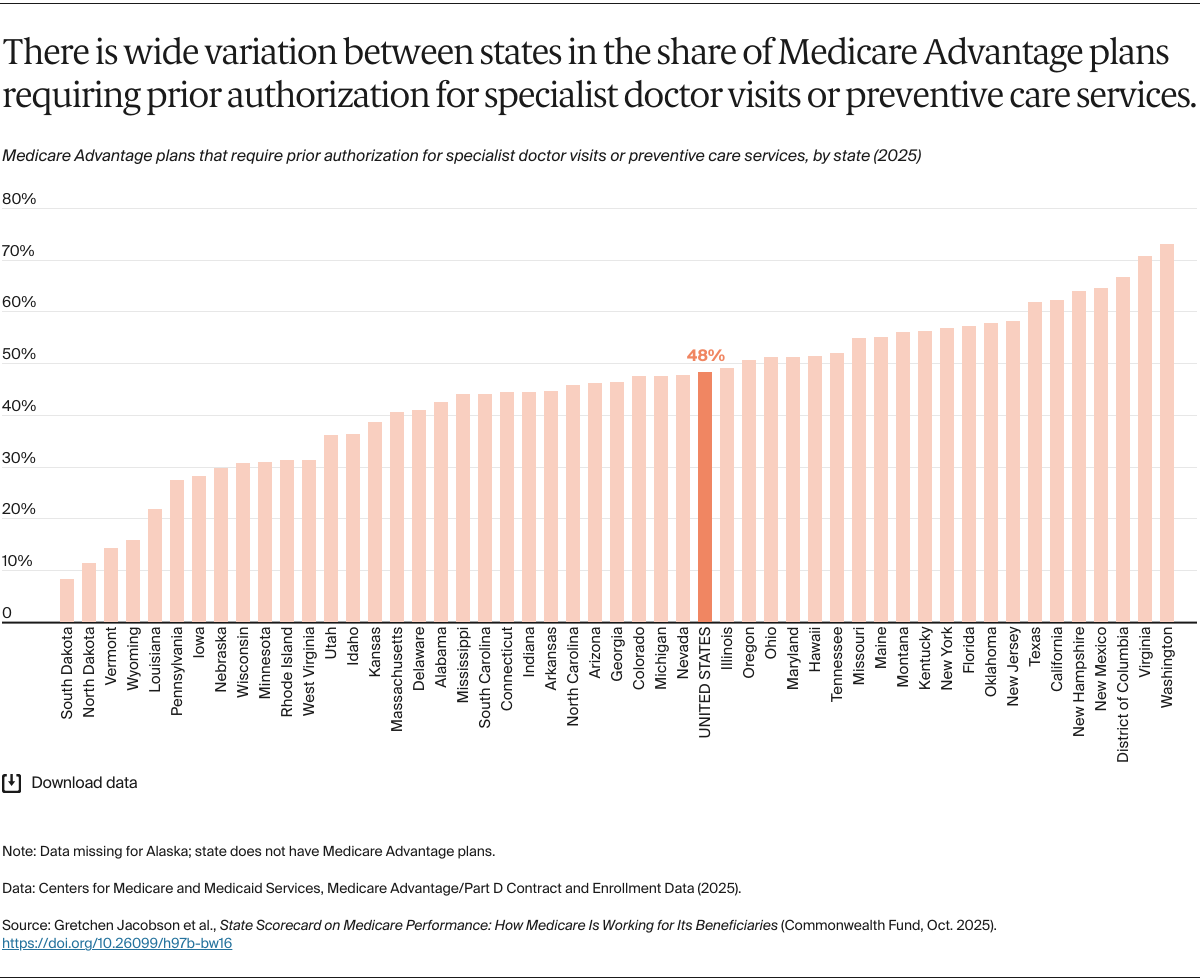
  • For Medicare beneficiaries, access to needed care varies greatly depending on where they live. For example, fewer than 10 percent of Medicare Advantage plans in South Dakota require prior authorization for specialist physicians or preventive care services, compared to over 70 percent of plans in Washington. Traditional Medicare generally does not require prior authorization for coverage of services.
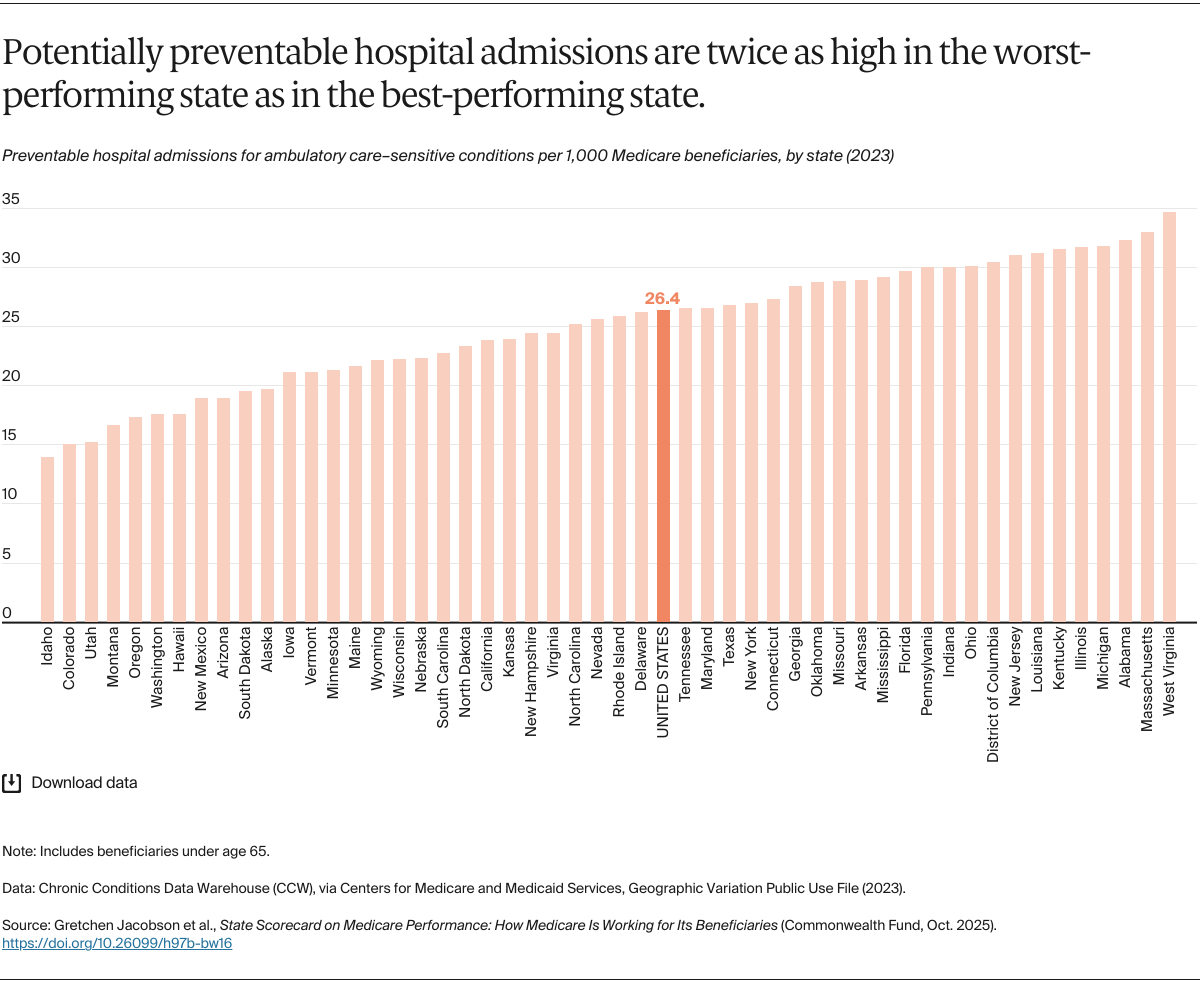
  • The quality of care Medicare beneficiaries receive — and ultimately the health outcomes they experience — also depends on where they live. The number of hospital admissions that could have been avoided with high-quality outpatient care range from a low of about 14 per 1,000 beneficiaries in Idaho to a high of nearly 35 per 1,000 in West Virginia — more than double.
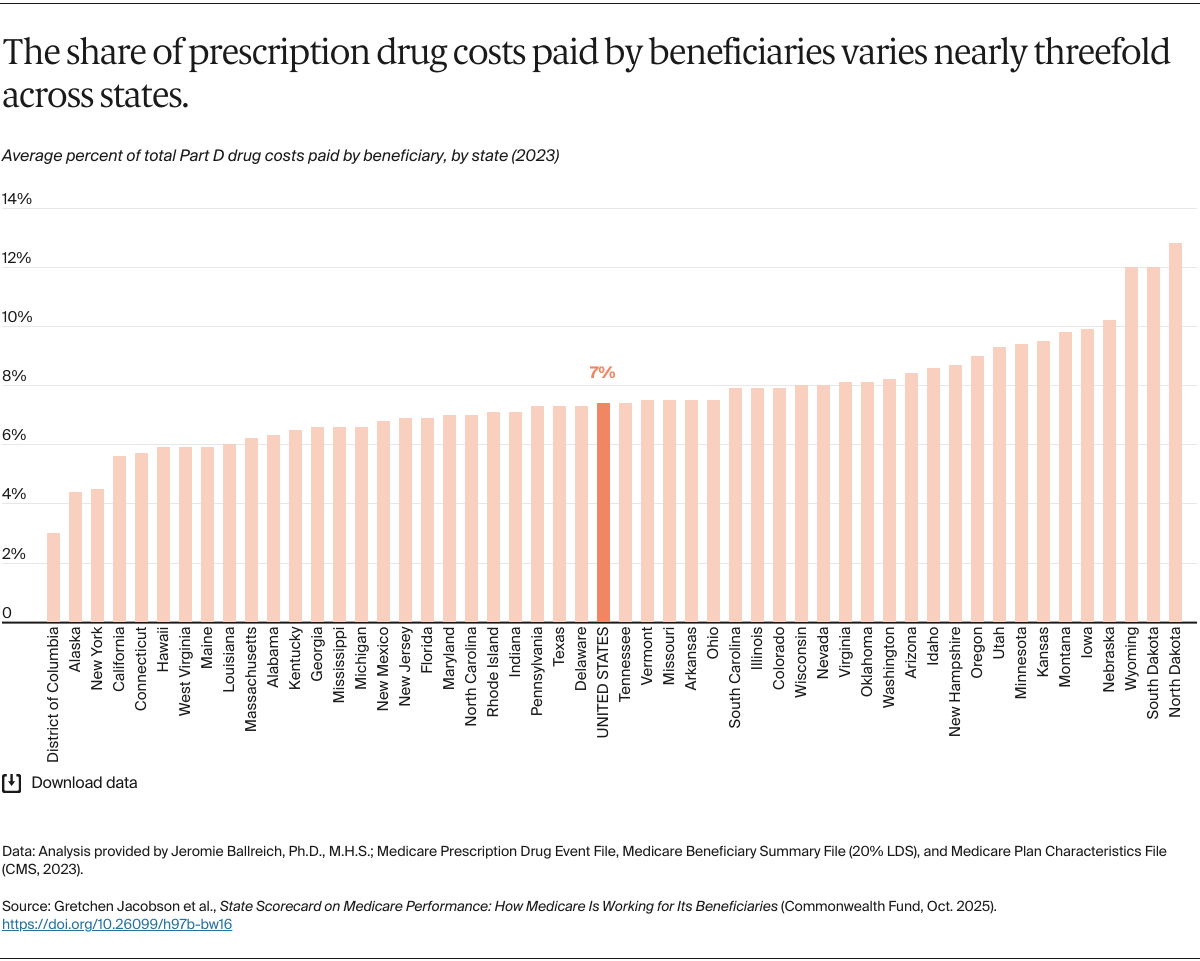
  • How much beneficiaries pay for their health care varies from state to state. For example, beneficiaries in New York paid a smaller share of their prescription drug costs (spending 4.5% out of pocket) than beneficiaries in North Dakota (who paid 12.8% out of pocket).
  • State differences in health care access, quality, and costs are notably smaller for Medicare beneficiaries than they are for people with Medicaid, commercial or other insurance, or no coverage at all. In many respects, Medicare has succeeded in ensuring that the people it covers — no matter which state they live in — have similar experiences with health care.
  • High-performing states share certain characteristics:
    • The availability of Medicare Advantage and prescription drug plans that offer better coverage than plans in other states, making it easier for Medicare beneficiaries to afford and access needed care. These plans in high-performing states are more likely than plans in other states to offer better coverage of services and prescriptions, don’t require prior authorization for preventive services and specialty care, and help enrollees establish a usual source of care.
    • Low Medicare program spending per person. This can help make care more affordable for beneficiaries, since, for many services, beneficiaries pay a percentage of what Medicare pays for their health care.
    • A health care system that performs well for people not covered by Medicare. This is a clear indication that a state’s policies, health care infrastructure, and local clinical practice norms are having a positive impact on all residents, not just those in Medicare.
Jacobson_medicare_state_scorecard_Exhibit_01

Medicare Scorecard Findings

Demographics of Beneficiaries

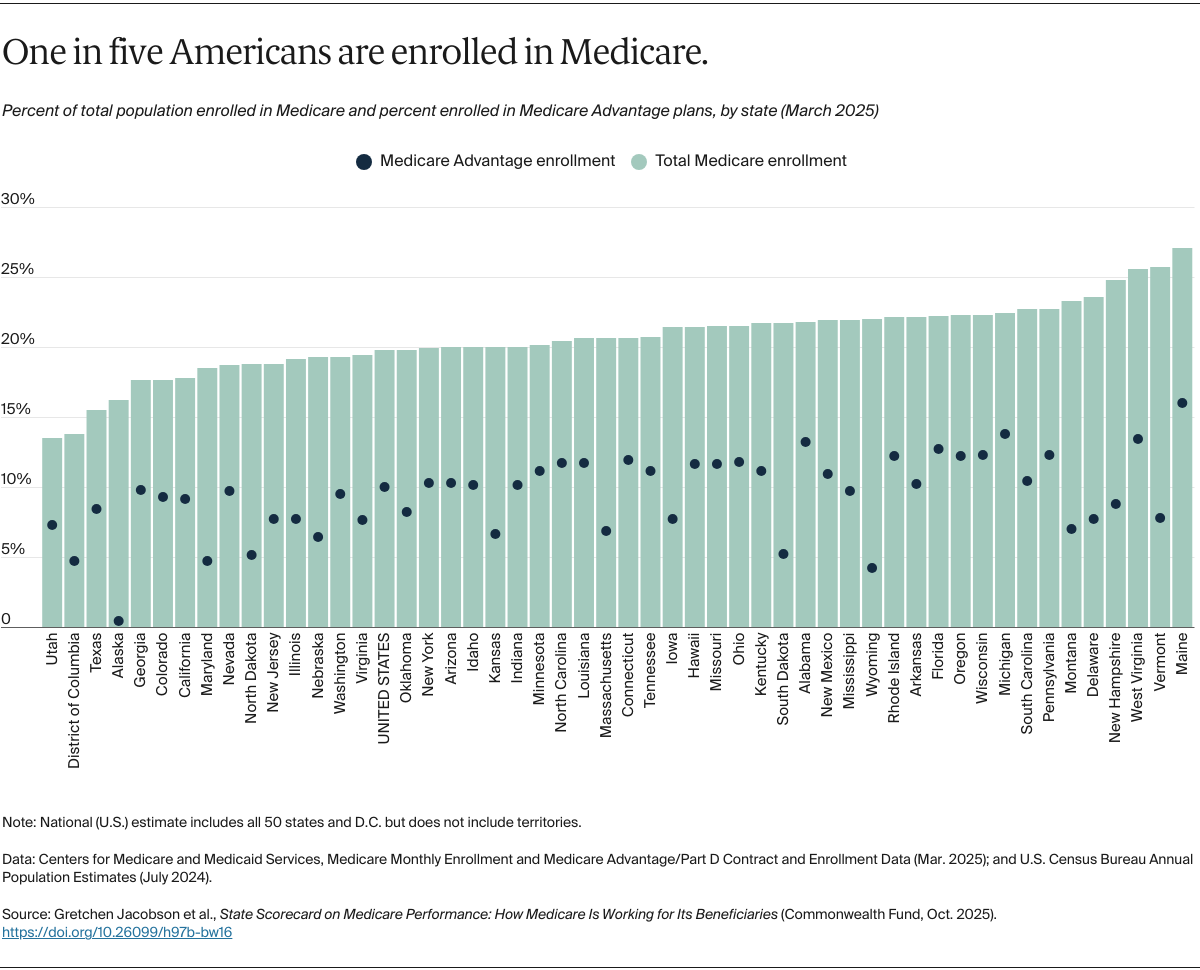
About one in five Americans are covered by Medicare. Most are adults age 65 and older, but some 10 percent are younger people with significant disabilities (Appendix G).

Jacobson_medicare_state_scorecard_Exhibit_02

Demographic characteristics such as age, income, and financial assets are linked to how much health care and support Medicare beneficiaries need. In addition, the share of state residents who are older or have disabilities may influence the extent to which state lawmakers tailor policies to their residents on Medicare. For example, Maine’s Cabinet on Aging was created to support the needs of older residents.4 As a percentage of the population, Maine has about twice as many Medicare beneficiaries as Utah does.

Jacobson_medicare_state_scorecard_Exhibit_03

Despite their similar coverage, Medicare beneficiaries can have dissimilar experiences with the health care system due to differences in their income and assets, which they use to pay for required coinsurance and services that Medicare doesn’t cover.

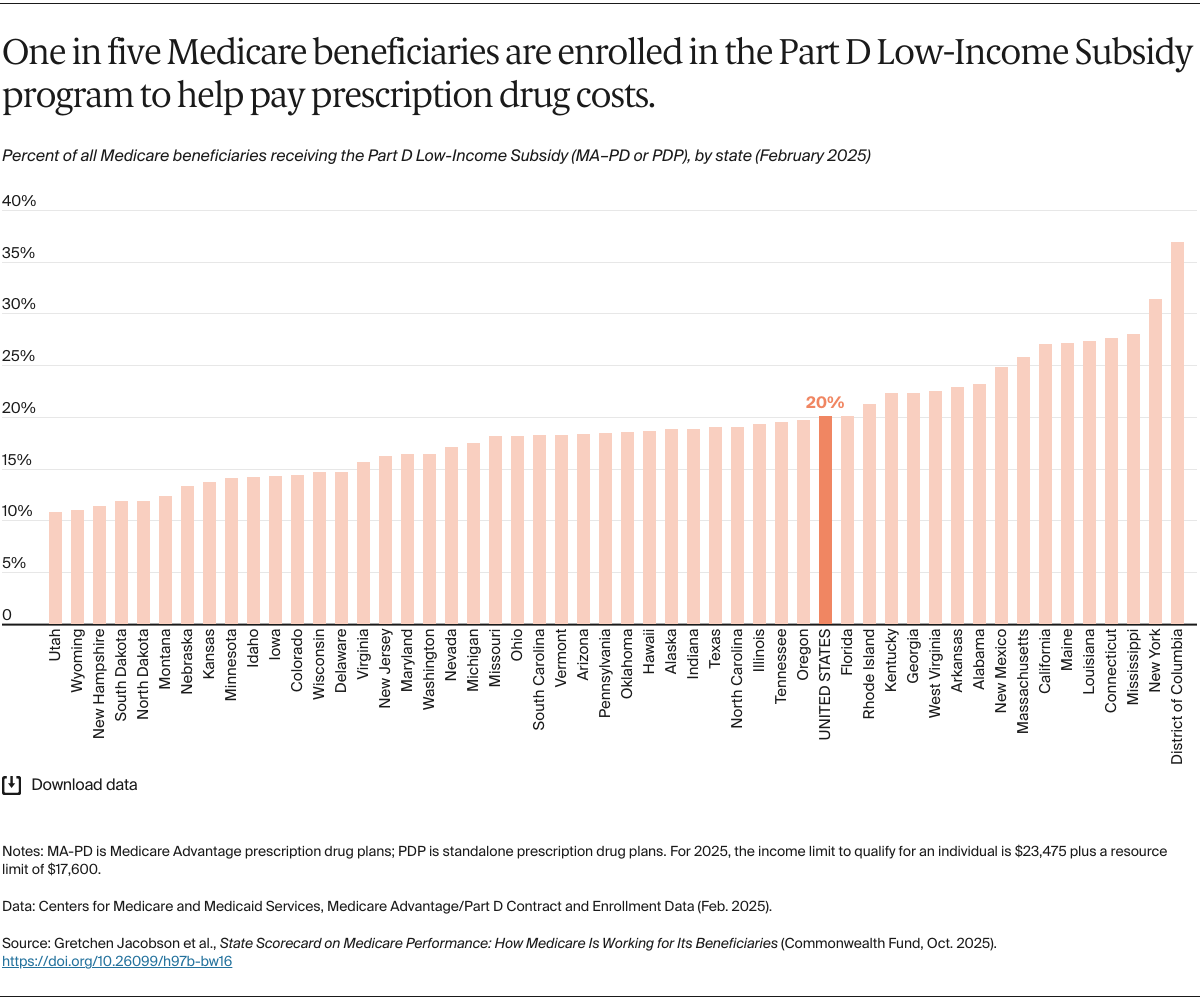
One-fifth (20%) of Medicare beneficiaries are enrolled in the Part D Low-Income Subsidy (LIS) program, which helps individuals with low income and assets pay their prescription drug premiums and cost-sharing expenses. The share of a state’s beneficiaries enrolled in this program is an indication of the level of financial need among those with Medicare. Since the LIS program helps cover enrollees’ cost sharing and premiums for prescription drugs, beneficiaries enrolled in it may be better able to afford other needed health care services.

The median income for older adults is lower than that for working-age adults, but we see similar variations in income across the two populations, and large differences between states. Median household income for older adults is lowest in Mississippi, where it’s just under half the median for older adults in Hawaii (Appendix G).

Access to Care

Access to care is about more than just having coverage: it’s about getting the right care, in the right place, at the right time. The ability to find care is affected by several factors, including the availability of providers who accept Medicare, having reliable transportation to medical appointments, and having access to care at home when needed. Access to timely care is also affected by potential barriers, like the need to obtain prior authorization for a service or procedure.

These barriers to care are sometimes different for beneficiaries in traditional Medicare compared to Medicare Advantage, and enrollment differences may result in variations in access to care between states. Differences in access also may stem from the health care infrastructure in each state as well as the availability of nonmedical but health-related services, such as care coordination, companion care, and transportation assistance.

Jacobson_medicare_state_scorecard_Exhibit_04

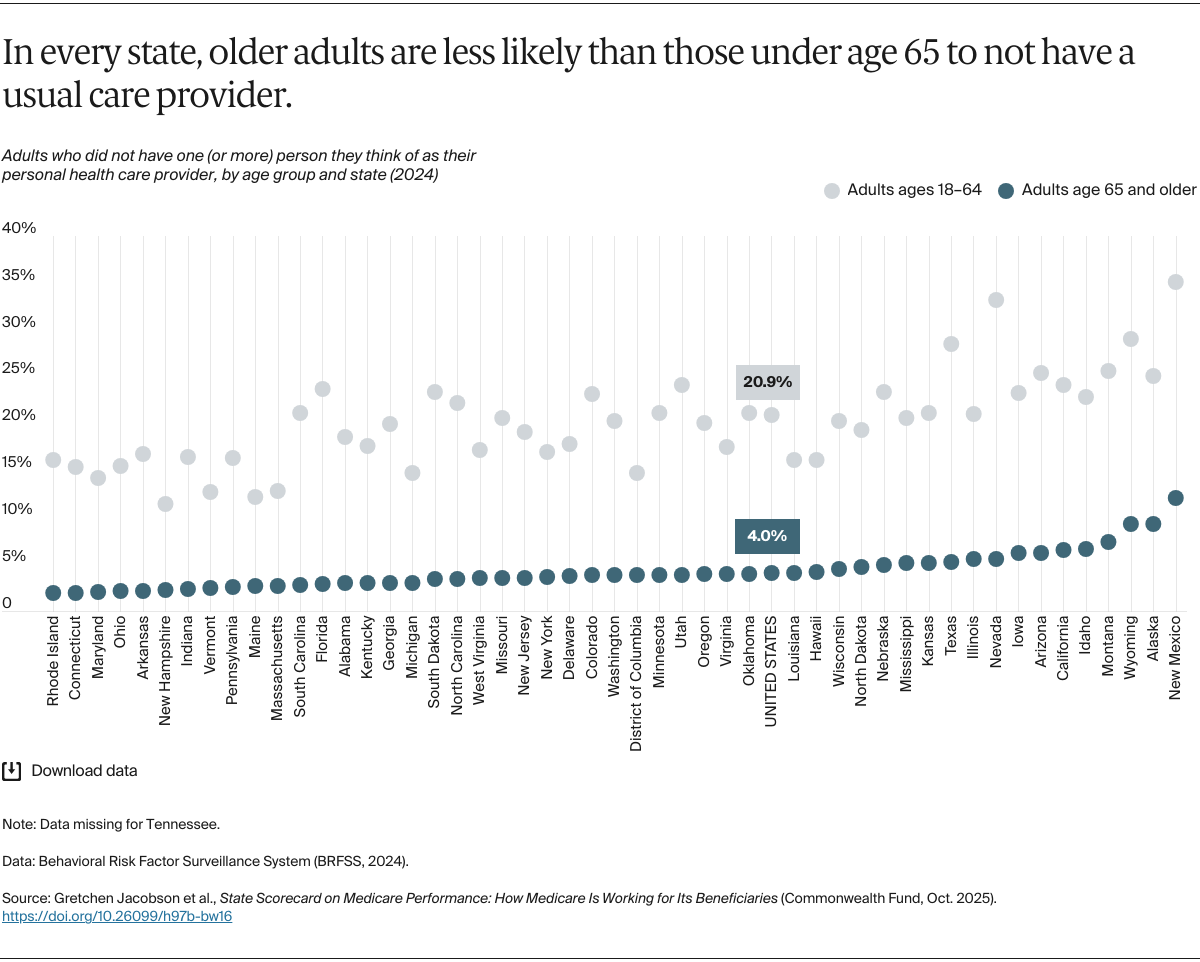
National survey data show that less than 5 percent of adults age 65 and older don’t have a person or persons whom they consider their personal health care provider. Having a regular provider makes it easier for Medicare beneficiaries to obtain needed care, including crucial services for managing chronic conditions. Having a regular provider is also associated with greater access to health screenings and preventive treatment.5

While most older adults say they have a usual source of care, the share of beneficiaries reporting not having one is higher in some rural states. In Wyoming, Alaska, and New Mexico, at least 9 percent of older adults say they do not have a regular provider. Those in rural states may face such challenges as a shortage of care providers or longer distances and travel times to get care.6

In contrast to older adults, people under age 65 — the vast majority of whom are not covered by Medicare — are five times more likely to report not having a usual care provider. Twenty-one percent of adults ages 18 to 64 say they lack a usual source of care.

Jacobson_medicare_state_scorecard_Exhibit_05

More than half of Medicare beneficiaries are enrolled in a Medicare Advantage plan (Appendix G). While these plans often pay for some transportation to medical appointments — a benefit not provided by traditional Medicare — plans typically have more restrictive provider networks.

Most Medicare Advantage plans also require prior authorization as a condition for coverage of services, a restriction only rarely required in traditional Medicare. Medicare drug plans also frequently require prior authorization or implement other tools to manage prescription drug use.

The share of Medicare Advantage plans that require prior authorization for specialist physician visits or preventive care varies greatly among states. Fewer than 20 percent of plans require prior authorization for these services in Wyoming, Vermont, North Dakota, and South Dakota, compared to greater than 70 percent of plans in Virginia and Washington.

While prior authorization requirements may help to reduce inappropriate care or low-value services, they can also erect barriers to care for Medicare beneficiaries by delaying care, causing care disruptions, or denying medically necessary services. The Commonwealth Fund’s 2024 Value of Medicare survey found that 22 percent of beneficiaries in a Medicare Advantage plan reported delays due to required approval, compared to 13 percent of beneficiaries in traditional Medicare.7

Quality of Care

The quality of care people with Medicare receive is influenced by several factors within the program’s control. These include the coverage that Medicare plans provide in a given area, Medicare’s “conditions of participation” for providers, and the financial incentives that hospitals and physicians have to deliver high-quality care and undertake improvement efforts. Other factors are not under Medicare’s direct control, such as state licensing and training requirements for health care providers, how much providers help to coordinate care for their Medicare patients, and beneficiaries’ access to social support systems to enhance medical care.

Jacobson_medicare_state_scorecard_Exhibit_06

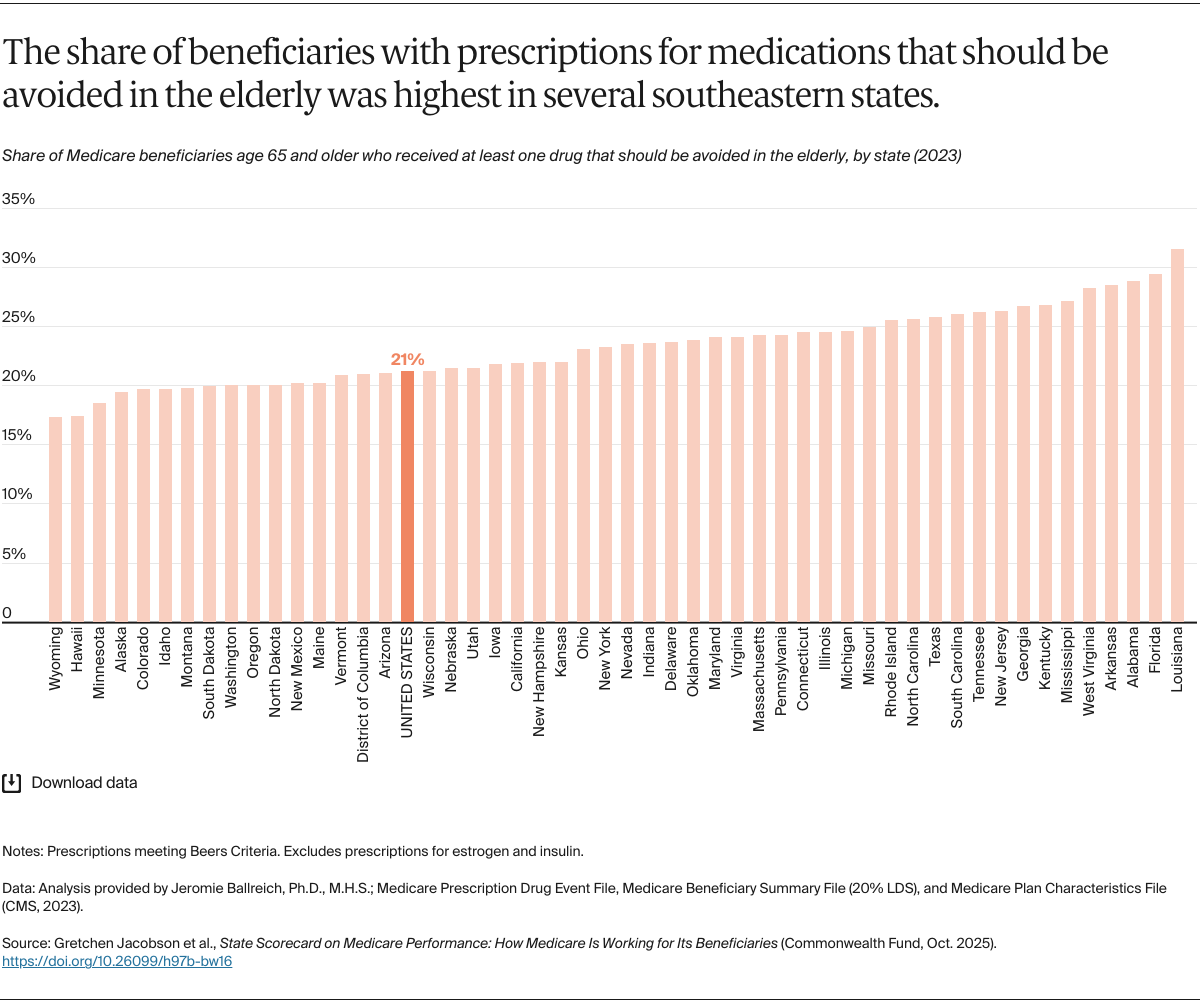
High-quality care means patients get the tests, treatments, and services that are appropriate for managing their health conditions. Certain medications that carry a higher risk of adverse health events for older adults should be limited or avoided altogether. Medications that are potentially inappropriate for the elderly increase the risk of confusion, falls, bleeding risk, and other potential harms.8 The Medicare program includes a measure in the Part D star quality ratings to monitor and penalize for excessive use of high-risk medications in older adults.

The use of high-risk drugs is most prevalent in the southeastern states of Louisiana, Florida, Alabama, Arkansas, and West Virginia.

Jacobson_medicare_state_scorecard_Exhibit_07

Preventable hospitalizations can occur when people with chronic conditions experience acute exacerbations, often when the underlying disease is detected late or poorly managed. High rates of preventable hospitalizations often indicate opportunities for earlier disease detection and better care management, but they also can reflect local practice patterns and local health system capacity.

Medicare incentivizes hospitals to prevent some readmissions for ambulatory care–sensitive conditions — those that can be avoided with receipt of timely care — through its Hospital Readmissions Reduction Program. There are wide gaps between states in the frequency of Medicare adults’ preventable admissions: in Idaho and Utah, for example, rates are under 20 hospitalizations per 1,000 beneficiaries, while in Kentucky, Massachusetts, and West Virginia they approach 35 per 1,000 beneficiaries.

Costs and Affordability

Health care practice norms, Medicare payment rates for providers, and the generosity of coverage offered by prescription drug plans and Medicare Advantage plans in a state are a few of the factors that help determine costs and affordability of care for Medicare beneficiaries. Medicare has significant cost-sharing requirements, including premiums, deductibles, copayments, and coinsurance as well as notable gaps in its coverage, such as long-term care. Ultimately, which services beneficiaries use, including those covered and not covered by Medicare, directly affects beneficiaries’ out-of-pocket costs.

Jacobson_medicare_state_scorecard_Exhibit_08

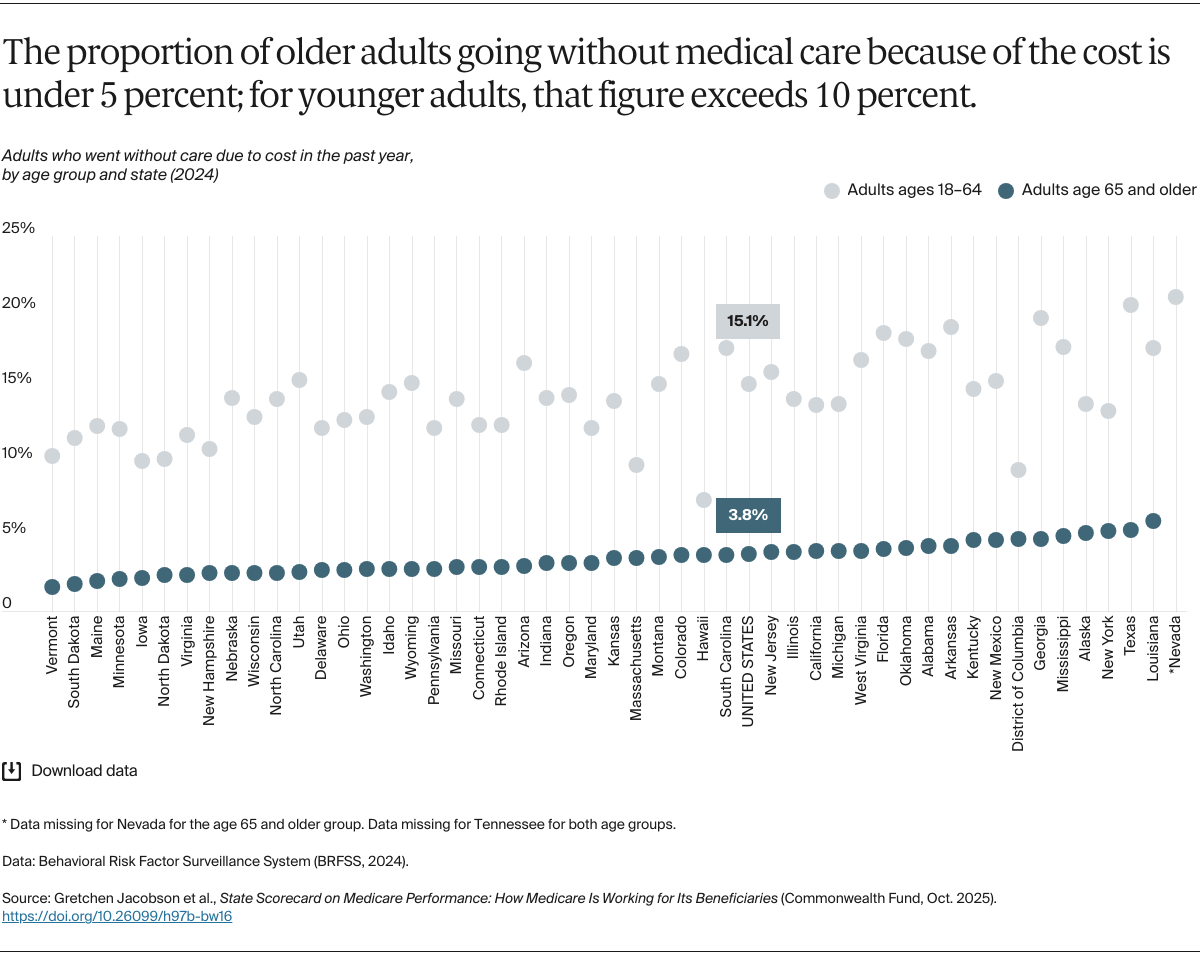
Whether beneficiaries are avoiding necessary care because of the cost is one measure of affordability. While postponing or not receiving necessary care can reduce costs in the short term, over the long term doing so can lead to poorer health outcomes and higher expenses. Among adults age 65 and older, 3.8 percent report going without medical care due to cost. Rates vary widely across states, from a low of 1.6 percent in Vermont to a high of 6.0 percent in Louisiana.

A larger share of adults ages 18 to 64 — about 15 percent — report going without care because of cost. Among working-age adults, 11 percent lacked health insurance in 2024.9 Having insurance is key to accessing care and limiting out-of-pocket spending. Across all states, older adults who have health coverage through Medicare are much less likely to go without care because of costs, although there is some variation among states.

Jacobson_medicare_state_scorecard_Exhibit_09

Medicare beneficiaries have the option of enrolling in private prescription drug coverage through either a Medicare Advantage plan or a standalone prescription drug plan. The Medicare program subsidizes beneficiaries’ drug costs and has oversight over private plans; some employers and unions also subsidize costs for their retirees. However, plans’ drug formularies, coverage generosity, pharmacy networks, and costs can vary. Which prescription drugs beneficiaries use also varies by health status as well as by provider and patient preferences.

The average share of prescription costs that beneficiaries pay out of pocket — as opposed to what the plan or the federal government pays — varies throughout the U.S. Beneficiaries in rural states of the West and Upper Great Plains paid a larger share of total costs, on average, than beneficiaries in other parts of the country.

Population Health

Many factors impact population health, including people’s ability to find and afford high-quality medical care, their access to social supports that contribute to health, and whether they have the resources and financial means needed to maintain their health. Many of these are closely linked to people’s access to and use of health care prior to enrolling in Medicare.

Jacobson_medicare_state_scorecard_Exhibit_10

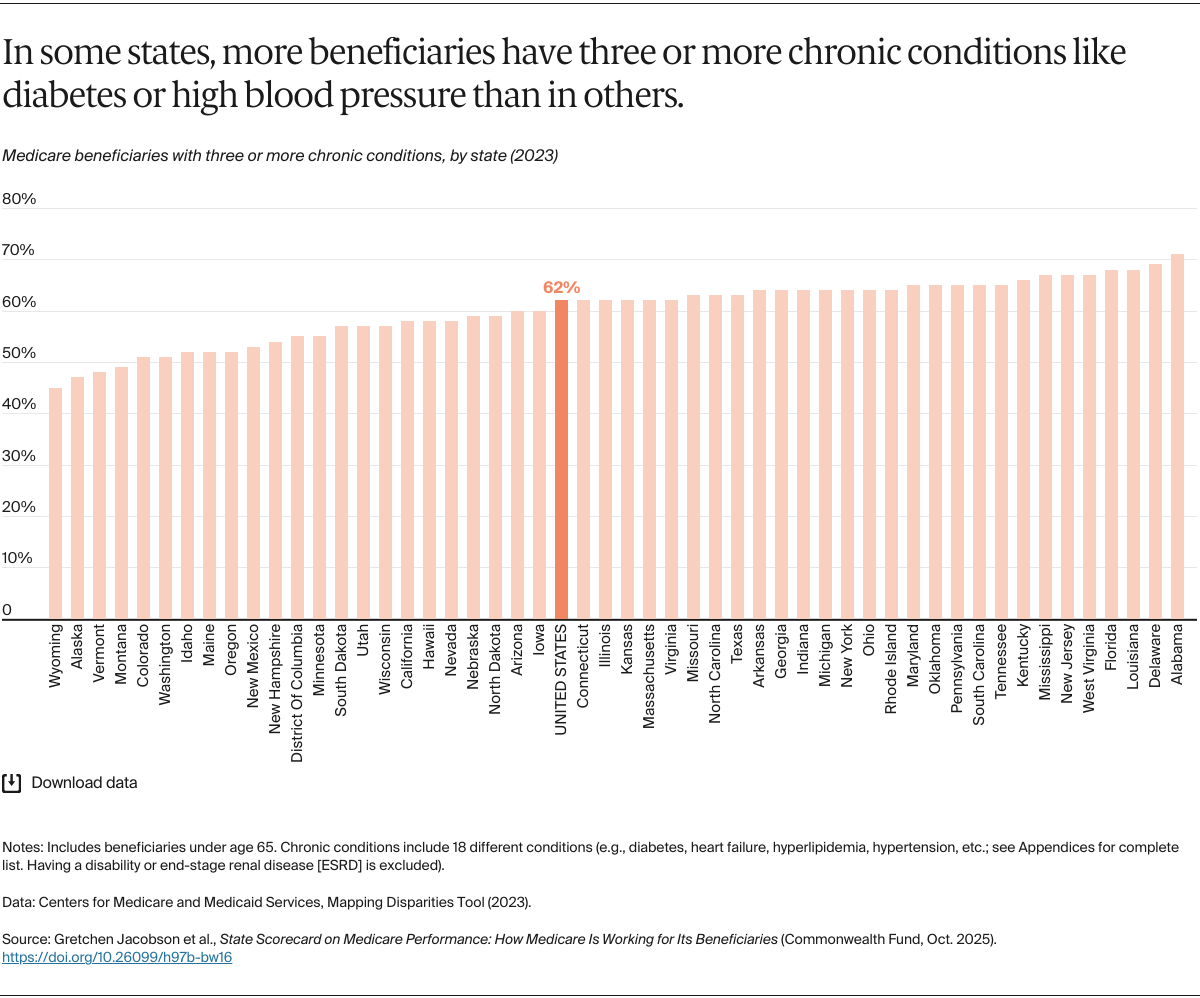
About two in three beneficiaries enrolled in traditional Medicare have three or more chronic health conditions. People with multiple chronic conditions need extra services to manage their health and coordinate their health care.

Medicare has an important role in both preventing and helping to manage chronic conditions, which can influence health outcomes and health care costs. The program has many initiatives to help manage, treat, and meet the needs of people with chronic conditions, and both the effectiveness of these programs and beneficiaries’ access to them can affect health status.

In four rural states — Wyoming, Alaska, Vermont, and Montana — less than half of beneficiaries in traditional Medicare had three or more chronic conditions, compared to more than half in all other states. With other studies showing that chronic conditions in general are more prevalent in rural areas, there is a need for further research in this area.10

Jacobson_medicare_state_scorecard_Exhibit_11

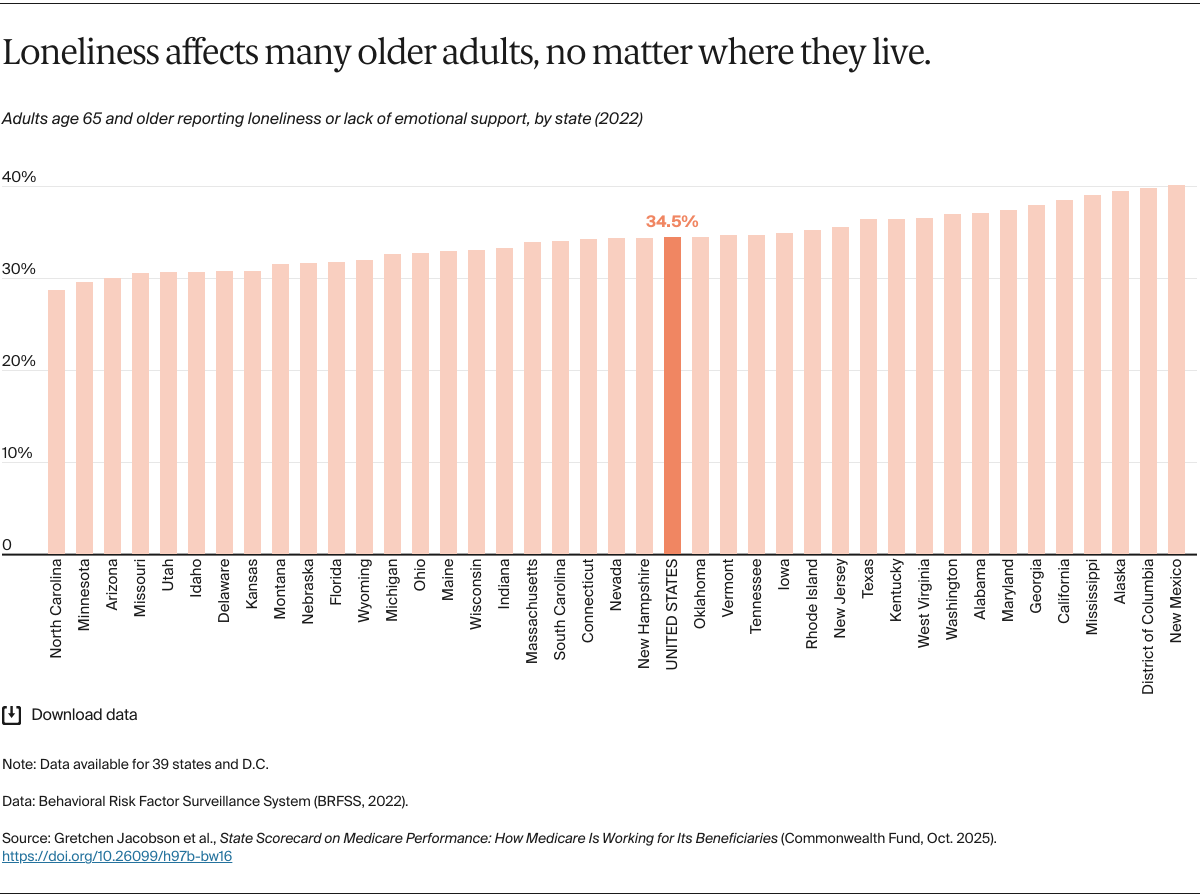
No matter where they live, many older adults face loneliness. In the states where data are available (39 states plus D.C.), at least 25 percent of older adults reported being lonely or lacking in emotional support. Loneliness has been linked with poorer health outcomes, including increased risk for heart disease and stroke, and isolation can lead to higher use of health care services and higher costs.

The Senior Medicare Patrol, a federal government–led program that conducts beneficiary outreach and organizes volunteers, provides resources on preventing and addressing loneliness, including local resources for maintaining social connections. In addition, Medicare Advantage plans have the option of providing companionship programs, with about 6 percent of plans doing so in 2025.11

Jacobson_medicare_state_scorecard_Exhibit_12

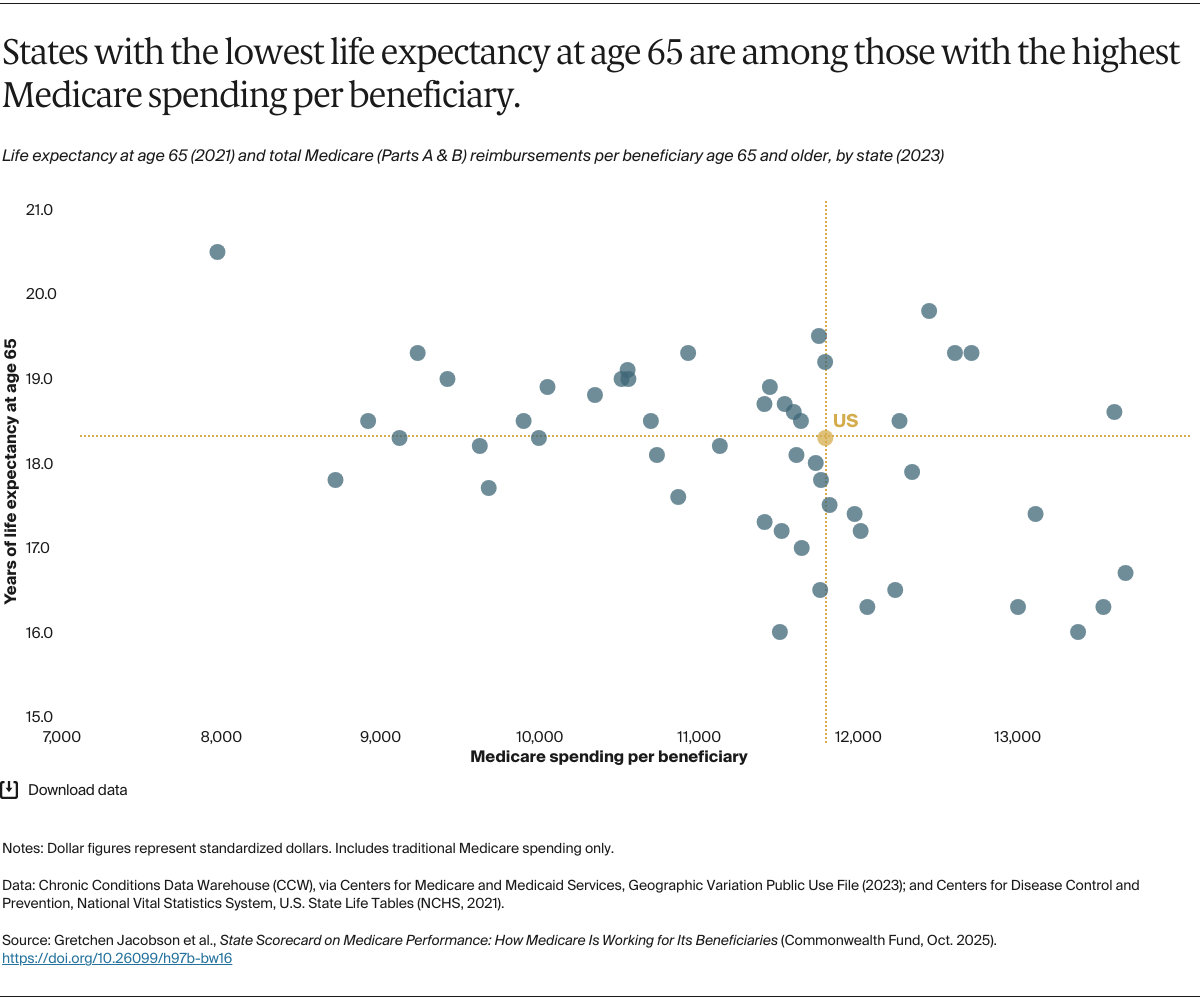
Life expectancy at age 65 represents the number of additional years a person that age can expect to live, on average. Life expectancy at 65 differs across the United States, varying by more than four years — from a high of 20.6 years in Hawaii to a low of 16.1 years in Mississippi and West Virginia.

Life expectancy has many contributing factors, including public health policies and socioeconomic conditions, as well as medical care.12 Avoidable mortality, or deaths before age 75 from conditions that are preventable or treatable through timely health care, is closely related to life expectancy.13

Like life expectancy, Medicare spending per beneficiary varies across states. Hawaii has the longest life expectancy at age 65 and the lowest Medicare spending per beneficiary of any state. In contrast, states with the highest spending per beneficiary, many in the Southeast, have a life expectancy at 65 below the national average.

As a nation, the U.S. consistently spends more on health care than its peers around the world yet has lower life expectancy at birth.14 Why is a question that has long vexed policymakers. We do know that life expectancy at age 65 is a product of many factors, including the medical care and nonmedical services people get both before and after Medicare enrollment.

Understanding Variation: The Role of State Factors and Federal Policy

Although Medicare is a national program, health outcomes, access to needed health care, the affordability of care, and quality of care all vary widely for the people it covers. Medicare performs better in states where Medicare Advantage plans and prescription drug plans offer better coverage, making care easier to access and afford. Medicare also tends to perform better in states with lower per capita Medicare costs, which may help to make care more affordable for beneficiaries. Whether beneficiaries have supplemental coverage and are enrolled in low-income programs if they’re eligible also drives affordability and accessibility of care.

While factors such as out-of-pocket spending, wait times for an appointment, or clinical health outcomes might be better indicators of affordability, access, and quality, data for these indicators are often available only at the national level, not at the state level. For this reason, we could not include them in our scorecard. We faced other data limitations as well. With respect to beneficiaries in Medicare Advantage plans, data on access, quality, and affordability are often lacking — an issue that becomes more problematic with Medicare Advantage growing into the predominant source of Medicare coverage.15 Moreover, many sources of state-level data do not specify the type of insurance coverage; for these indicators, we could only examine state differences among people age 65 and older. Thus, for some indicators, we were unable to examine how well the Medicare program is serving beneficiaries younger than 65, who qualify based on a disability or disabling condition.

Federal and State Roles

Federal policymakers have many levers for improving care. The Medicare program sets standards and has oversight over Medicare private plans. It can, for example, delineate the circumstances or services for which prior authorization is permitted. For other services, such as home health care, policymakers could ensure coverage rules are clear and payments to providers are appropriate. Federal policymakers also can incentivize providers to apply best practices and reduce wasteful care. Existing federal supports for low-income people through programs like the Part D Low-Income Subsidy and the Medicare Savings Programs could also be enhanced.

It’s noteworthy that Medicare performs better in states where the health care system also performs better for other populations. In fact, the top performers in this report overlap with many of the highest-ranking states in other assessments of health care system quality and performance.16 Clearly, a state’s health care infrastructure, its clinical practice norms, and its policies affect all state residents, including Medicare beneficiaries, and investments in the health care system benefit everyone. This confluence of state and federal health policy is what enables beneficiaries to get the health care they need and ultimately affects their health outcomes and experiences with health care.

HOW WE CONDUCTED THIS STUDY

The Commonwealth Fund’s State Scorecard on Medicare Performance evaluates states on 31 performance indicators grouped into four dimensions. The report generally reflects data from 2023 through 2025.

Performance Domains

Access to Care (5 indicators): Includes measures of access to a usual source of care, routine checkups, and dental care among older adults, share of Medicare Advantage plans in a state requiring prior authorization, and Medicare beneficiaries referred for home health care who received timely services.

Quality of Care (13 indicators): Includes measures of receipt of preventive care (including vaccinations), falls with injury and prescriptions for medications that should be avoided among older adults, indicators of hospital and emergency department use that might be reduced with timely and effective care and follow-up care, as well as measures of quality in hospital, postacute, and long-term care settings.

Costs and Affordability (5 indicators): Includes estimates of Medicare beneficiary spending per person, the share of Medicare spending directed toward primary care, beneficiaries’ out-of-pocket spending on medications, and rates at which older adults went without care because of the cost.

Population Health (8 indicators): Includes measures of fair or poor health status, poor physical health, poor mental health, functional limitations, food insecurity, and loneliness among older adults; life expectancy at age 65; and diagnoses of three or more chronic conditions.

See Appendix H for a detailed description of all indicators.

Data Sources

Indicators generally draw from publicly available data sources, including the Centers for Medicare and Medicaid Services (CMS), selected federal surveys, and vital statistics datasets. We used the most current data available whenever possible. Appendix A1 provides detail on the data sources and timeframes.

Scoring and Ranking Methodology

For each indicator, a state’s standardized z-score is calculated by subtracting the 51-state average (treating the District of Columbia as a state) from the state’s observed rate and then dividing by the standard deviation of all observed state rates. States’ standardized z-scores are averaged across all indicators within the performance dimension, and dimension scores are averaged into an overall score. Ranks are assigned based on the overall score. This approach gives each dimension equal weight and, within each dimension, it weights all indicators equally. In addition, it accommodates for the different scales used across indicators (for example, percentages, dollars, and population-based rates).

ACKNOWLEDGMENTS

The authors would like to thank Liz Fowler, Angela Liu, and David Lipschutz for their review and feedback. We also would like to thank the following Commonwealth Fund staff members: Joseph Betancourt, Kathleen Regan, Melinda Abrams, Sara Collins, Tony Shih, Lovisa Gustafsson, and Arnav Shah, for providing constructive feedback and guidance; and the Fund’s communications and support teams, including Barry Scholl, Chris Hollander, Bethanne Fox, Samantha Chase, Deborah Lorber, Joshua Tallman, Jen Wilson, Paul Frame, Naomi Leibowitz, Aishu Balaji, Carson Richards, Avni Gupta, Paige Huffman, and Karina Polanco for their guidance, editorial and production support, and public dissemination efforts.

Finally, the authors wish to acknowledge Maya Brod and Gabrielle O’Brien of Burness for their assistance with media outreach, and the Center for Evidence-based Policy at Oregon Health & Science University for its support of the research unit, which enabled the analysis and development of the scorecard report.

NOTES
  1. Centers for Medicare and Medicaid Services, “Medicare Monthly Enrollment, April 2025,” accessed Aug. 27, 2025.
  2. Faith Leonard et al., Medicare’s Affordability Problem: A Look at the Cost Burdens Faced by Older Enrollees — Findings from the Commonwealth Fund Biennial Health Insurance Survey, 2022 (Commonwealth Fund, Sept. 2023).
  3. Alex Cottrill, Juliette Cubanski, and Tricia Neuman, “What to Know About How Medicare Pays Physicians,” KFF, Mar. 24, 2025.
  4. State of Maine, Cabinet on Aging, 2024 Annual Report (State of Maine, Feb. 2025).
  5. Kevin Croke et al., “Primary Health Care in Practice: Usual Source of Care and Health System Performance Across 14 Countries,” Lancet Global Health 12, no. 1 (Jan. 2024): e134-e144.
  6. Gina Turrini et al., Access to Health Care in Rural America: Current Trends and Key Challenges (Office of the Assistant Secretary for Planning and Evaluation, Oct. 2024).
  7. Gretchen Jacobson et al., What Do Medicare Beneficiaries Value About Their Coverage?: Findings from the Commonwealth Fund 2024 Value of Medicare Survey (Commonwealth Fund, Feb. 2024).
  8. American Geriatrics Society, Beers Criteria Update Expert Panel, “American Geriatrics Society 2023 Updated AGS Beers Criteria for Potentially Inappropriate Medication Use in Older Adults,” Journal of the American Geriatrics Society 71, no. 7 (July 2023): 2052–81.
  9. Lisa N. Bunch and Halelujha Ketema, Health Insurance Coverage in the United States: 2024, Current Population Reports, P60-288 (U.S. Census Bureau, Sept. 2025).
  10. Beth Carter and Olivia Dean, “Rural–Urban Health Disparities Among U.S. Adults Ages 50 and Older,” AARP, Oct. 27, 2021.
  11. ATI Advisory, “Advancing Nonmedical Supplemental Benefits in Medicare Advantage,” June 18, 2025.
  12. Jason D. Buxbaum et al., “Contributions of Public Health, Pharmaceuticals, and Other Medical Care to U.S. Life Expectancy Changes, 1990–2015,” Health Affairs 39, no. 9 (Sept. 2020): 1546–56.
  13. David C. Radley et al., “Americans, No Matter the State They Live in, Die Younger Than People in Many Other Countries,” To the Point (blog), Commonwealth Fund, Aug. 11, 2022.
  14. Munira Z. Gunja, Evan D. Gumas, and Reginald D. Williams II, U.S. Health Care from a Global Perspective, 2022: Accelerating Spending, Worsening Outcomes (Commonwealth Fund, Jan. 2023).
  15. Gretchen Jacobson and David Blumenthal, “Medicare Advantage Enrollment Growth: Implications for the U.S. Health Care System,” JAMA 327, no. 24 (June 28, 2022): 2393–94.
  16. David C. Radley, Kristen Kolb, and Sara R. Collins, 2025 Scorecard on State Health System Performance: Fragile Progress, Continuing Disparities (Commonwealth Fund, June 2025).

Publication Details

Date

Contact

Gretchen Jacobson, Vice President, Medicare, Expanding Coverage and Access, The Commonwealth Fund

gj@cmwf.org

Citation

Gretchen Jacobson et al., State Scorecard on Medicare Performance: How Medicare Is Working for Its Beneficiaries (Commonwealth Fund, Oct. 2025). https://doi.org/10.26099/h97b-bw16