Advanced Search

Advanced Search

Current Filters

Filter your query

Publication Types

Other

to

Issue Briefs

/

The Current State of Freestanding Birth Centers in the United States

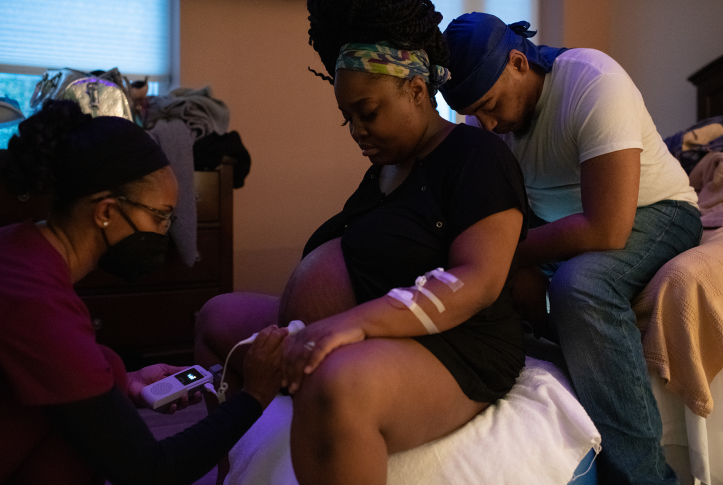
Nurses listens to fetal heartbeat of mother in labor, with father behind her

Director of Nursing Mai-Lan Caman listens to the fetal heartbeat of laboring mother Jamira Eaddy-Onque, 27, while expectant father Ali Onque, 25, listens at the Birth Center of New Jersey. Photo: Alice Proujansky

Director of Nursing Mai-Lan Caman listens to the fetal heartbeat of laboring mother Jamira Eaddy-Onque, 27, while expectant father Ali Onque, 25, listens at the Birth Center of New Jersey. Photo: Alice Proujansky

Toplines
  • A comprehensive maternal health system that incorporates community birth centers could help the U.S. address its maternal health crisis, but access is limited and uneven across states

  • Nearly four in 10 families who use birth centers to deliver paid out of pocket, compared with 3 percent of families using hospitals

Introduction

Freestanding birth centers are community-based facilities — separate from hospitals or medical centers — that care for people with low-risk pregnancies throughout pregnancy, birth, and the postpartum period. Patients and families are cared for by midwives who know them and their needs and preferences, and who support their right to make informed choices about their care. Birth centers offer care focused on patient autonomy and cultural responsiveness — a model that can reduce the disparities in pregnancy and delivery outcomes for Black and Indigenous communities.1 Birth centers have also been shown to keep medical interventions such as cesarean deliveries — which are associated with higher risk of complications — to a minimum.2

A substantial body of evidence from other countries confirms that when birth center care is properly integrated into a comprehensive maternal health system, it consistently lowers costs while maintaining positive maternal and newborn outcomes.3 International evidence also points to higher maternal satisfaction with midwife-led birth center care compared to hospital-based care (97 percent versus 78 percent).4 Yet, despite the evidence, access to birth center care remains limited in the United States by factors such as state regulatory requirements, provider shortages, and insufficient Medicaid and private insurance reimbursement.5

As policymakers, payers, communities, and local health system leaders search for ways to improve maternal health outcomes in the U.S., birth centers warrant greater attention as part of a comprehensive maternal health care system. This brief provides an overview of the current state of freestanding birth center care in the U.S. using available data, including trends in birth center births, variation in birth center availability, regulation across states, and the characteristics of patients and providers in birth centers (see “How We Conducted This Study” for more details).
Highlights

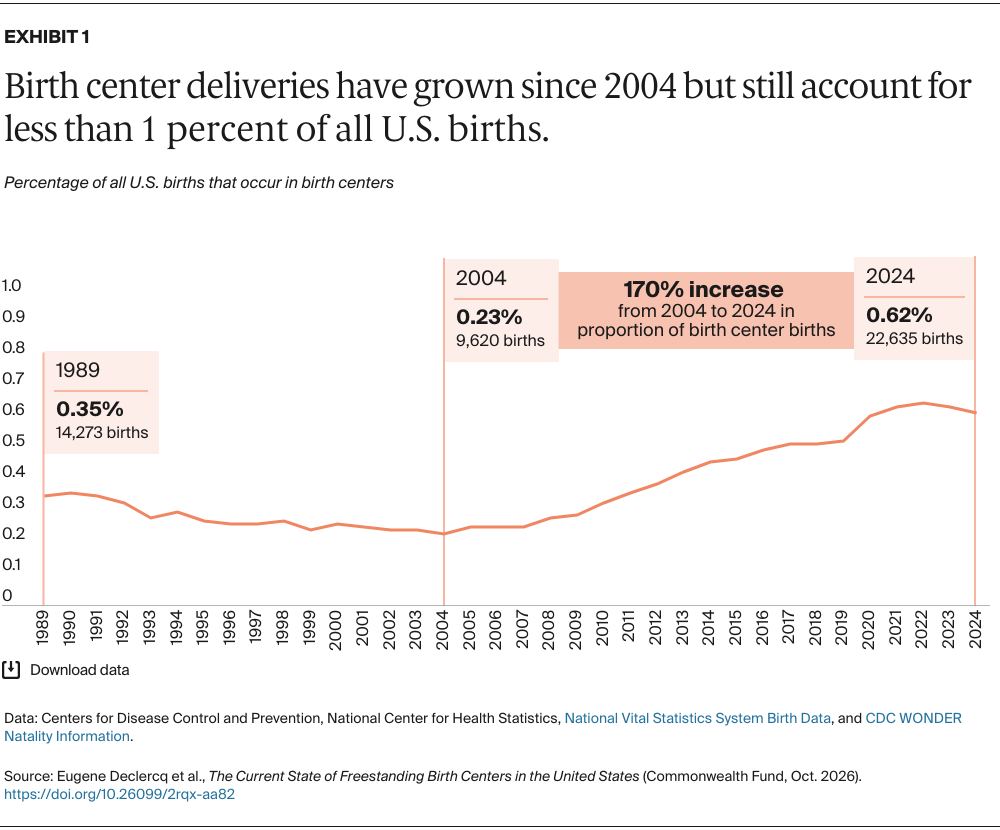
  • Growth: Births at freestanding birth centers, which provide a low-intervention model of maternity care led by midwives, have grown since 2004 but still account for less than 1 percent of U.S. births.
  • Access to care: Availability of birth centers varies by state based in part on factors such as licensing requirements, certificate-of-need rules, Medicaid reimbursement, and state regulatory requirements.
  • Affordability of care: High out-of-pocket costs and lower insurance and Medicaid reimbursement for birth centers present financial barriers for lower-income families.
  • Opportunities: Adequate Medicaid and private insurance reimbursement, a stronger midwifery workforce, health system partnerships, and diverse financing strategies that support community-based birth models may help expand equitable access to birth centers.

Findings

How Many Babies Are Born in Birth Centers?

Declercq_freestanding_birth_centers_Exhibit_01

Birth center deliveries have always represented a very small proportion of U.S. births, never reaching 1 percent of all births. However, after a gradual decline from 1990 to 2004, the number of birth center births began to grow — including a surge in demand during the COVID-19 pandemic, driven by concerns about in-hospital births.6 The proportion of all U.S. births in birth centers increased by 170 percent overall between 2004 and 2024, from 0.23 percent to 0.62 percent. This surge was matched by a growth in home births during the same period (171% increase from 2004 to 2024).7 There has, however, been a slight decline in birth center deliveries since 2022, potentially caused by birth center closures in some states. Western and southern states accounted for more than 80 percent of the recent decline.

The exhibit does not include planned birth center births that involved hospital transfers, but one comprehensive study found that 12.1 percent — about one in eight — required transfer during labor.8 Despite providing labor care in the lead up to delivery, birth centers may not receive Medicaid or other insurance payment, or could receive a reduced payment, if a hospital transfer occurs.

Where Are Birth Centers in the U.S.?

Declercq_freestanding_birth_centers_Exhibit_02_v2

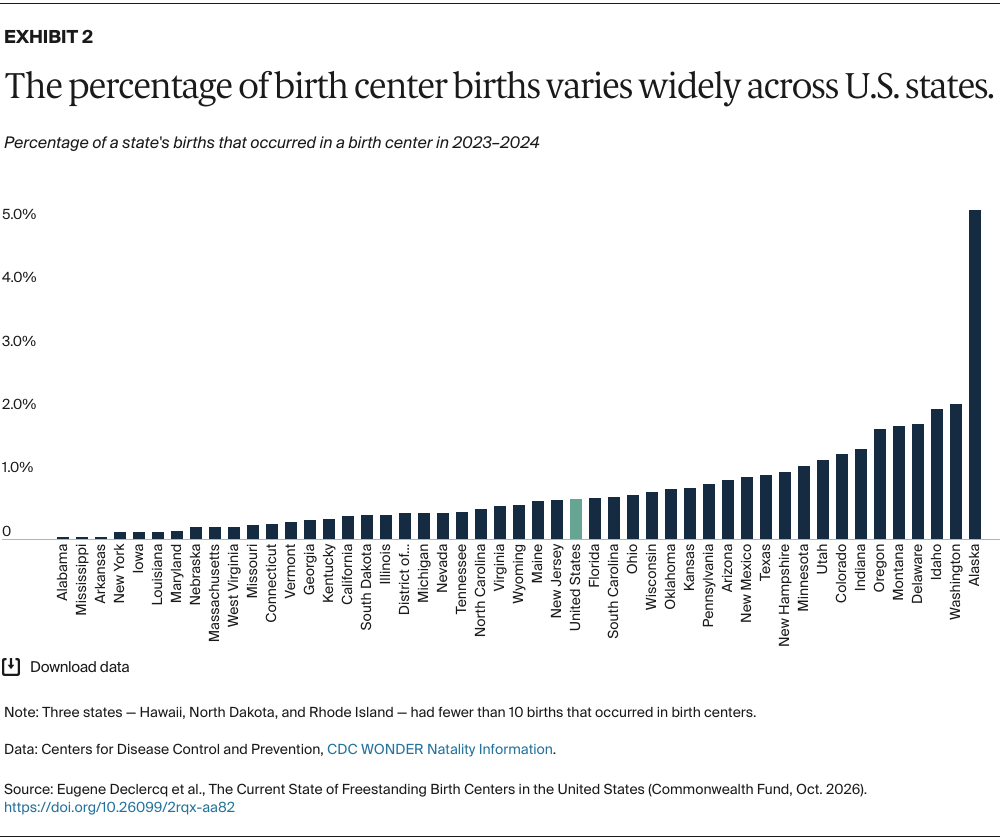
Rates of birth center births vary dramatically across states. For 2023 and 2024 combined, 5.18 percent of births to residents of Alaska occurred in birth centers, compared with 0.02 percent to residents in states such as Mississippi and Arkansas with no birth centers, resulting in women traveling to a different state with a birthing center to have their baby. Alaska is unique because its geography creates remote communities and transportation barriers that contribute to distinctive models of maternity care, along with a more permissive regulatory environment born out of necessity. Alabama, Mississippi, and Arkansas all have large rural populations and significant maternity access challenges that could potentially benefit from adaptable community birthing solutions. Five additional states — Washington, Idaho, Delaware, Montana, and Oregon — had at least 1.5 percent of their births in a birth center, and six more states had at least 1 percent of their births in a birth center.

Unlike other birth data where regional patterns exist, the distribution of birth center births is more random, dictated largely by varying state policies that might enable or restrict the establishment of birth centers.

Case Study: Juneau Family Birth Center, Alaska

Juneau Family Birth Center shows how a small, community-based birth center can expand maternity care options in a state with many rural and remote communities. The nonprofit center, founded in 1998, has three midwives who support about 55 births annually. It also provides prenatal care, home- and clinic-based postpartum visits, childbirth education, and support for planned birth center, hospital, and home births. “We see people probably six to eight times in that first six weeks postpartum,” says Madi Grimes, CPM, center director.

Juneau Family Birth Center highlights both opportunities and challenges for birth centers caring for rural populations. Alaska state law recognizes certified professional midwives (CPMs) and has relatively favorable insurance reimbursement. Additionally, the center’s nonprofit status and rental income from perinatal mental health and physical therapy providers in their building have supported its sustainability. Still, it faces familiar pressures related to staffing, financing, and meeting families’ needs after birth. Sixty-six percent of Alaska’s pregnancy-associated deaths from 2019 to 2023 occurred between seven days and one year postpartum.9

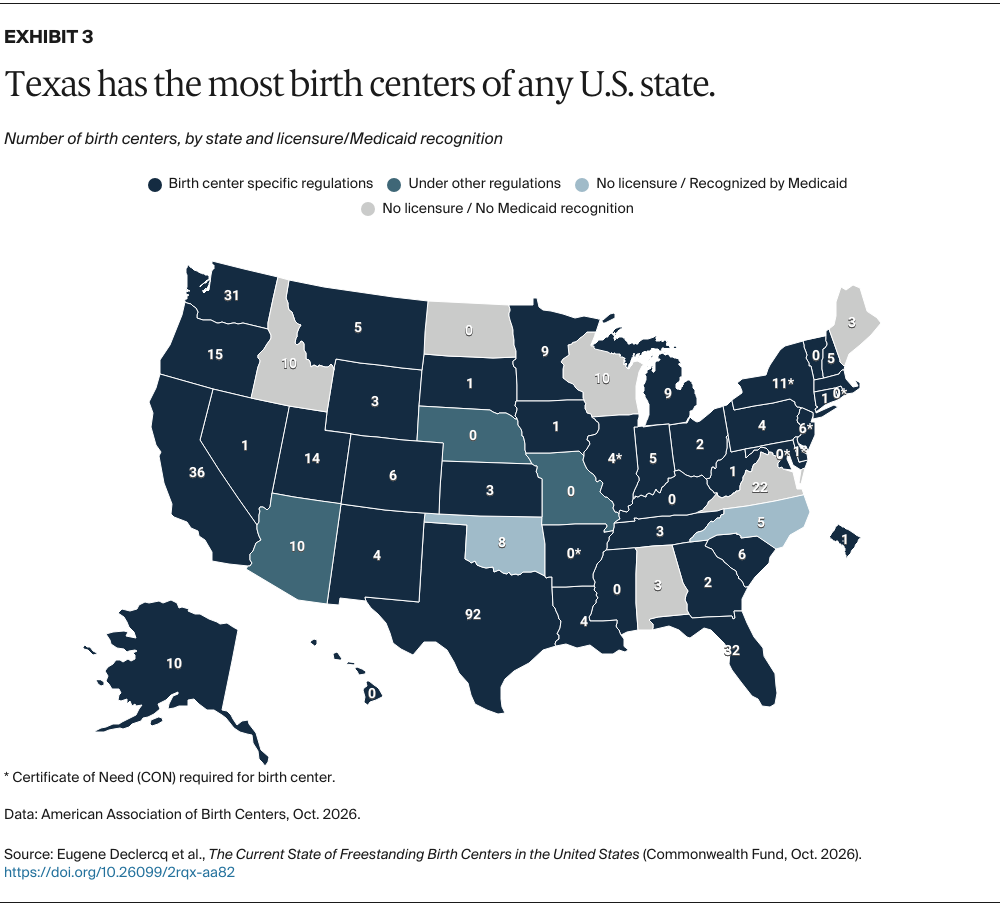
Declercq_freestanding_birth_centers_Exhibit_03_v2

The American Association of Birth Centers (AABC) map is a snapshot, as of October 2026, of how different state regulatory environments impact birth center distribution.10 Numbers range from 92 birth centers in Texas to zero birth centers in 10 states and one birth center in seven states. About 80 percent of states formally recognize birth centers and have developed specific regulations under which they may open and operate. These rules may determine staff coverage (such as 24/7 midwife coverage), type of staff required (such as requiring the medical director to be an obstetrician rather than a certified nurse-midwife or certified professional midwife), building codes, the services that can and cannot be provided, and protocols for hospital transfers. These state regulations may or may not align with the model standards proposed by the AABC.11

A handful of states oversee birth centers under a separate regulatory authority relying on general standards, such as those for ambulatory surgery centers, while Alabama, Idaho, Maine, North Dakota, Virginia, and Wisconsin have no form of licensure to guide birth centers. Several states require certificates of need for birth centers to open, a rule originally aimed at preventing duplicative, expensive hospital services in a locality.12 However, this requirement can provide health systems with the opportunity to block the opening of new birth centers.13

State Medicaid programs can also determine the level of facility fees a center receives for each birth — this reimbursement can be critical to their sustainability, particularly if their goal is to reach women without private insurance or those who are unable to pay out of pocket (see Exhibit 5). Despite a fragmented and often challenging regulatory environment, birth center births have grown in recent years, likely reflecting increasing patient demand for this option. However, the sustainability of these centers remains a challenge given the difficult financing and regulatory landscape.

Who Is Giving Birth in Birth Centers?

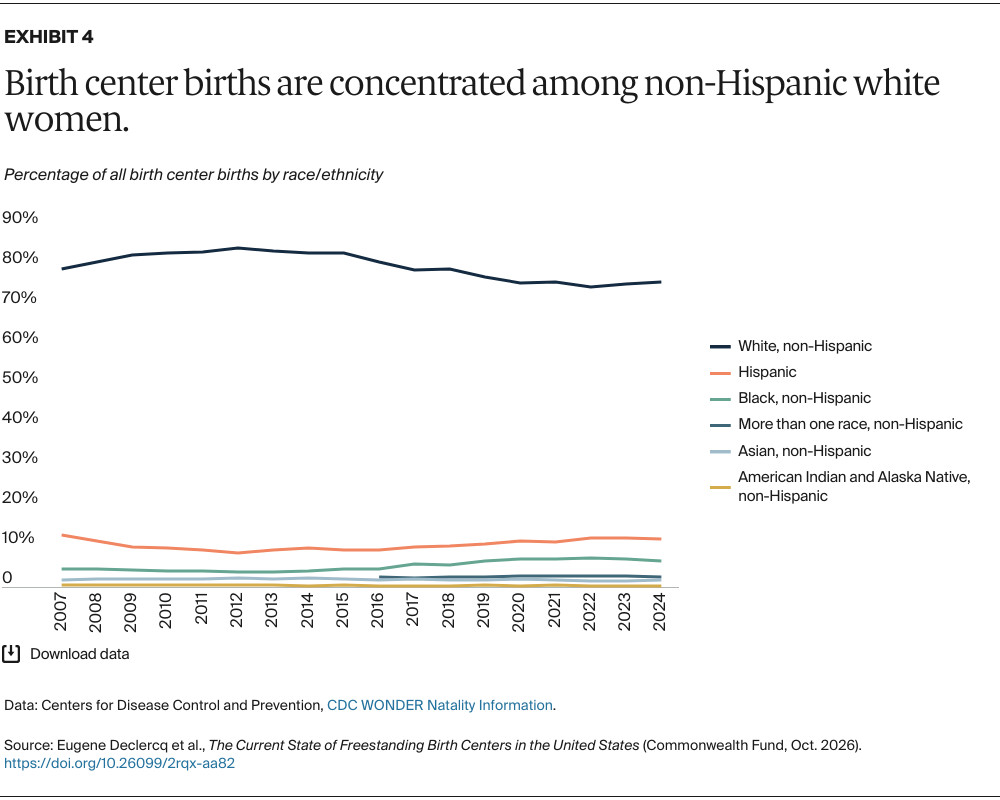
Declercq_freestanding_birth_centers_Exhibit_04

Birth center births remain concentrated among non-Hispanic white mothers, who accounted for more than three in four birth center births in 2024 — down from a peak of 85 percent in 2013. Hispanic mothers represent an increasing percentage of birth center births, from 8.6 percent in 2012 to 12.2 percent in 2024. Likewise, non-Hispanic Black mothers represented 3.9 percent of birth center births in 2012 and 6.6 percent in 2024.

In recent years, there has been growing demand to provide greater access to birth centers for women of color, who face worse pre- and postnatal outcomes than their white peers. Individualized maternal health services delivered in the community by more diverse staff than in hospitals may advance birth equity by fostering culturally centered care and patient agency.14

Case Study: Community of Hope Family Health and Birth Center, Washington, D.C.

Community of Hope Family Health and Birth Center shows how integrating a birth center with a federally qualified health center can expand access to care for Black families and Medicaid beneficiaries, among others. Located in Washington, D.C., the center combines midwifery care, doulas, and home-based postpartum support with primary care, behavioral health care, dental care, transportation assistance, and Special Supplemental Nutrition Program for Women, Infants, and Children services. From January 2023 to June 2024, it served more than 700 perinatal patients, 87 percent of whom were Black, and 71 percent of whom were insured by Medicaid. Community of Hope also launched an innovative initiative, Housing Our Newborns, Empowering You (HONEY) in late 2023 that connects pregnant people experiencing homelessness to prenatal and postpartum care services. The program enrolled 122 patients in full wraparound services in 2024, including connecting people with prenatal health care providers, helping schedule appointments, and home or community visits.

The Community of Hope model of care has led to better perinatal outcomes when compared with patients in the surrounding D.C. area. In 2023, Community of Hope patients with Medicaid had a lower proportion of low birthweight babies (10%) than Medicaid beneficiaries in D.C. overall (15%), especially among Black patients (10% compared to 17% for D.C. overall).

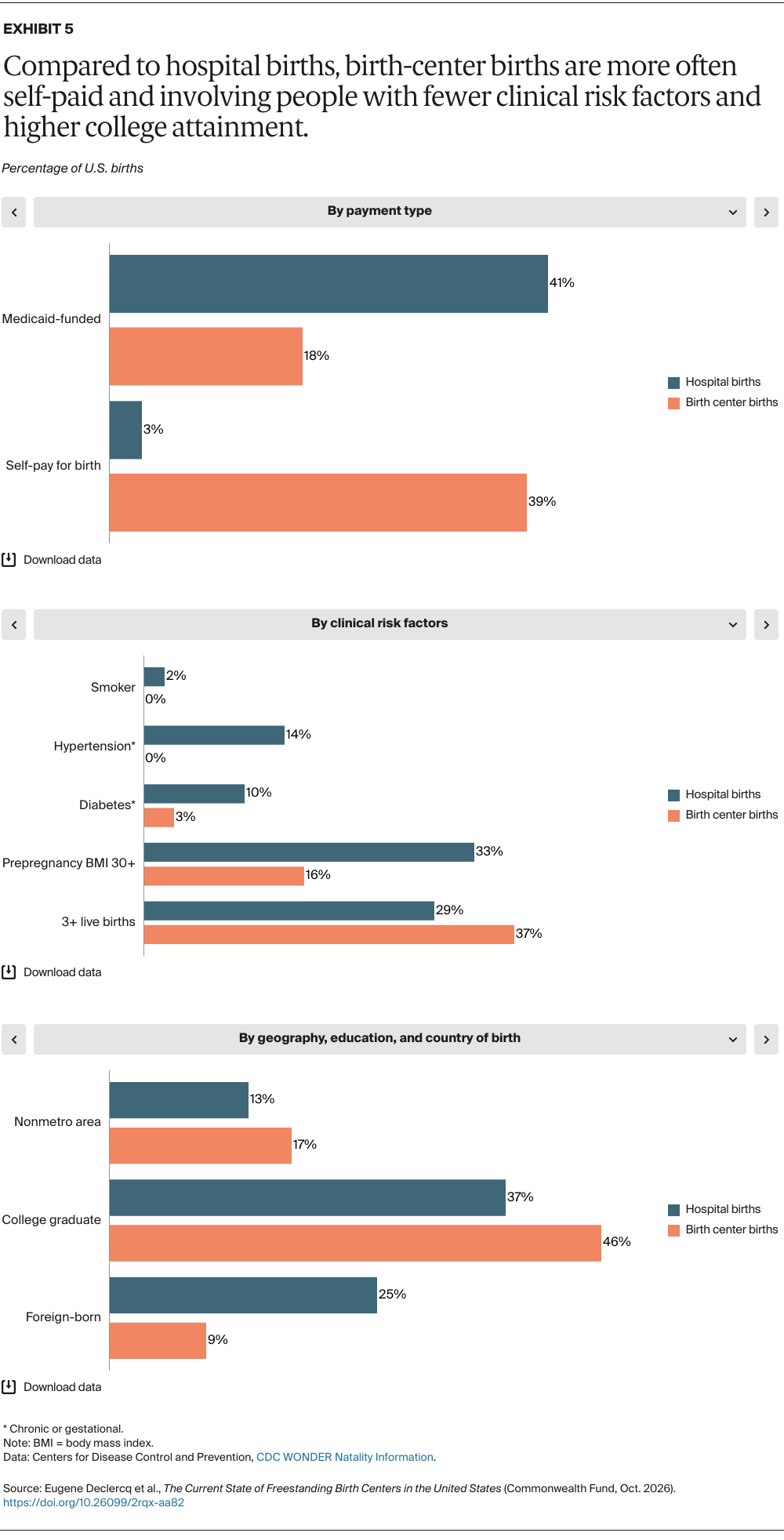
Declercq_freestanding_birth_centers_Exhibit_05_combined

Less than 0.5 percent of those giving birth in birth centers reported smoking or experienced hypertension, and only 3 percent had diabetes. They also had half the rate of prepregnancy obesity (16% vs. 33% in hospitals). There was little difference in the age distribution of mothers who chose a birth center over a hospital (data not shown), but those who chose birth centers were more likely to be giving birth to their third child or more (37% vs. 29% of those who chose hospitals) and much less likely to be born overseas. Seventeen percent of individuals who gave birth in birth centers resided in nonmetropolitan — or rural — areas compared with 13 percent of those who gave birth in hospitals.

A major structural barrier to accessing birth centers is how they’re paid for: 39 percent of families reported having to pay for a birth center birth out of pocket, compared with 3 percent of those who had hospital births. Medicaid, a possible safety net for those of limited means who opt for a birth center birth, is used less than half as often in birth centers (18% vs. 41% in hospitals).

Who Delivers Birth Center Care?

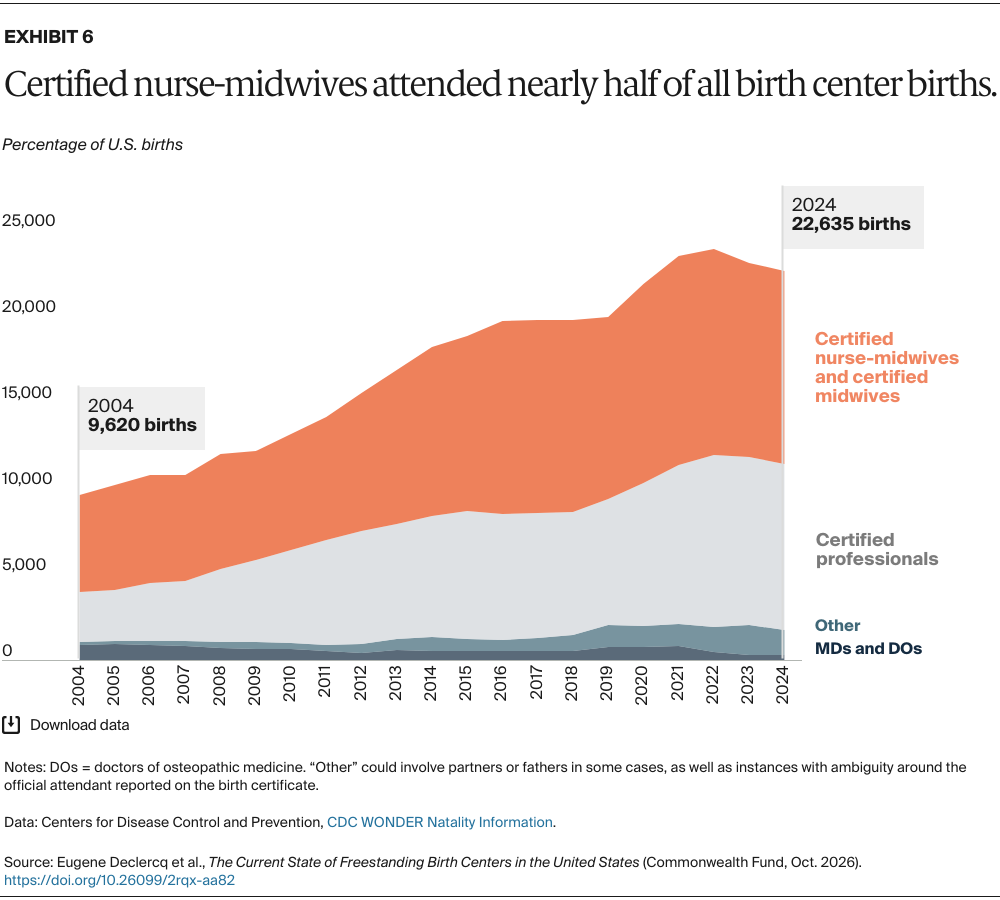
Declercq_freestanding_birth_centers_Exhibit_06

Birth center births are the domain of midwives. In 2024, certified nurse-midwives and certified midwives attended just under half (49.5%, or 11,187) of all birth center births, with certified professional midwives attending most of the remainder (42.7%, or 9,642).15 Doctors with either an M.D. or D.O. attended 1.4 percent.

Discussion

The American Association of Birth Centers suggests that birth centers will be most successful as part of an integrated health care system guided by principles of prevention, sensitivity, safety, appropriate medical intervention, and cost-effectiveness.16

Challenges to Increasing Birth Center Births

Deliveries in freestanding birth centers have increased as a share of all births — from 0.35 percent in 1989 to 0.62 percent in 2024 — in the United States, yet the number of centers is not increasing despite public demand.17 A 2025 report from California examining the rapid decline in birth centers in the state focused on three factors that are applicable across the country:18

  1. Onerous licensing processes and financial start-up costs, without which private insurers and state Medicaid funds are reluctant to provide essential reimbursements to centers. These contribute to what may be extensive start-up costs that place birth centers in a precarious financial position from the outset.19 The licensing of birth centers may be the responsibility of state organizations more accustomed to regulating hospitals or surgical centers, and require building standards, equipment, and staffing levels not compatible with financially sustaining a birth center.
  2. Low reimbursement rates, especially from state Medicaid programs, often do not cover birth centers’ operational expenses. One 2025 study of Medicaid reimbursement rates across nine states found that reimbursement varied widely, ranging from $1,300 in New Jersey to $6,012 in Massachusetts, with comparably wide variance in states’ reimbursement policies if a birth is transferred to a hospital.20 The result is 39 percent of birth center patients reporting self-financing their birth center deliveries. Centers likely also need to rely on external fundraising to sustain their operations.
  3. A shortage of midwives familiar with birth center births and the administrative experience necessary to lead birth centers. The number of midwives varies widely across states, from more than 230 per 10,000 births in Vermont to less than 20 per 10,000 births in Mississippi, Alabama, and Louisiana.21 Additionally, the midwifery workforce lacks racial and ethnic diversity — Black midwives represent roughly 6 percent to 7 percent of the work force, Native American midwives less than 1 percent, and Asian American midwives less than 2 percent.22 Legislation has been introduced in Congress to increase the midwifery workforce, but significant barriers remain.23

Finally, birth centers find it difficult to compete with hospitals and medical associations for influence with state legislatures and policymakers who establish state rules regulating birth centers.

Case Study: Neighborhood Birth Center, Massachusetts

Neighborhood Birth Center shows how community leadership and policy advocacy can help overcome barriers to opening birth centers. After a decade-long campaign, the nonprofit received zoning approval in December 2025 to build a four-suite birth center in Boston’s Roxbury neighborhood. It will be the only Black-run birth center in New England. It is expected to serve more than 1,000 families and support approximately 300 births annually in a state where the only existing birth center is located more than 100 miles west of Boston.

Its development has required navigating financing, regulatory, and zoning challenges typical of new birth centers. At the same time, the organization’s advocacy helped secure $1.65 million in state funding for freestanding birth centers and advance 2024 legislation establishing licensure for certified professional midwives, affirming equal reimbursement for certified nurse-midwives, and updating birth center regulations. The center’s case demonstrates that expanding birth center access may require not only viable care and financing models but also sustained community engagement and policy change.

Recommendations for Reducing Barriers

Expanding access to freestanding birth centers will likely require changes to how we provide maternity care in the U.S. The first step includes educating patients and policymakers about the importance of a comprehensive maternal health system that incorporates midwifery care and birth centers. At the same time, hospitals can benefit from collaborating with birth centers to jointly develop protocols for the seamless transfer of patients when necessary. State-level policy changes recognizing that birth centers are unique and cannot be regulated by the same rules that oversee, for example, surgical centers, would also be beneficial.

Reimbursement from private insurers and state Medicaid programs that reflect the reality of birth center staffing and operating costs would also support their development. And new collaborations might also be explored, with one of the most promising being a linkage between birth centers and federally qualified health centers (FQHCs), which would support a continuous model of care before, during, and after birth. Long-term sustainability likely depends heavily on integrating community birth centers into state and federal reimbursement systems; these FQHC-birth center models may provide insights for exploring new payment models at the national level.

Financing birthing centers effectively depends on more than policy and payment reform. Establishing and expanding birth centers also requires upfront capital for facilities, infrastructure, and other start-up costs that reimbursement alone cannot support. Addressing these capital needs will require a blend of innovative investment strategies, including philanthropic grants or impact models, credit and debt opportunities, and public–private partnerships. Together with payment and policy reform, these initiatives can support more sustainable freestanding birth center models.

HOW WE CONDUCTED THIS STUDY

To describe the status of freestanding birth centers and highlight factors shaping access, growth, and sustainability, we analyzed the Centers for Disease Control and Prevention’s CDC WONDER birth files and reviewed state-level birth center availability and regulation information. The birth files in CDC WONDER include place of birth (i.e., birth centers or hospitals) as well as the state in which a birth occurred, birth attendants, how the birth was paid for, and demographic characteristics of mothers, all of which formed the basis for Exhibits 1, 2, 4, 5, and 6. Exhibit 3 is adapted from a map provided by the American Association of Birth Centers. The case studies sought to examine different contexts in which birth centers operate and involved Zoom interviews and data from the directors of the respective birth centers.

Notes

Publication Details

Date

Contact

Eugene Declercq, Professor, Community Health Sciences, Boston University School of Public Health

declercq@bu.edu

Citation

Eugene Declercq et al., The Current State of Freestanding Birth Centers in the United States (Commonwealth Fund, Oct. 2026). https://doi.org/10.26099/2rqx-aa82