

Advanced Search

Advanced Search

Current Filters

Filter your query

Publication Types

Other

to

Issue Briefs

/

Improving Access to Medicare Home Health Care: Key Policy Considerations

Older woman lies in bed while being helped by younger person

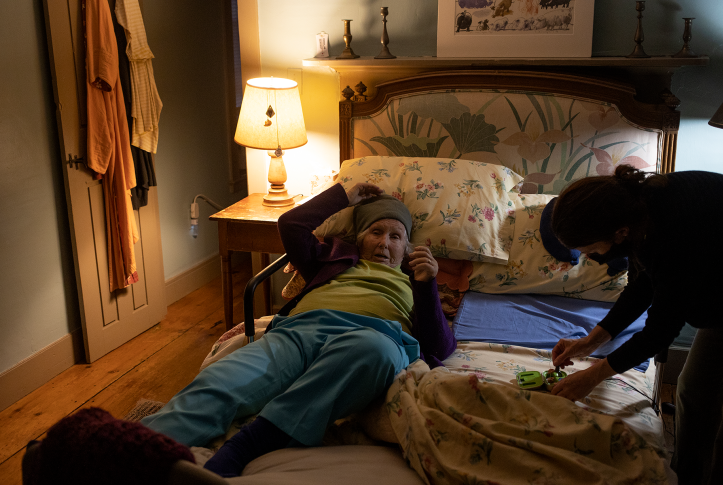
Cynthia Crawford, 87, despite a stroke and increasing signs of dementia, is trying to live her last few years in her own home in the village of Stonington, Conn. Despite an aging population, use of the Medicare home health benefit has declined in recent years, raising concerns about beneficiaries’ access to needed home-based care. Photo: Andrew Lichtenstein/Corbis via Getty Images

Cynthia Crawford, 87, despite a stroke and increasing signs of dementia, is trying to live her last few years in her own home in the village of Stonington, Conn. Despite an aging population, use of the Medicare home health benefit has declined in recent years, raising concerns about beneficiaries’ access to needed home-based care. Photo: Andrew Lichtenstein/Corbis via Getty Images

Toplines
  • Medicare beneficiaries, especially those with chronic health conditions, are increasingly unable to access home health services, primarily because of misaligned payment and quality incentives, Medicare Advantage plan practices, and workforce shortages

  • Efforts that would help more beneficiaries get needed home health include stronger payment and quality incentives, an expansion of the home health workforce, support for caregivers, and Medicare Advantage policies addressing administrative issues

Toplines
  • Medicare beneficiaries, especially those with chronic health conditions, are increasingly unable to access home health services, primarily because of misaligned payment and quality incentives, Medicare Advantage plan practices, and workforce shortages

  • Efforts that would help more beneficiaries get needed home health include stronger payment and quality incentives, an expansion of the home health workforce, support for caregivers, and Medicare Advantage policies addressing administrative issues

Abstract

Issue: Despite an aging population, use of the Medicare home health benefit has declined in recent years, raising concerns about beneficiaries’ access to needed home-based care.

Goal: Examine factors contributing to declining use of Medicare home health services and identify key policy considerations to facilitate beneficiary referral and benefit utilization.

Methods: Interviews with more than 20 policy experts and home health agencies (HHAs), providers, and advocates, as well as an environmental scan of published literature and policy analyses related to payment policy, quality incentives, access, and utilization trends.

Key Findings: Declining utilization reflects multiple, interrelated factors. Recent home health payment reforms favoring postacute patients with short-term needs potentially disadvantage beneficiaries with chronic conditions, cognitive impairment, behavioral health needs, or long-term maintenance requirements. Compared to traditional Medicare beneficiaries, Medicare Advantage (MA) enrollees receive fewer visits, and their home health providers receive lower payments. MA enrollees also encounter narrow provider networks. Workforce shortages and referral practices further constrain access.

Conclusion: Misaligned payment and quality incentives, MA practices, and workforce constraints can limit access to home health services for Medicare beneficiaries. Interviewed experts identified several policy options to increase access and reverse declining utilization, including better aligning payment with patient needs, improving oversight and transparency, and strengthening workforce capacity.

Introduction

Home health coverage has been a Medicare benefit since the program’s inception in 1965. Services available through the benefit are designed to help beneficiaries remain in their homes, avoid costly institutional care, and maintain or stabilize function. Beneficiaries may be referred for home health services following hospitalization or skilled nursing facility (SNF) admission, or from a community setting to help manage chronic conditions. Covered services include skilled nursing care, physical therapy, occupational therapy, speech-language pathology services, and home health aide services, including help with personal care. Although Medicare’s home health benefit is not a long-term care benefit, there are no scope or duration limits if beneficiaries are homebound and need intermittent skilled nursing or therapy care.

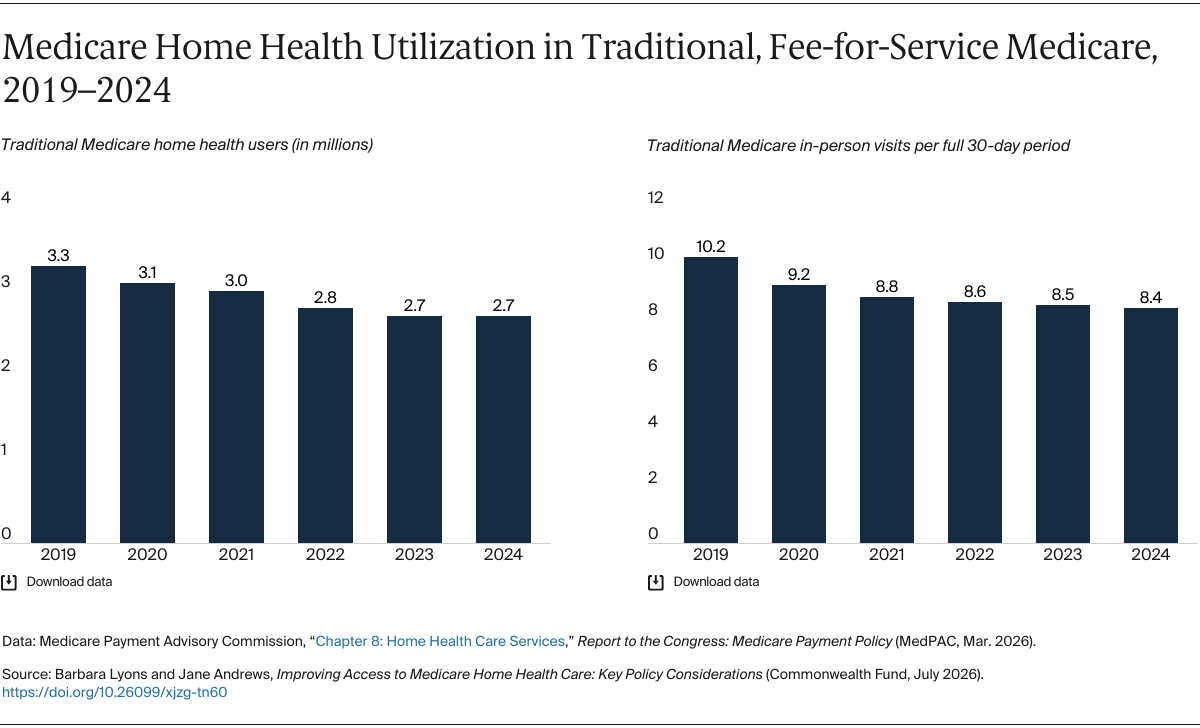
Despite a growing, aging population, use of the Medicare home health benefit has declined in recent years, particularly for home health aide and medical social services (Exhibit 1).1 Declining use disproportionately impacts community-admitted patients, who experience longer stays, are more likely to be older, rural, and dually eligible for Medicare and Medicaid, and are more likely to be living with Alzheimer’s disease and related dementias compared to postinstitutional patients.2 It’s noteworthy that between 2020 and 2022, home health care use decreased among individuals with dementia.3
Lyons_improving_access_medicare_home_health_policy_considerations_Exhibit_01

Utilization patterns also differ by payer. Medicare Advantage (MA) enrollees receive fewer home health visits than beneficiaries in traditional Medicare (TM), averaging 1.8 fewer visits per episode.4 Home health agency (HHA) availability may also be limiting access. There was a 1 percent decrease in HHAs in 2024, excluding California, and data from the Centers for Medicare and Medicaid Services (CMS) indicate that approximately 1,000 HHAs closed between 2019 and 2024.5 While most beneficiaries live in ZIP codes with two or more agencies,6 closures and staffing shortages can still constrain access.

Home health is a relatively low-cost care setting, accounting for $16 billion, or 3.4 percent, of traditional Medicare Parts A and B spending in 2024.7 Even so, the total number of TM users has declined since 2019, despite some stabilization in 2024, as Exhibit 1 shows. There have also been declines in the number of in-person visits per full 30-day period.

According to the Medicare Payment Advisory Commission (MedPAC), a nonpartisan congressional agency, several factors are contributing to the decline, including enrollment shifts from TM to MA, falling use of home health services among TM enrollees, the impact of payment changes on the number of therapy visits, and the COVID pandemic.8 MedPAC reported that total home health payments fell between 2019 and 2023, with a slight increase in 2024. Continued declining trends in use and payment of Medicare home health care raise concerns about potential increased reliance on higher-cost institutional care and future Medicare spending growth.

To better understand the factors shaping declining use of Medicare’s home health benefit, we conducted more than 20 structured interviews with experts in TM, MA, aging and disability policy, HHAs, providers, and advocates. We also conducted an environmental scan of published reports on payment and quality, access, and utilization. From these sources, we identified key considerations related to payment policy, quality incentives, referral processes, and workforce constraints.

Findings

Home Health Payment Structure, Utilization, and Quality Incentives

Current payment systems favor some beneficiaries over others. Medicare’s home health prospective payment system, the Patient-Driven Groupings Model (PDGM), was instituted in 2020. Under PDGM, agencies are paid for 30-day periods of care, with 60-day recertification. Payments are adjusted for patient characteristics and type of admission, such as posthospital or from the community. Financial incentives favor shorter term periods of care and postacute referrals,9 which may involve patients expected to show rapid improvement and not those with chronic conditions.

My biggest overarching concern about PDGM is it has really focused the benefit to be a short-term postacute benefit for patients with simpler, less complex needs.

Researcher

Interviewees consistently reported that PDGM and the Expanded Home Health Value-Based Purchasing model, which rewards or penalizes home health agencies based on their performance on quality and utilization measures, incentivize agencies to admit patients who are less medically complex and more likely to show rapid improvement, based on higher payments for shorter durations. As a result, beneficiaries with chronic or progressive conditions, such as Parkinson’s disease, cognitive impairment, behavioral health needs, or long-term maintenance and functional support needs may face reduced access despite being eligible. PDGM pays less for community-admitted patients, who are more likely to be dually eligible for Medicare and Medicaid, living with dementia, and reliant on family caregivers.10 This creates incentives for agencies to avoid these higher-cost patients or discharge them once improvement plateaus,11 potentially threatening access for socially vulnerable beneficiaries with greater clinical severity and longer-term chronic disease management and ongoing functional support needs.12

The value-based payment system adds extra payment or withholds payment based upon quality health outcomes. And there are improvement standards baked into those measurements. So, it further incentivizes home health agencies to gravitate towards patients who they can show demonstrably improve over a short period of time.

Aging expert

Home health aides and behavioral health supports are particularly underutilized. Interviewees noted that payment structures, quality metrics, and Outcome and Assessment Information Set (OASIS) data, which home health agencies collect to evaluate patients, may not adequately recognize when individuals should receive aide services or behavioral health care. Payments for these services are disincentivized, compared to skilled nursing or therapy.13 As compared to a similar survey in 2016, a 2021 survey of HHAs found continued declines in access to aide services.14 Community-based persons with dementia have lower odds of receiving services such as nursing, occupational therapy, social work, and personal care due to reduced payment, despite high need.15

Interviewees suggested that the lack of beneficiary, caregiver, and provider education on the full scope and duration of the benefit further contributes to the underutilization of services. One interviewee suggested that physician training on the home health benefit is needed to deliver the full scope of services, but they have too little bandwidth to take mandatory training.

Interviews further highlighted that PDGM structurally undervalues community-based referrals. Policies that pay HHAs less for community-admitted beneficiaries may ultimately increase Medicare spending by raising the risk of hospitalization and institutionalization.16

Agencies also noted that quality reporting requirements are administratively burdensome. This is particularly the case for smaller HHAs with limited staff and can detract from direct patient care. Some interviewees expressed concern that reporting exemptions for smaller HHAs may limit transparency and complicate quality comparisons for beneficiaries.

Fraud was identified as an area of concern by some interviewees. They noted that in certain areas, agency counts may not always reflect active service delivery. While emphasizing the importance of appropriate program integrity efforts, interviewees also observed that enforcement approaches should be designed and implemented carefully to avoid unintended consequences, such as narrowing access for beneficiaries with longer-term or chronic conditions.17 Continued, balanced oversight of referral patterns and home health agency practices in both TM and MA to ensure access to care was broadly supported by interviewees.

Low Provider Payments, Narrow Networks, and Other Barriers to Care

Home health utilization is lower among MA enrollees than TM beneficiaries. MA enrollees are more likely to underutilize home health services in rural areas and have shorter lengths of stay and fewer nursing, therapy, and aide visits compared with similar patients with TM. They are also less likely to receive care from high-quality HHAs.18

Most interviewees said MA payments are opaque and inadequate. Some HHAs said that MA payments are roughly half the cost of providing home health care. Per-visit payments rather than episode-based payments may not fully account for patient complexity, care coordination needs, and travel time, particularly in rural areas. They may also act as a disincentive for MA plans to provide the full range of services. A recent study suggests that MA plans that restrict HHAs’ ability to determine the number and type of visits delivered may have worse patient outcomes compared with TM and MA plans that provide episodic payments.19

Low payment rates and high administrative burdens discourage some HHAs from taking MA referrals, potentially leaving enrollees without timely access to care. Although some agencies accept all patients to maintain good relationships with affiliated hospitals and other providers, interviewees noted that TM increasingly cross-subsidizes MA underpayments. This masks the true impact of MA payment policy on access while MA enrollment grows. Interviewees noted that annual TM payment updates do not account for persistently low MA payment rates, increasing agencies’ reliance on TM referrals to remain viable.

Narrow MA networks may further limit access to high-quality care. While MA plans are required to maintain adequate HHA networks supported by written agreements, interviewees reported the existence of “ghost networks” that do not accept patients or do not actively provide care. As a result, beneficiaries may face limited choice or be unable to access services in practice. Narrow HHA networks may subject some MA enrollees to worse quality of care because the network may include lower-quality HHAs that are willing to accept lower payment rates.20

They [the HHA] will stop being in a network for a specific MA plan because their reimbursement is so low that they lose money every time that they take one of those patients, and they can’t make that up with traditional Medicare patients because now there are so many people enrolled in MA.

Researcher

MA utilization management tools, such as prior authorization, visit caps, and frequent reauthorization requirements, are additional barriers. Interviewees indicated that these practices can delay care, increase administrative burden, and impose arbitrary limits on medically necessary care. In separate interviews with MA plans and HHAs, the Medicare requirement that doctors sign off on orders and plans of care can complicate and slow down home health authorizations where MA plans also require prior authorization.21 Recent investigations document how MA utilization management tools may restrict access to care, including home health services.22 These findings underscore the need to assess functional outcomes and beneficiary experience for MA enrollees alongside spending.23 One interviewee noted that better MA spending guardrails are needed, so that plans are not prioritizing marketing and supplemental benefit spending in lieu of providing the full range of home health services.

Part of the challenge for home health agencies is that with traditional Medicare, there is one type of process set up to accept and deliver home health care. But for the MA plans, depending on how many networks there are, and with all their different IT systems, each of them might be very different. So, the administrative burden is incredible.

Physician researcher

Referral Processes, Staffing Shortages, and Caregiver Burden

Several additional factors may contribute to declining access to home health care.

Referral processes may promote selective patient acceptance by HHAs. Quality measures emphasizing measurable improvement can discourage agencies from accepting beneficiaries who are medically complex or unlikely to show short-term functional improvements. Interviewees described the increasing use of electronic referral platforms that enable agencies to “bid” on patients, as well as hospital-based screening and chart reviews to identify those most likely to improve quickly.

Referral fulfillment rates have declined across Medicare. Between 2016 and 2022, fulfillment fell from 66 percent to 59 percent.24 Rejection rates or unfulfilled referral rates are higher in MA than in TM.25 Up to one-third of TM patients discharged from hospitals with home health referrals do not receive services.26 Although completed referrals are associated with lower mortality and readmission rates, they may increase short-term spending.27

I can tell you that we’ve seen referral rejection rates that are three, four times higher for certain MA plans than for traditional Medicare.

Home health agency representative

One interviewee raised whether beneficiaries referred for home health get timely initiation of care, or any home health at all, since there is no system to track it. Another shared concern about delays in receipt of home health services once the referral is made, due to the fragmentation of the health system and the lack of coordination and navigational systems to obtain the care.

There’s a lot of frustration about who’s responsible for home health in the postacute setting because it’s often ordered by hospitalists, but the primary care providers who don’t know that their patients have been hospitalized are supposed to sign the plan of care, and people can fall through cracks very easily.

Physician researcher

Staffing shortages were identified as a major constraint in accessing care. Agencies face difficulty recruiting and retaining staff, especially registered nurses, due to competition from hospitals offering higher wages and better benefits. Some interviewees reported HHAs not staffing home health aides due to shortages. Workforce shortages limit agencies’ capacity, particularly for beneficiaries with complex or chronic care needs, or those living in rural or underserved areas. It is noteworthy that over 25 percent of referred patients were turned away by home health care providers due to staffing shortages.28 Worker safety concerns in home settings may further increase costs or restrict service availability.

About 40 percent of patients referred to home health from a hospital stay don’t end up being admitted. And it could be for a variety of reasons, such as the agency might not have the staff to take on that patient.

Home health agency representative

Family caregivers play a critical role in enabling home health care but are at risk of being overburdened. Interviewees noted that beneficiaries without caregivers may be deemed unsafe for home care, while those with caregivers may be told that Medicare will not cover services because informal care is available.29 Caregivers for community-admitted patients, who have serious social vulnerabilities and greater clinical severity, may be particularly overburdened by home health payment changes that reduce reimbursement for these patients without a prior hospitalization and leave gaps in care.30

MA enrollees’ caregivers may face a heightened burden as MA beneficiaries experience slightly worse functional outcomes yet are more likely to be discharged to the community.31 Substituting informal care for formal services can place caregivers at risk of physical, emotional, and financial strain. Homebound beneficiaries without caregivers face a higher mortality risk, highlighting the importance of both personal care aides and caregiver support.32

What they’re seeing in the population is actually mental health issues on the caregiver side. The caregiver is burnt out. They don’t know how to deal with somebody who may have cognitive decline and they’re not getting the support and resources that they need. . . . HHAs are having fewer and fewer ways to support those folks because they have less time in the home due to the payment issues.

Community aging services representative

Policy Considerations

Declining home health utilization may be attributed to prospective payment disincentives, improvement-based quality measurement incentives, MA payment inadequacy and utilization management, workforce shortages, and reliance on unpaid caregivers. These factors disproportionately affect beneficiaries with chronic conditions, serious illnesses, and functional needs that do not align with short-term improvement metrics. To improve access and utilization of home health services, policymakers may:

  • Align traditional Medicare payment policy and quality measures with patient complexity and maintenance needs.
  • Consider improvements to quality measures to ensure they fully reflect the needs of all beneficiaries, including those with chronic and longer-term needs and who are not expected to improve.
  • Strengthen oversight and tracking systems to monitor for quality, timely initiation, and referral completion; delayed, reduced, or forgone home health services; HHA avoidance of sicker patients; and compliance with discharge planning requirements.
  • Improve transparency in MA home health access and payments, performance on functional outcomes, network adequacy, and utilization management.
  • Develop options for expanding the home health care workforce that include better payment and benefits, and immigration policies that enable qualified foreign workers, such as nurses and home health aides, to seek a legal pathway to working in U.S. home health agencies.
  • Identify and disseminate best practices for home health coordination, payment, quality, and delivery among MA plans.
  • Review CMS’s evaluations of home health payment and quality in models such as Home Health Value-Based Purchasing and Bundled Payments for Care Improvement Advanced Model (BPCI Advanced) for reduced spending and quality improvement examples to share with MA plans.
  • Develop and/or fund patient-centric education and navigational supports, together with provider education and training opportunities on the scope and duration of the benefit.
  • Review new ways to disseminate quality of care information to beneficiaries and providers.
  • Recognize caregiver burden in providing services where the home health benefit falls short in scope or duration, especially for beneficiaries with behavioral health, complex care, and ongoing maintenance needs, screen for caregiver stress or other vulnerabilities, and consider options to mitigate caregiver burden, such as respite care, training, and payment.
  • Review emerging caregiving assistance programs that may involve training and paying for the care they provide for aging adults.
  • Conduct a representative survey of both traditional Medicare and Medicare Advantage beneficiaries referred for home health care services to better understand turned-down referrals and reasons for declining utilization by demographic characteristics, health and functional status, and other factors.

Conclusion

Declining utilization in the traditional Medicare home health benefit not only reflects lower enrollment but also the effects of payment policy and quality incentives. These factors — together with Medicare Advantage underpayment, narrow networks, and utilization controls, agency referral practices and availability, and workforce shortages — may limit access for beneficiaries who could benefit most from home-based care and thereby increase utilization of higher-cost institutional settings or caregivers. Targeted policy reforms could improve referrals and access to home health services, support beneficiaries and caregivers, and help protect Medicare from avoidable spending growth.


How We Conducted This Study

Between November 2025 and February 2026, we interviewed via Zoom more than 20 experts in traditional Medicare, Medicare Advantage, and aging and disability policy as well as home health agencies (HHAs), providers, and advocates. We also conducted an environmental scan of published reports on payment and quality, access, and utilization. We identified key considerations related to payment policy, quality incentives, referral processes, and workforce constraints. We discussed the Medicare home health referral process, the process of finding and starting home health services, the challenge beneficiaries face in accessing Medicare home health services, how Medicare payment policies influence how agencies deliver home health services, and whether quality indicators provide enough meaningful information for beneficiaries to make an informed decision in selecting an HHA. We have also included select interviewee quotes that highlight these issues.

Interviewees were asked questions such as:

  • How do Medicare beneficiaries receive a referral for home health services today and in what form?
  • How do beneficiaries and caregivers typically navigate the process of finding and starting home health services?
  • What are the biggest challenges currently facing beneficiaries in accessing Medicare home health services?
  • How do current Medicare payment policies influence how agencies deliver home health services, and do they result in access problems and lower home health utilization?
  • Do the current HHA quality indicators (like Medicare Compare) provide enough meaningful information for beneficiaries to make an informed decision in selecting an HHA?
  • What information resources do beneficiaries and caregivers need most when choosing a home health agency, and does a lack of good information or misinformation lead to lower utilization?
  • What changes do policymakers need to consider to improve access to and utilization of Medicare home health services?
Notes

Publication Details

Date

Contact

Barbara Lyons, Leading Expert on Medicaid and Medicare Policy Issues

Citation

Barbara Lyons and Jane Andrews, Improving Access to Medicare Home Health Care: Key Policy Considerations (Commonwealth Fund, July 2026). https://doi.org/10.26099/xjzg-tn60