Advanced Search

Advanced Search

Current Filters

Filter your query

Publication Types

Other

to

Since the signing of the Universal Health Care Act in 2019, the Philippines’ public-private health care system has aimed to provide medical care to every citizen. At its center is the Department of Health, which is responsible for public health governance, regulation, and policy formulation.1 The social health insurance program PhilHealth provides coverage for preventive, curative, and rehabilitative services. Since 2024, 100 percent of the PhilHealth-registered population has been covered, though many households still incur significant out-of-pocket expenses.2

Geographic disparities shape health care access and outcomes. Isolated and disadvantaged areas, including remote rural communities and small islands, tend to have fewer physicians and insufficient medical facilities.3 Life expectancy, meanwhile, is lower than the Western Pacific regional average, and the infant mortality rate is significantly higher.4

The Philippines has been in the process of moving towards universal coverage through its social health insurance program, the Philippine Health Insurance Corporation (PhilHealth). PhilHealth provides coverage for preventive, curative, and rehabilitative services.

  • Public insurance coverage: 83% of population

  • Private insurance coverage: 39% of population
  • Primary care physicians: 19.5 per 100,000 people
  • Specialist physicians: 21.4 per 100,000 people

In 2024, total health spending reached PHP 1.6 trillion (USD 27.4 billion), a per capita spending of PHP 12,751 (USD 223). Government spending accounted for 42 percent of total health expenditure, while prepaid private spending accounted for 10 percent and development assistance accounted for another 6 percent. Per capita spending has also continued to grow, reaching USD 766 in 2022, and is above the average for upper-middle-income countries (USD 585).

  • Pharmaceutical spending: 19% of total health care budget

  • Out of pocket spending: 44.4% of total health care spend

Significant health disparities exist for Indigenous populations, further compounded for these populations that live in impoverished areas. 

Geographic isolation presents a major barrier to enrolling in PhilHealth and access to care due to lack of health care infrastructure in many regions of the country.

Coverage and Access

Background and History

The Philippines’ health care system has evolved over centuries, shaped by colonial rule and political change.5 Institutional development began with the creation of the Department of Health and Public Welfare in 1939, followed by the Department of Health in 1947, which expanded basic health services under the Rural Health Act of 1954.6 Subsequent reorganizations reflected shifts in government structure following the declaration of martial law in 1972 — from the change to the Ministry of Health in 1978, following the adoption of a parliamentary form of government, to its reestablishment as the Department of Health in 1986, following the People Power Revolution and a shift back to a presidential government.7

In 1991, the Local Government Code of the Philippines decentralized the delivery of health services and gave local government units (LGUs) autonomy over, and responsibility for, local health care delivery.8 The National Health Insurance Act of 1995 created a system of social health insurance known as the Philippine Health Insurance Corporation (PhilHealth).9

Subsequent reforms have included the launch of the 1999 Health Sector Reform Agenda to target systemic inefficiencies, such as fragmented service delivery, inequitable access to care, weak regulation, and underfunded local health facilities, and the FOURmula One for Health framework in 2005 to implement new strategies for health financing, regulation, service delivery, and governance.10

In 2010, the government launched the universal health care (UHC) policy (Kalusugan Pangkalahatan), which focused on increasing PhilHealth membership and improving government health facilities through the Health Facilities Enhancement Program. UHC expanded health care coverage through PhilHealth, upgraded thousands of health facilities, deployed more than 23,000 health professionals, and mobilized community health teams — all of which improved service availability, expanded access to outpatient and inpatient care, and strengthened financial protections. These actions were followed by the enactment of the UHC Act in 2019, which guaranteed access to comprehensive services, regulated copayments to improve financial protection, and combined fragmented local health systems into province- and city-wide networks.11

The Role of Public Health Insurance

The UHC policy strengthened PhilHealth’s role by automatically covering citizens through the National Health Insurance Program, regardless of their ability to pay premiums.12 The UHC also ensures that citizens are automatically enrolled in an essential health benefits package consisting of preventive, curative, rehabilitative, and palliative services, with no copayments for basic care in public hospitals and fixed copayments for higher-level services.13

Although the National Health Insurance Program purports to provide coverage for all Filipinos, in reality, the government fails to enroll significant segments of the population — especially Indigenous communities (see Addressing Health Inequities).14

As of June 30, 2024, PhilHealth had enrolled 83 percent of the population.15

Services Covered by Public Health Insurance

The following services are covered under public health care:

  • Preventive care16
  • Inpatient care17
  • Outpatient care18
  • Maternity care19
  • Primary care20
  • Pharmaceuticals21
  • Dental care22
  • Eye care23
  • Mental health care24
  • Palliative care25
  • Long-term care26
  • Rehabilitative care27
  • Home visits28
  • Assistive devices.29

PhilHealth members are classified as either direct contributors (those who pay premiums, such as employees and pensioners) or indirect contributors (those whose premiums are paid for by the government).30 As of 2025, the contribution rate for direct contributors is 5 percent of income (to be equally shared by employer and employee). Employees who earn under PHP 10,000 (USD 175) a month pay a fixed premium of PHP 500 (USD 9), while the contribution of those who earn more than PHP 100,000 (USD 1,750) a month is capped at PHP 5,000 (USD 87).31

In 2024, PhilHealth increased reimbursement rates for nearly all its case rate packages by 80 percent, backed by reserve funds totaling PHP 600 billion (USD 10.4 billion). The goal was to eradicate financial burdens for its members and facilitate timely access to essential medical services.32

Safety Nets 

The UHC Act automatically enrolls all Philippine citizens under the National Health Insurance Program through PhilHealth, which includes a comprehensive range of health services.33

These systems of health financing are complemented by social protection programs. The Pantawid Pamilyang Pilipino Program, for instance, is a conditional cash transfer program for low-income families, with assistance tied to meeting such requirements as keeping children in school and attending regular health check-ups.34 The Department of Health assists poorer patients through the Medical Assistance Program, which provides necessary medicines free of charge in government hospitals, and the Z Benefit Packages, which pay for high-cost treatments for severe or major illnesses.35

Another safety net, the Medical Assistance to Indigent and Financially Incapacitated Patients Program, provides financial aid to people with no income, those with insufficient income to meet their family’s needs, and those suffering from conditions that require expensive treatment they can’t afford. The level of aid is based on individual need.36

The Role of Private Health Insurance

Private health insurance serves as a supplement to PhilHealth.37 In 2022, 39 percent of the population was covered by health insurance other than PhilHealth, and private insurance plans made up 13 percent of health spending in 2024.38

The most common type of private insurance is provided by health maintenance organizations (HMOs) operating on a prepaid basis. Policies typically include consultations, hospitalization, outpatient services, and preventive care at hospitals in each HMO’s network.39 Annual premiums range from PHP 5,000 (USD 88) to PHP 20,000 (USD 351), depending on the benefits.40 Most HMOs in the Philippines set their own annual benefit limits, known as maximum benefit limits.41 Some premium HMO plans offer up to PHP 5,000,000 for hospitalization and PHP 100,000 for outpatient services per year.42

Many Filipinos enroll in HMOs to supplement PhilHealth, which only partially covers hospital bills and certain procedures, leaving patients with high out-of-pocket costs.43 HMOs offer cashless access: patients simply present their HMO card at accredited hospitals, and the provider charges the HMO directly.44 HMOs are commonly offered by employers as a benefit, making them a convenient option.45

The Role of Government

The Philippine government plays an active role in regulating and delivering health services and promoting national and local collaboration.46

At the national level, the Department of Health is the lead agency that sets policy, conducts regulatory supervision, sets standards, and carries out planning.47 It comprises 18 central bureaus and 17 regional health offices, which implement various national public health programs, such as immunization, disease control, and emergency health services, and work closely with LGUs.48 The Department of Health also supervises government-owned specialty and regional hospitals, licenses health facilities through the Health Facilities and Services Regulatory Bureau, and regulates health products through the Food and Drug Administration.49 PhilHealth automatically accredits all facilities accredited by a Department of Health regional office.50

Health service delivery is mainly carried out at the local level. LGUs comprising provinces, cities, municipalities, and villages (barangays) are responsible for managing primary- and secondary-level health facilities.51 District and provincial hospitals are managed by provincial governments, while Rural Health Units and barangay health stations are under the jurisdiction of municipal governments.52 Governors or mayors lead Local Health Boards, which have representatives from the Department of Health, in overseeing health planning and service integration in communities.53

Following earlier decentralization under the Local Government Code, which fragmented the public health system and led to uneven service delivery, the 2018 Mandanas-Garcia ruling increased LGUs’ funding from national taxes. This was followed by a 2021 executive order that mandated full devolution, making LGUs fully responsible for both funding and delivering health services using their expanded budgets.54

Integration and Care Coordination

There have been significant steps to promote integration and care coordination, particularly at the primary care level. The UHC Act expanded PhilHealth’s primary care benefits with the Konsultasyong Sulit at Tama (Konsulta) package, which streamlines a range of services — including preventive, promotive, diagnostic, and rehabilitative care — through a unified primary care platform (see Primary Care).55

The Department of Health has issued multiple policies guiding the integration of local health systems into province- and city-wide health systems to improve coordination, efficiency, and accountability. It establishes health care provider networks — groups of hospitals, clinics, and primary care providers working together to deliver continuous care. The initiative is monitored through frameworks that track LGUs’ progress in integrating their health services. Overall, it aims to ensure more equitable access to primary and specialized care, reduce fragmentation, and strengthen the country’s move toward universal health coverage.56

The Malasakit Centers, established in 2019, are situated in government hospitals to streamline access to medical and financial assistance for low-income Filipinos. Bringing together the Department of Health, the Department of Social Welfare and Development, and PhilHealth in one place, these centers help qualified patients cover hospitalization, medicines, diagnostics, and transportation.57

Operations and Resources

Overview of the Delivery System

The health system is organized into three service levels:58

  • Primary care is delivered via barangay health stations, Rural Health Units, and community clinics. It focuses on prevention, health promotion, early diagnosis, and the treatment of common diseases.
  • Secondary care is provided by district and provincial hospitals. It includes specialized care and treatment that’s beyond the capacity of primary care providers, such as maternal health services, inpatient care, and basic surgery.
  • Tertiary care is provided by specialized and regional hospitals, including government corporate hospitals. Tertiary facilities offer advanced diagnostic, therapeutic, and rehabilitation services for complex and advanced disease conditions.

The traditional fee-for-service payment system began to give way to a case-based system in 2011, when PhilHealth launched 23 case rates covering common conditions and procedures.59 In 2014, the All Case Rates system was implemented nationally. It bases all inpatient service reimbursements on fixed, standard rates to simplify claims processing, increase certainty, and reduce overutilization of services.60

Primary Care 

In the Philippines’ mixed health system, primary care is delivered through public facilities and private providers. Public primary care is delivered mainly through Rural Health Units and barangay health stations managed by LGUs.61

Konsulta, launched in 2020 and scaled nationally by mid-2021, is a primary care package available to all PhilHealth-registered members.62 Designed to strengthen access, it focuses on basic curative and preventive services, offering annual check-ups, selected diagnostics, and essential medicines.63 As of 2024, Konsulta’s capitation rate increased to PHP 1,700 (USD 30) per registered beneficiary annually for both public and private providers.64 Payment is split into two tranches: 40 percent on registration and first patient encounter and 60 percent based on performance metrics.65 While public providers deliver services at no cost, private providers are permitted to charge a copayment of up to PHP 900 (USD 16) per beneficiary annually.66

The Barangay Health Worker program strengthens primary health care at the community level through trained volunteers who provide basic services and health education.67 Complementing this, general practitioners (GPs) provide primary health care by diagnosing common conditions, performing minor procedures, and referring complex cases — often through private practice or as salaried staff in health facilities.68

As of 2024, there were about 19.5 GPs for every 100,000 people.69 There are no data available on the number of GPs practicing publicly versus privately, nor are there regional GP data.

As of 2021, there were about 3,900 primary care facilities, including about 2,590 Rural Health Units. However, nearly half the population found it difficult to access them, being unable to reach one within 30 minutes.70

Under the UHC Act, every citizen is required to register with a primary care provider of their choosing. However, the registration process has faced operational challenges, such as a lack of facility accreditation and confusion about procedures.71 By 2022, only 8.5 percent of PhilHealth members were registered with accredited primary care providers, highlighting implementation gaps.72

Outpatient/Specialist Care

The decentralized health care delivery system has led to overlapping referral patterns, with district hospitals, rather than primary care facilities, sometimes serving as the first point of care. This has resulted in overcrowded district hospitals, underutilized primary care facilities, and the redirection of patients back to their local barangays.73

Disparities in access to specialist and outpatient services are significant, particularly for families in remote and underserved areas. These households experience higher disease burdens and a greater need for outpatient care but face considerable barriers to accessing these services, leading to lower benefit utilization and higher out-of-pocket spending. (see Addressing Health Inequities)74

As of 2024, there were 21.4 specialists for every 100,000 people.75 There are no recent data available on the number of medical specialists practicing publicly versus privately, nor are there regional specialist data available.

Physician Education and the Workforce

The medical education system combines academics with extensive clinical training. Aspiring doctors take the National Medical Admission Test.76

The core Doctor of Medicine program takes four years, after which graduates must pass the Physician Licensure Examination.77 Candidates then complete a mandatory one-year postgraduate internship to gain practical experience. Those pursuing specialization proceed to residency training, which lasts three to six years, depending on the chosen field.78 Tuition fees for medical degreed at state universities in the Philippines are paid in full by the government.79

With 64 authorized medical schools and English as the main teaching language, the Philippines is emerging as a medical education hub in Asia.80 To support this, funding under the Doktor Para sa Bayan Act aims to increase the number of physicians by providing full medical scholarships, exam review support, and higher allowances for students.81

Still, the Philippines faces a critical health care workforce crisis due to the migration of skilled medical professionals to countries that offer better pay and working conditions.82 Senior staff, in particular, are increasingly choosing to work abroad.83 This migration has led to significant staffing shortages at both public and private hospitals, longer wait times, reduced hospital services, and overburdened staff.84

Entry-level nurses in private hospitals earn between PHP 15,000 (USD 263) and PHP 25,000 (USD 438) a month, leading many to leave the system.85 As of 2021, about one-third of the country’s 900,000 registered nurses were working abroad, while over 290,000 licensed nurses had shifted to non-nursing careers domestically. By 2023, only 170,000 nurses were active in public and private health care facilities.86

In response, the government has introduced several initiatives to expand local access to medical education and strengthen the health care workforce. There has been an increase in the number of new medical school programs approved by the Commission on Higher Education, particularly in underserved regions.87 In addition, the Department of Migrant Workers has proposed a scholarship fund for aspiring nurses, to be funded by countries recruiting Philippines-educated nurses. (As of July 2025, there had been no formal updates on this.)88

Hospitals

BY THE NUMBERS

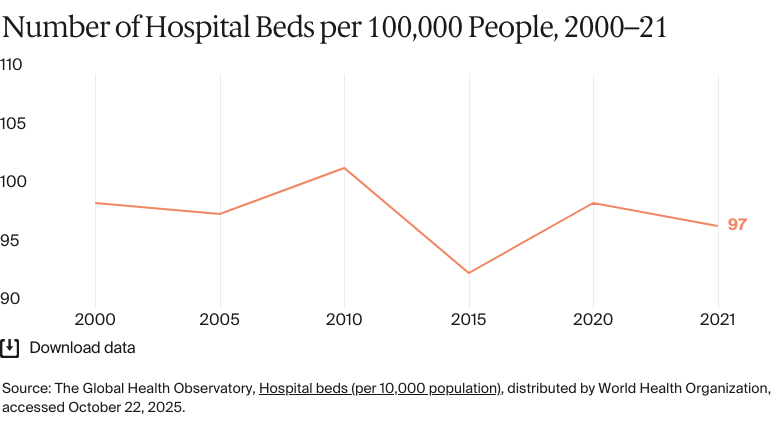
  • In 2021, there were 97 hospital beds per 100,000 people.89
  • In 2021, there were 479 nurses per 100,000 people (compared with an average of 434 in the Western Pacific region in 2022).90
Line chart: Number of Hospital Beds per 100,000 People, 2000–21

The Department of Health directly manages regional, specialty, and government–corporate hospitals, while LGUs oversee the operations of provincial and district hospitals.91 The Hospital Licensure Act of 1965 authorizes the Health Facilities and Services Regulatory Bureau to serve as the licensing authority responsible for setting standards in hospital construction, operation, and service delivery.92 To ensure compliance, these standards are enforced through regular monitoring by the Health Facilities and Services Regulatory Bureau, the Center for Health Development — Regulatory Licensing and Enforcement Division, and the regional units of the Department of Health.93

Based on service capabilities, hospitals are classified into three levels: 

  • Level 1 offers basic inpatient and diagnostic services.
  • Level 2 provides departmentalized services and intensive care.
  • Level 3 includes advanced diagnostic, treatment, and training capabilities and often functions as a teaching and referral hospital.94

As of 2024, there were 1,884 hospitals across the country, or about 1.6 hospitals for every 100,000 people.95 Of these, 792 were government-run hospitals and 1,092 were privately operated.96 Public hospitals focus on primary and preventive care and lead community health education efforts.97 Private hospitals are more likely to concentrate on curative and specialized care.98 There are no regional data available on the number of hospitals.

In terms of capacity, Albert Francis E. Domingo, MD, M.Sc., officer in charge and assistant secretary of the Department of Health, notes that data on the total number of beds may not reflect the reality of access to tertiary care.

The private sector is both a strength and a weakness in terms of bed capacity. We lack bed capacity if you look only at the public beds because the private beds seem to be prohibitive when it comes to cost, but it is arguable that if you combine the total number of beds, both public and private, it may not be that bad when it comes to tertiary care access.

Albert Francis E. Domingo, MD, M.Sc.

Officer in Charge and Assistant Secretary
Department of Health

Hospitals play a dominant role in health care provision: they accounted for 83 percent of all paid claims processed by PhilHealth between January and June 2024.99

Mental Health Care

BY THE NUMBERS

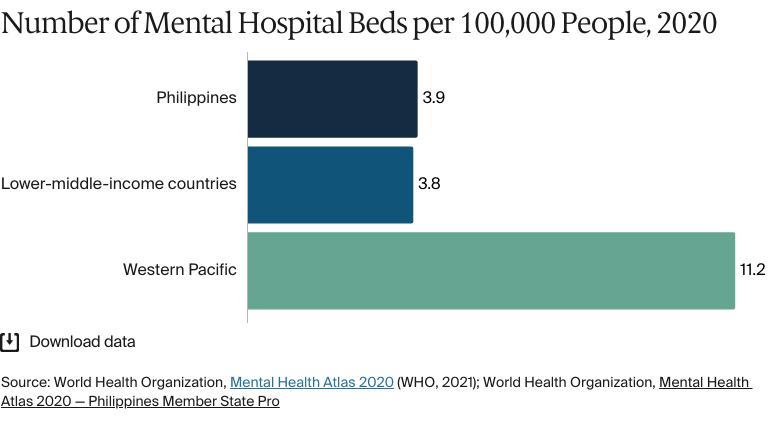
  • In 2020, there were 3.9 mental hospital beds per 100,000 people (compared with an average of 3.8 in lower-middle-income countries).100
  • In 2020, there were 1.7 mental health workers per 100,000 people (compared with an average of 3.8 in lower-middle-income countries).101
Bar chart: Number of Mental Hospital Beds per 100,000 People, 2020

Mental health care has traditionally been centralized in psychiatric hospitals and outpatient services, with limited integration into primary health care and community-based systems. However, there now appears to be a shift toward a more accessible mental health framework.102

The Philippine Mental Health Act of 2018 mandated the integration of mental health services into all levels of health care and education.103 The law established standards for psychiatric, psychosocial, and neurological services to be monitored by the Philippine Council for Mental Health — a policymaking and advisory body under the Department of Health.104 It also requires LGUs and academic institutions to promote wellness, prevention, and rehabilitation through community-level mental health programs.105

Government mental health financing has grown significantly, increasing from PHP 57 million (USD 1 million) to PHP 1 billion (USD 18 million) between 2022 and 2023.106

The Basic Education Mental Health and Well-Being Promotion Act of 2024 advances mental health integration in schools by mandating comprehensive school-based programs, including mental health first aid, crisis response, and referral systems.107 Government bodies, including the Department of Education and the Department of Labor and Employment, are also tasked with implementing age-appropriate mental health education and workplace mental health initiatives to address stigma and improve mental well-being.108

PhilHealth offers annual coverage of up to PHP 9,000 (USD 158) for general mental health services and up to PHP 16,000 (USD 281) for specialized psychiatric care.109

Long-Term Care and Social Support

Long-term care is a pressing issue because elderly people are expected to make up over 10 percent of the population by the end of 2025.110 Traditionally, caregiving was provided by family members, although this is becoming less common.111 This trend adds to the importance of developing formal, community-based elder care systems.112

In response, the government has initiated several long-term care options. The Home Care Support Services for Senior Citizens administrative order of 2010 allows for the delivery of in-home caregiving to sick, frail, or bedridden elderly people by trained volunteers and LGUs.113 Between 2013 and 2019, the program reached only 96 LGUs across 13 regions, highlighting its limited geographic scope.114 Also in 2010, the Department of Social Welfare and Development introduced the long-term care program for senior citizens, providing a national framework for current and future care needs by promoting active aging, improving the efficiency of program delivery, and ensuring consistent standards of care across regions.115

Cost and Affordability

Health Care Spending Overview

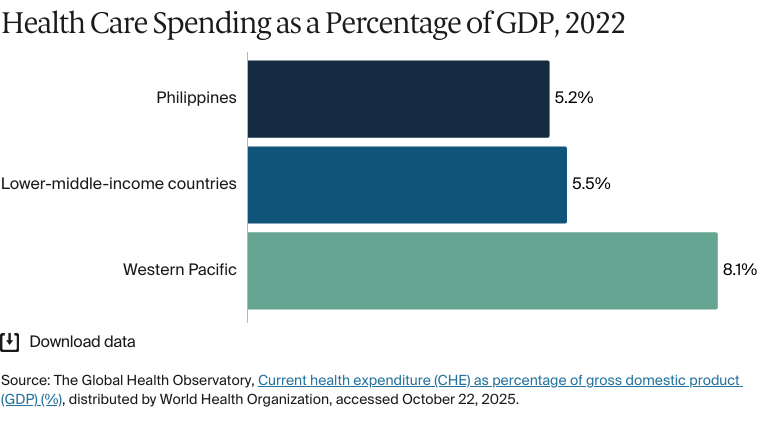
In 2023, health care spending accounted for 5.1 percent of gross domestic product (GDP). This figure was lower than the average for lower-middle-income countries (5.5%) and significantly lower than the regional average for the Western Pacific (8.1%).116

In 2024, total health spending reached PHP 1.6 trillion (USD 27.4 billion), a per capita spending of PHP 12,751 (USD 223) — more than twice the average for lower-middle-income countries in 2022 (USD 92).117 “We are able to register fairly high per capita health expenditures, which is a strength on the financing side – ultimately, there’s money in the system. It could be improved if expenditure was shouldered more by domestic governmental health financing and not out of pocket,” says Albert Francis E. Domingo.

In 2022, government and out-of-pocket spending each accounted for 42 percent of total health expenditure, while prepaid private spending accounted for 10 percent and development assistance accounted for the other 6 percent.118

PhilHealth is one of the largest sources of financing in the health industry, financing health care providers in both the public and private sectors. However, in 2024, the government announced that it would cut PhilHealth subsidies, saying the agency already had large reserves — about PHP 600 billion (USD 11 billion).119 This announcement made PhilHealth entirely dependent on direct contributions and its reserve funds.120

Bar chart: Health Care Spending as a Percentage of GDP, 2022

Medical inflation hit 19.3 percent in 2024 and has consistently been in the 15 to 19 percent range over the past three years.121 The HMO industry has faced significant losses — PHP 1 billion (USD 25 million) in 2022 and PHP 4 billion (USD 76 million) in 2023 — because of rising claims and benefit payouts. These losses have prompted annual pricing adjustments.122 Although HMOs started to recover in early 2024, ongoing negotiations over an 80 to 150 percent increase in doctors’ fees are causing high inflation projections for 2025.123

Pharmaceutical Spending

Pharmaceutical spending represents a significant portion of current health care expenditure, accounting for 19 percent in 2021.124 In 2020, per capita pharmaceutical expenditure was USD 109.125

Government measures, such as the Generics Act of 1988 and the Universally Accessible Cheaper and Quality Medicines Act of 2008, have reduced drug prices over the years.126 The UHC Act has enabled price regulation, but long-term strategies rely on promoting market competition and strengthening local manufacturing.127

These policies aim to improve access to essential medicines for high-morbidity diseases by capping prices and reducing out-of-pocket expenses.128 Some medications, particularly for cancer and chronic illnesses, have dropped in price by up to 93 percent.129

Cost Sharing and Out-of-Pocket Spending

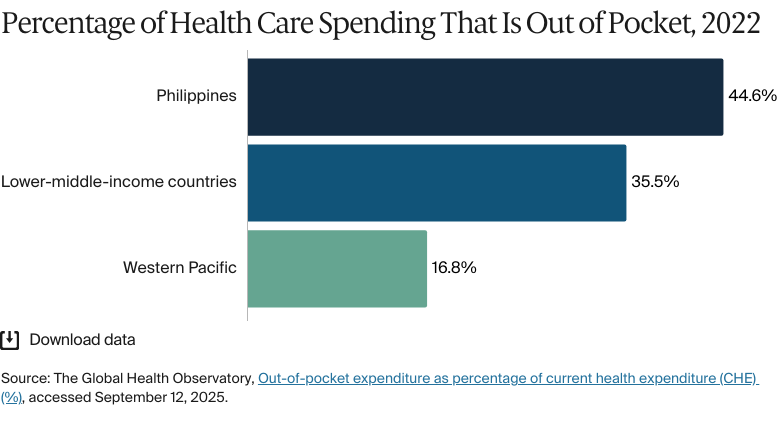
In 2023, out-of-pocket spending accounted for 44.4 percent of total health spending, above the average of 35.5 percent for lower-middle-income countries.130

Bar chart: Percentage of Health Care Spending That Is Out of Pocket, 2022

To limit out-of-pocket expenses for PhilHealth beneficiaries, the No Balance Billing policy requires government hospitals to charge eligible members no more than the PhilHealth case rate.131 By guaranteeing that they can access hospital services without incurring additional costs, the policy aims to financially protect marginalized populations (See Safety Nets).132

All PhilHealth members and their dependents who are admitted to basic (nonprivate) wards, whether in public or private facilities, are covered by the policy, which was expanded and renamed the No Co-Payment scheme by the UHC Act.133 The No Co-Payment plan is based on the type of hospital ward, whereas No Balance Billing is linked to membership type.134

How Are Costs Contained?

The persistent challenges of high out-of-pocket spending led to the Health Care Financing Strategy (2023–28). This medium-term plan supports UHC reforms and aims to improve fund utilization, reduce financial risk for patients, and strengthen investments in primary care.135

The strategy aims to increase public funding for health by raising taxes on tobacco and alcohol, improving premium collection, encouraging LGUs to increase health spending, and finding alternative sources. It also aims to increase access to more affordable medications and encourage equitable financing. The strategy calls for improving access to necessary medications at every stage of life, integrating cost sharing, with no copayments for basic hospital accommodation, moving to more effective provider payment systems, and coordinating medical assistance programs with PhilHealth benefits.136

Quality and Outcomes

Health Outcomes

BY THE NUMBERS

  • Life expectancy was 66.4 years in 2021, compared with 77.4 years in the Western Pacific.
    • Life expectancy for women was 69.9 years compared with 80.5 years in the Western Pacific.
    • Life expectancy for men was 63.4 years compared with 74.5 years in the Western Pacific.137
  • The top three causes of death in 2021 were:138
    • Ischemic heart disease: 143 deaths per 100,000 people
    • Stroke: 88 deaths per 100,000 people
    • Lower respiratory infections: 80 deaths per 100,000 people.
  • The maternal mortality rate was 129 deaths per 100,000 live births in 2023 (compared with an average of 35 across the Western Pacific).139
  • The infant mortality rate was 15 deaths per 1,000 live births in 2023 (compared with an average of nine across the Western Pacific in 2022).140
  • In 2024, the share of the population with mental health disorders was 12 percent (compared with an average of 14% in lower-middle-income countries in 2021).141
  • The suicide rate was 3.8 people per 100,000 in 2023 (compared with an average of nine per 100,000 people in lower-middle-income countries).142
  • The gun death rate was five deaths per 100,000 people in 2023.143
  • 9 percent of adults were affected by obesity in 2022 (the same as the average of 9% in the Western Pacific).144

Average life expectancy in 2021 was 66.4 years — slightly below the average for lower-middle-income nations (67.2 years) and significantly lower than the Western Pacific region’s average (77.4 years). Men had a lower life expectancy than women (63.4 vs. 69.9).145

Noncommunicable diseases caused 68.5 percent of deaths in 2021. Communicable, maternal, perinatal, and nutritional conditions caused 25.4 percent of deaths, while injuries caused 6.2 percent.146

Addressing Health Inequities 

The availability and quality of services vary across public primary health care facilities because LGUs have different financial capabilities. The Department of Health provides LGUs with additional resources for infrastructure, human resources, and commodities.147

There are particular gaps in access to health care in impoverished areas and among disadvantaged populations, such as the Bangsamoro communities in Mindanao, various Indigenous peoples (such as Aeta, Lumad, Mangyan, Igorot, and Manobo), urban informal settlers concentrated in Metro Manila, and geographically isolated islanders.148 Some provinces have less than one hospital bed for every 1,000 people.149 Urban centers (Metro Manila and parts of the Visayas) have better access to high-level private hospitals, with higher bed densities, while underserved communities, especially in Luzon and Mindanao, rely on government-owned hospitals with fewer beds.150

About 13 percent of the population is Indigenous and faces harsh health inequities.151 These people live in geographically isolated locations and tend to have low incomes and poor health outcomes, including high rates of child and maternal mortality and a high prevalence of anemia and cholera.152 The Indigenous Peoples Rights Act of 1997 recognizes and protects the rights of Indigenous communities and ensures equal access to social security, health care, work, housing, and education.153 However, its enforcement at the local level remains weak, owing to limited consideration of cultural and language needs, geographical isolation, and inadequate education and health facilities.154

Although 77.1 percent of Indigenous people know about the National Health Insurance Program, 46.2 percent are not enrolled. This is largely due to barriers such as lacking the required documentation, living in geographically isolated or remote areas, and having a limited understanding of the enrollment process and program benefits. This leaves many, including dependent minors, with no financial safety net to protect them from health care costs.155

There are also significant gaps in health care accessibility, particularly in rural areas where health care infrastructure is underdeveloped, and vaccination rates are suboptimal.156

In 2024, the Department of Health established 28 Bagong Urgent Care and Ambulatory Service (BUCAS) centers to cater to 28 million of the country’s poorest people. BUCAS are designed to provide immediate medical, surgical, and dental care. The primary care services they offer help reduce hospital congestion and guide patients to higher-level care as needed.

“Urgent care centers (BUCAS), which are standalone but still connected to Department of Health hospitals, are ways to decongest the emergency rooms and higher levels of care. They’ve been very popular since we launched them March of last year, and serve collectively about 2,500 patients per day,” says Albert Francis E. Domingo.

By the end of 2024, 41 BUCAS centers were operational, but most are in locations that do not serve rural communities.157

Innovation and Reform

Health Care Innovation

The government is investing in health sector transformation through substantial budget allocations, strategic planning, and targeted workforce initiatives.

2025 Health Sector Budget Allocation and Investments

In 2025, the Philippines committed PHP 256 billion (USD 5 billion) to the health sector, with the goal of ensuring accessible, high-quality, and equitable health care. Investments include PHP 35 billion (USD 621 million) in the Health Facilities Enhancement Program for the modernization of facilities and equipment and PHP 18 billion (USD 316 million) in the National Health Workforce Support System to maintain the workforce in priority areas.158

The Department of Health’s Eight-Point Action Agenda (2023–28)

The Department of Health’s Eight-Point Action Agenda focuses on measurable outcomes for the entire health sector. The Department of Health serves as the central hub, coordinating the work across three pillars:

  • For every community (Para sa Bawat Komunidad), which prioritizes mental health, crisis preparedness, and health promotion
  • For every Filipino (Para sa Bawat Pilipino), which aims to provide access to safe, high-quality care through provider networks and digital tools
  • For every health worker and institution (Para sa Bawat Health Worker at Institusyon), which prioritizes the welfare of medical professionals and institutional resilience.159

Quality of Care

To improve health care delivery, PhilHealth has expanded benefit packages and committed PHP 257 million (USD 5 million) in 2024 to strengthen the Konsulta program, enhancing access to primary care. Simultaneously, the government plans to invest PHP 23 billion (USD 403 million) to upgrade and expand hospitals and health centers across the country.160

National Human Resources for Health Master Plan and Workforce Initiatives

The Department of Health has launched initiatives, such as the Doctors to the Barrios program, to send medical professionals to high-need areas to address the shortage of health care workers. Nevertheless, rural and impoverished areas, such as the Bangsamoro Autonomous Region in Muslim Mindanao, have worse staff shortages than urban areas.161

Health Care Technology

The COVID-19 pandemic accelerated the adoption of health information technologies, particularly telemedicine.162 The government and private sectors each launched telemedicine platforms to expand access to medical consultations, especially in remote areas.163 As of 2023, 63 out of 70 Department of Health hospitals were actively implementing telemedicine services.164 Despite telemedicine services increasing by 44 percent in the five years prior to 2024, there are governance and regulatory gaps.165

Individual initiatives, such as the National eHealth Program — a multi-agency effort to integrate digital health services — and RxBox telehealth devices, have improved health care access, but there’s no overarching legislation supporting health technology.166 In 2021, the eHealth System and Services Act was proposed to establish a national framework, but the legislation is still pending Senate approval.167

The Department of Health and PhilHealth intend to set national health data standards for interoperability and guide the implementation of digital services. PhilHealth has also developed a technology roadmap to standardize planning and investment in health technology.168

Since electronic medical records (EMRs) were introduced under the National eHealth Program, their use has been inconsistent — especially in Rural Health Units.169 Eighty-eight percent of public primary care facilities use EMRs, but only 41 percent of private primary care facilities use them.170

This profile reflects data as of January 2026. New or updated information may have become available since its release.

Notes

Country Profile Details

Date

Citation

International Health Care System Profiles: Philippines (Commonwealth Fund, May 2026).

https://doi.org/10.26099/VSMH-8957

Compare Countries

Explore how countries compare on key health system characteristics including health care coverage and spending, the health workforce, health outcomes, and more.

Learn more →

Related Content