

BACKGROUND
Health system leaders worldwide are searching for innovative care delivery models that lower costs, improve quality, and increase access to services. India’s Narayana Health is one of the best-known examples of a health system that has achieved these goals.
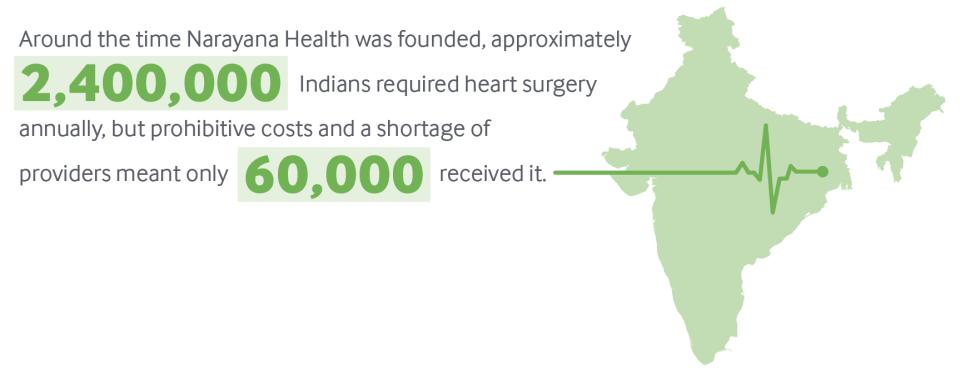
U.K.-trained cardiac surgeon Devi Prasad Shetty, M.D., who served as Mother Teresa’s personal physician after operating on her following her heart attack, founded Narayana Health in 2001 in Bangalore. Its mission: to provide high-quality, affordable cardiac care to everyone, regardless of ability to pay. Changes to Indians’ lifestyle and diet in recent decades have led to an unprecedented increase in heart disease.1 Around the time Narayana Health was founded, approximately 2.4 million Indians required heart surgery annually, but prohibitive costs and a shortage of providers meant only 60,000 received it.2

India’s Narayana Health: A Model of Efficient, High-Tech Care
This gap inspired Shetty to create what is today one of India’s largest multispecialty hospital chains, comprising 31 tertiary hospitals across 19 cities. By combining innovative technology and a highly efficient delivery system, Narayana Health is able to optimize productivity and minimize costs. This has enabled it to both increase treatment capacity and expand the number of specialty services offered. In early 2016, the company’s share price rose more than 35 percent in its initial public offering.
This case study describes the Narayana Health model and the challenges the health system has faced in opening a new hospital in the Caribbean island of Grand Cayman. It also offers lessons for U.S. health care payers and providers on ways to dramatically reduce costs while maintaining high-quality tertiary care.
KEY PROGRAM FEATURES
- leveraging economies of scale
- using assembly line concepts for surgery
- reducing the average length of stay
- reengineering the design, materials, and use of medical equipment to reduce the cost of ownership.
Because of these innovations, the average cost of open-heart surgery, as reported by Narayana Health, is less than $2,000. The same procedure at a U.S. research hospital typically costs more than $100,000.4
A Tight Focus on Efficiency
Narayana Health has achieved savings through smart use of equipment and telemedicine as well as efficient staffing procedures. The health system has built reliable and low-cost supply chains in India over the past decade and leverages economies of scale to further drive down prices. Utilizing a pay-per-use model with suppliers for some diagnostic equipment, it minimizes capital costs.5 Strict sterilization procedures, permitted by the Joint Commission International, enable reuse of some devices, such as guide wires and certain cardiology catheters that are typically disposed of after a single use. Centralized purchasing allows the system to take advantage of economies of scale. Bar coding of stock enables precise inventory counts at any time, minimizing storage costs and preventing unnecessary spending.
In addition to offering services at its own facilities, Narayana Health has one of the world’s largest telemedicine networks, connecting 800 centers globally. The system has treated more than 53,000 patients through telemedicine programs, increasing Narayana’s reach without requiring investment in physical infrastructure. Mobile outreach vans, meanwhile, increase access to diagnostic and consultation services in semiurban and rural areas of India.
A production-line approach to surgery, combined with task-shifting among staff, create an extremely efficient operating theater, resulting in many more procedures completed per day than is typical in the U.S. and elsewhere. Each surgeon performs 400 to 600 procedures annually, compared with 100 to 200 in the U.S.6 All staff members work at the top of their scope of practice: surgeons perform only the tasks they are uniquely qualified to do, while other clinicians perform tasks such as preoperative preparation, patient education, and charting. This enables many surgeries to be performed in a row, with surgeons completing one procedure and quickly beginning the next on a fully prepped patient. This high volume drives lower costs and better-quality outcomes, with surgeons quickly gaining experience and mastery.
Narayana Health’s well-known brand, social mission, and strong leadership — in addition to competitive compensation and incentive packages — attract and retain highly qualified cardiac surgeons and other tertiary care specialists. The system has approximately 16,000 employees, with 11,000 clinicians spread across the company, and 4,000 people are subcontracted for housekeeping and security.
Smart Use of Data to Reduce Costs, Monitor Performance
Use of information technology and data promote efficiency and standardization throughout Narayana Health. A centralized cloud environment connects all the hospitals, helping to streamline administrative tasks and enable performance monitoring.
The finance team generates profit-and-loss statements for executives every day, allowing them to identify and address capital flow issues as they arise. Financial data are reviewed monthly with unit heads and the CEO.
Key performance indicators for individuals and departments are monitored daily, and a real-time patient-complaint process provides a simple and powerful tool to identify and quickly correct performance issues.
Providing Affordable Care to All
Narayana Health hospitals serve anyone who needs care, regardless of their ability to pay. Each year, more than half of patients receive free or subsidized inpatient care, with an average discount of 15 percent. This is accomplished through philanthropy and a cross-subsidy model, in which higher-income patients pay more for nonclinical amenities, such as private recovery rooms. Since the total charges are still far below the cost of comparable services at other private hospitals, Narayana Health is still an attractive option for such consumers. The health system’s business model is sustainable because of its ability to attract so many patients who can pay full price.
SPREAD TO THE CARIBBEAN
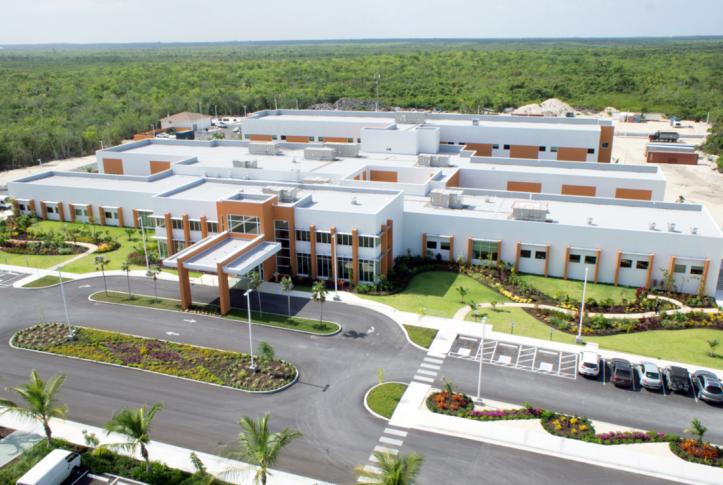
In 2014, Health City Cayman Islands (HCCI), a 101-bed tertiary care hospital that follows the Narayana model, opened in the Caribbean island of Grand Cayman, which is part of the United Kingdom’s Cayman Islands territory. The venture is a partnership between Narayana Health and Ascension Health, the largest nonprofit and largest faith-based health system in the U.S. (See Appendix for details of HCCI’s business and staffing models.) Local factors have affected the implementation and success of the Narayana model in the Caribbean, in both positive and negative ways.
Facilitators of Success
The choice of Grand Cayman was driven by a convergence of factors, including the enthusiasm of local business leaders, the Caymanian government’s need to diversify its economy in the wake of the recent global recession, and Narayana Health’s desire to establish a presence in the region (see box). The island’s well-developed tourism industry, strong infrastructure, low crime rate, and geographic proximity to multiple new markets made it an attractive location.
Key Partners in Health City Cayman IslandsCaymanian businessmen Harry Chandi and Gene Thompson were critical in the genesis of HCCI. Chandi, a Cayman resident of Indian origin, became friends with Narayana Health founder Devi Prasad Shetty, M.D., after he treated Chandi’s father in India. Thompson was Chandi’s business partner and a third-generation Caymanian director of Thompson Development Ltd., a major development company. The Cayman government had approached Thompson about developing avenues for economic diversification. Chandi and Thompson, inspired by Shetty’s vision, were vital in brokering relationships between Narayana Health and the Cayman government and developing the project’s master plan. “Ignorance is empowerment,” said Thompson. “We knew no boundaries, limits, barriers; we only saw opportunities.” At the same time, Ascension Health, the largest faith-based and largest not-for-profit health system in the United States, was drawn to Narayana Health’s mission-driven approach. A subsidiary of Ascension, TriMedx, had been collaborating with Narayana to service equipment beyond its usual lifespan, resulting in reduced capital expenses and operating costs. The executive leadership team at Ascension saw the investment in HCCI as a way to provide affordable health care while affording the opportunity to test innovative quality- and cost-improvement strategies that could apply to the United States. |
The Caymanian government’s willingness to make sweeping changes to the regulatory and policy environments to accommodate HCCI was critical. The government changed nine laws and 13 regulations in two and one-half years, including its health practice law, which now recognizes Indian medical qualifications and approves Indian doctors and nurses to practice in the Caymans. Tort reform capped medical malpractice awards at $620,000, thereby reducing insurance costs for the hospital.7 Immigration law was changed to support expedited visa processing for people from countries that require a visa to enter Grand Cayman, and the duty tax was waived for imported medical supplies. The government also preapproved expansion to match the project’s 15-year master plan (see Appendix).
Efficient methods (e.g., building with insulated concrete forms that decrease air conditioning use by 40 percent) led to fast and affordable construction of the HCCI hospital, resulting in completion within budget in 12 months.
Challenges
In its early stage, several factors threatened to hinder the success of the model in Grand Cayman, including differences between the Narayana and local work culture, higher operational costs, and prevalent misconceptions about the hospital that discouraged local patients from seeking services.
HCCI imports most of its clinical staff from India, a practice that may be difficult to continue as it grows. Hospital leaders are working to embed the Narayana Health work culture, including continuous improvement, balancing multiple roles as needed, and task-shifting, among local clinicians. However, the model will also need to adapt to cultural norms in the Cayman Islands.
Higher operational costs and the supply chain logistics of an island also present challenges. Hospital leaders are looking for ways to reduce operational costs through approaches such as use of solar power, and are importing some supplies from India to find lower prices.
HCCI has also had to dispel myths that discouraged local patients from seeking care, including perceptions that low cost means low quality, that the hospital is a medical tourism institution that would not serve locals, that Indian doctors weren’t as good as Western doctors and might not speak English, and that the only services offered were through telemedicine. To help address these misconceptions, HCCI provided care to a few notable Caymanians, who then became advocates for the hospital.
Efficiency in ConstructionHCCI’s construction integrated many concepts from India, including Shetty’s philosophy of incorporating natural light into all areas of the building, especially operating rooms. There was a firm commitment to lean and green hospital design. For example, on-site oxygen manufacturing, use of solar power, and recycling water for nonpotable uses, mitigated environmental concerns, and should lead to long-term cost-savings “The sum total of multiple efficiencies in the construction process had greater impact than one silver bullet of saving,” says Thompson, a Caymanian businessman who helped develop HCCI. The hospital was built at $420,000 per bed, compared with an average of $1 million per bed in the United States. HCCI has just over 100,000 square feet, less than half the size of a typical Western hospital. This small footprint has also led to operational savings. |
Plan for Growth
In the short to medium term, HCCI is marketing its services to Caymanians and other Caribbean residents and Latin Americans covered by government or private insurance, as well as wealthy patients who pay out of pocket. Through a partnership with the Heart to Heart organization, HCCI also provides subsidized cardiac surgery for Haitian children. U.S. residents covered by traditional insurance are not the immediate target of patient growth, though self-insured companies may be willing to partner with HCCI.
To date, HCCI’s clinicians have focused on orthopedic surgery (32%) and cardiology procedures (26%), with 15 percent in cardiac surgery, 13 percent in general surgery, and 14 percent in other specialties. As the volume of patients increases, HCCI is expanding its specialties. New services include medical oncology, spine surgery, bariatric surgery, neurosurgery and neurology, plastic surgery, and urology. A sleep lab, sports medicine, surgical oncology, and a cancer institute with a radiation unit are expected.
The long-term plan also includes expansion to 2,000 hospital beds within 15 years, opening of a medical university, and a 1,500-unit assisted living facility that will serve people needing day-to-day medical supervision as well as healthy retirees wanting medical services nearby. Pharma-tourism — whereby people travel to purchase cheaper medicines — is also seen as a potential growth area.
RESULTS
Narayana Health
The Narayana Health model has been rigorously studied and its impacts on clinical quality and outcomes, access to care, and costs are well documented in the peer-reviewed literature. In 2007, the health system was responsible for 12 percent of all cardiac surgical procedures performed in India, with 25 procedures completed daily, six days per week.8 As noted above, its surgeons quickly develop expertise, resulting in patient outcomes that rival those in the United States. For example, Narayana Health reports a 1.4 percent mortality rate within 30 days of coronary artery bypass graft surgery, compared with 1.9 percent in the U.S.9 It also reports a 1 percent mortality rate for mitral valve replacement, and a door-to-balloon time of less than 90 minutes for 91 percent of cases; both rates exceed international benchmarks (Exhibit 1).10