

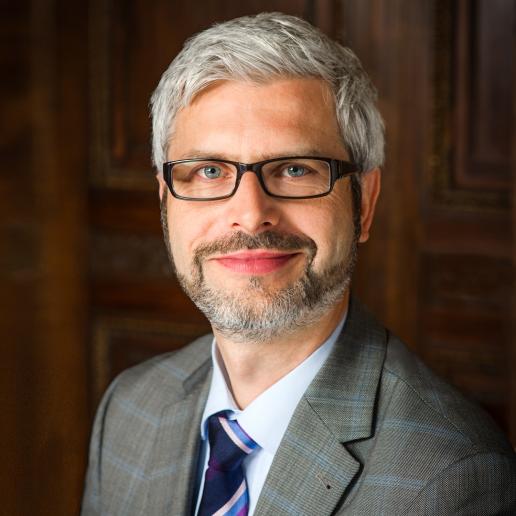
Job Title: Chair, Full Professor of Medicine, Witten/Herdecke University
Bio: Tobias Esch, M.D., a 2013-14 German Harkness/Robert Bosch Stiftung Fellow in Health Care Policy and Practice, is a tenured professor for integrative health promotion and scientific director of the Division of Healthy University at Coburg University of Applied Sciences in Germany. Prior to this appointment, Dr. Esch worked as a research fellow in general internal medicine at Universitätsmedizin Berlin. With a background in neurobiology and psychology, Esch has recently focused his work on integrative health promotion and patient empowerment. Esch has published over 80 peer-reviewed articles in journals such as Medical Science Monitor and European Journal of Integrative Medicine, and is author of two books and numerous book chapters. Esch is the deputy editor-in-chief at Medical Science Monitor and sits on the editorial board for several other medical journals. In 2011, Esch received the Award for Health Promotion and Prevention at the Bavarian Prize for Health Promotion and Prevention, for the implementation of an operating health management system at Coburg University. Esch received his medical degree from the University of Goettingen in Germany.
Placement: Beth Israel Deaconess Medical Center, Inc.
Mentors: Russell Phillips, M.D., Harvard Medical School; Thomas Delbanco, M.D., Beth Israel Deaconess Medical Center/Harvard Medical School
Project: Implementing Self-Care, Self-Management, and Patient Empowerment into Primary Health Care
Description: Esch’s project will analyze elements of the OpenNotes project, which allows open electronic availability of providers’ notes for patients. His analysis will explore how transparency relates to patient self-management, patient outcomes, and the physician-patient relationship. Lessons will also be drawn out for what OpenNotes can teach us about techniques to engage the patient. He will first conduct a literature review, followed by visits to sites in different states of implementation of OpenNotes and interviews with patients, physicians, and key informants. In the broader picture, Esch will frame his analysis around some of the various models for patient engagement, including integrative and coordinated or 'patient-centered' care.