

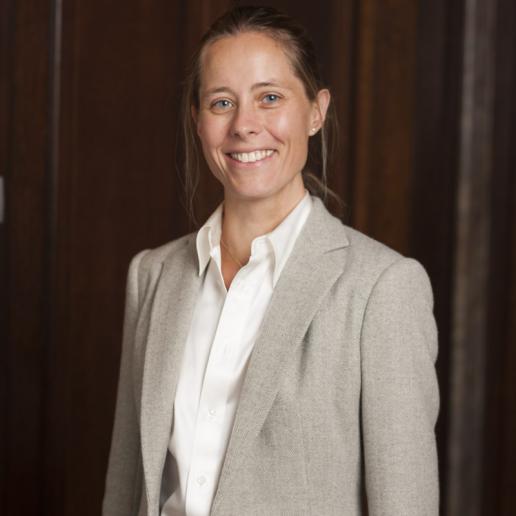
Job Title: Senior Director, Alvarez & Marsal
Bio: Margje Haverkamp, M.D., Ph.D., is a 2015-16 Dutch Harkness/VWS Fellow in Health Care Policy and Practice. She is a practicing internist and infectious disease specialist. Haverkamp works in the department of Infectious Diseases of the Leiden University Medical Center (LUMC), and was a senior advisor to the Council for Health and Society (RVS, formerly known as RVZ). In this advisory role, she contributed to reports for the Dutch Ministry of Health on topics such as shared decision making, the future of healthcare, and governance. Haverkamp also founded the Alumni Committee for The Netherland-America Foundation (NAF) in the Netherlands, which she currently chairs, and co-founded the Young Professionals group of the American Chamber of Commerce in Amsterdam, both with an aim to expand on trans-Atlantic issues with like-minded professionals and researchers. Haverkamp has been awarded a number of grants to support her research, including a Fulbright Scholarship at the Laboratory of Clinical Infectious Diseases within the National Institutes of Health (NIH) from 2003-2005. Haverkamp received her M.D. from the University of Utrecht and her Ph.D. from the University of Leiden in primary immunodeficiencies.
Placement: Harvard T.H. Chan School of Public Health
Mentors: Meredith Rosenthal, Ph.D., Harvard School of Public Health; Thomas Sequist, M.D., M.P.H., Partners HealthCare, and Harvard Medical School
Project: Incentives Behind Overuse of Medical Services in the Context of the Choosing Wisely Initiative
Description: In 2009, the National Physicians Alliance funded by the American Board of Internal Medicine (ABIM) started what would become known as the "Choosing Wisely" campaign. This campaign sets out to identify low-valued, wasteful medical interventions that, when eliminated, would increase the quality of patient care and reduce its costs. Haverkamp's research is directly linked to this campaign. Her research project relies on performance measures related to overuse that are listed in the Healthcare Effectiveness Data and Information Set (HEDIS) of the U.S. National Committee for Quality Assurance. It uses them to examine the impact of health care plan design on the appropriateness of care. It sets out to understand incentives behind overuse using qualitative methods--semi-structured interviews with insurers, physicians and patients linked to high- and low-performing plans--and statistical analysis based on plan performance in HEDIS. The project's main goal is to devise ways in which health care funders, such as insurers, can reinforce the Choosing Wisely movement without undermining physician engagement and patient trust. In addition, leveraging her medical background and her link with the Dutch Ministry of Health, Haverkamp will expand her activities to the problem of antimicrobial resistance resulting from the overuse of antibiotics. She will identify leading examples of antibiotic stewardship in U.S. Hospitals and transmit these to the Dutch Ministry of Health and fellow infectologists in the Netherlands.